An Echo of Mastery: The Soul of Portrait de Famille
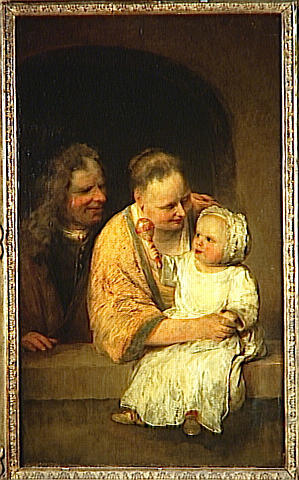
To encounter Aert de Gelder’s “Portrait de Famille” is to step into a profound dialogue with the past, specifically the twilight years of the Dutch Golden Age. Completed around 1720, this evocative oil on canvas serves as a vibrant, breathing echo of Rembrandt van Rijn’s legendary influence. De Gelder, one of Rembrandt's most devoted pupils, does not merely imitate his master; he breathes new life into the dramatic chiaroscuro technique, using light to sculpt emotion from the darkness. The painting captures a family unit—a mother, a father, and an infant—not as static figures in a formal arrangement, but as a cohesive, breathing entity bound by an invisible thread of affection and quiet contemplation.
The composition is masterfully orchestrated in a classic triangular formation, a structural hallmark that directs the viewer’s eye toward the heart of the domestic scene. At the apex of this human pyramid sits the mother, her presence commanding yet tender as she cradles her newborn. To her side, the father completes the triad, his posture providing a stabilizing balance to the group. This arrangement creates an intimate, enclosed space that feels shielded from the outside world, inviting collectors and admirers alike into a private moment of familial serenity. The dark, indistinct background acts as a void that pushes the subjects forward, ensuring that every flicker of light on a cheek or fold of fabric demands our full attention.
Texture, Light, and the Art of Observation
Technically, “Portrait de Famille” is a triumph of the Dutch Baroque tradition. De Gelder employs a palette dominated by rich, earthy tones—deep browns, warm ochres, and soft creams—which lend the work an organic, timeless warmth. Subtle splashes of red and white within the woman’s attire provide necessary focal points, preventing the composition from receding into shadow. What truly distinguishes this piece, however, is the artist's tactile approach to paint. His visible, energetic brushstrokes imbue the canvas with a sense of immediacy and vitality, a deliberate choice that celebrates the physical act of painting itself.
The lighting is nothing short of theatrical. Originating from an unseen source to the left, the light washes over the figures, highlighting the soft contours of the infant’s skin and the weathered textures of the parents' clothing. This interplay of brilliance and deep shadow creates a sense of three-dimensional depth, even within a relatively shallow pictorial space. For the interior designer or art enthusiast, this dramatic use of light offers an unparalleled opportunity to create a focal point in a room, bringing a sense of historical weight and sophisticated drama to any curated collection.
Symbolism and the Eternal Bond
Beyond its aesthetic brilliance, the painting is steeped in profound symbolic meaning. The infant, nestled securely within the mother's arms, serves as a potent symbol of innocence and the enduring continuity of lineage. There is a quiet gravity in the expressions of the parents—a solemnity that suggests they are not merely posing for a portrait, but reflecting on the responsibilities and the sacred nature of their bond. This layer of narrative complexity transforms the work from a mere likeness into a meditation on human connection and the passage of time.
For those seeking to adorn a space with art that speaks to the heart, “Portrait de Famille” offers more than just visual beauty; it offers an atmosphere of contemplative peace. Whether displayed in a grand library or a contemporary living space, this reproduction carries with it the weight of history and the warmth of human intimacy, making it a timeless investment for any lover of fine art.