A Gaze Through Time: The Soul of Orphan Boy
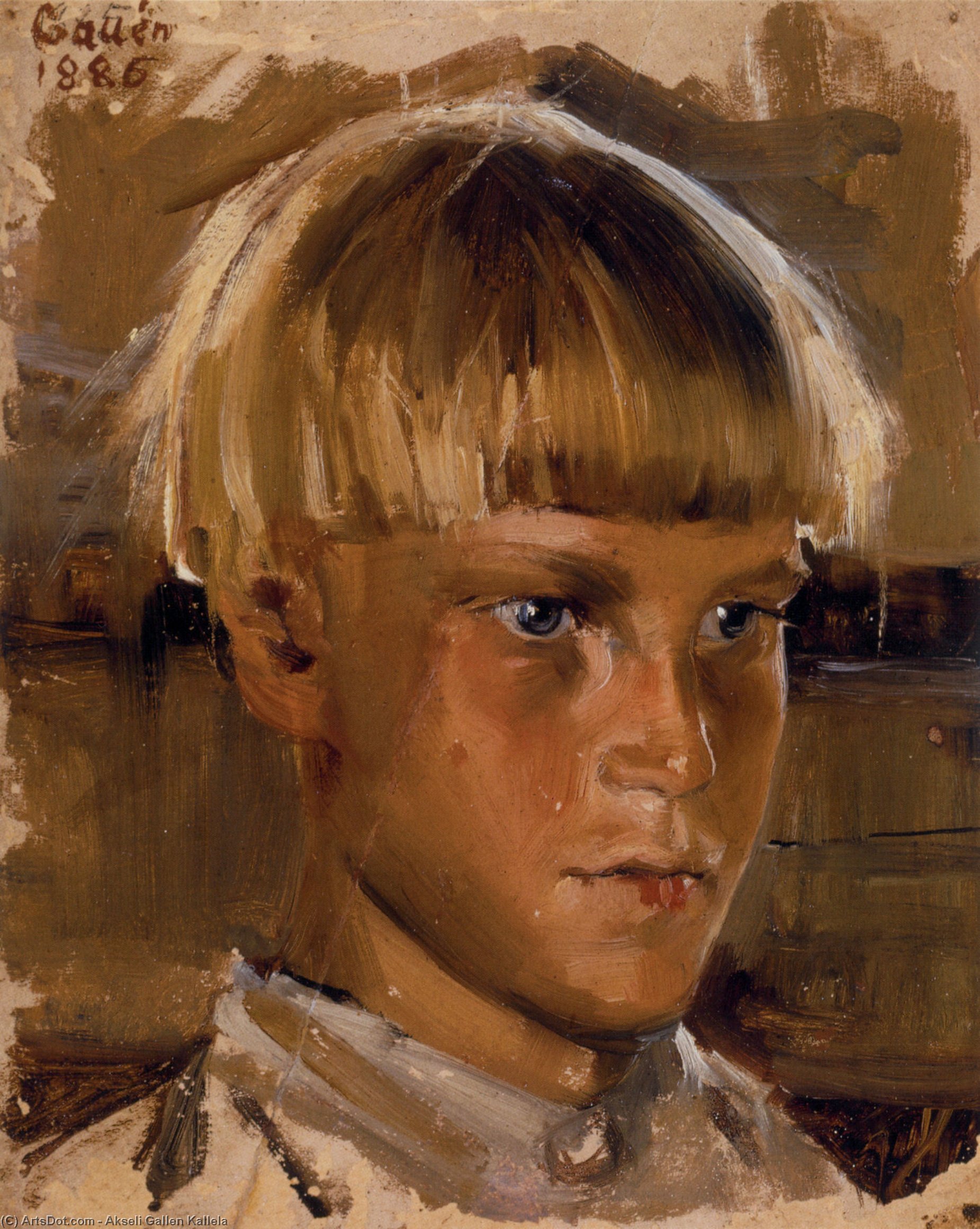
In the quiet, evocative portrait known as Orphan Boy, painted in 1886, we are invited into an intimate encounter with a moment frozen in history. Akseli Gallen-Kallela, a master who would later become a cornerstone of Finnish national identity, captures here a profound sense of vulnerability and resilience. The subject, a young boy with short, dark hair and a piercing gaze, stares directly at the viewer, bridging the gap between the nineteenth century and the modern day. His expression is one of solemnity, a weight far beyond his years, anchored by the striking detail of a scar resting above one eye. This singular feature serves as a silent narrator, hinting at a life marked by hardship and the rugged reality of existence in a period of great social transition.
The composition is masterfully understated, allowing the psychological depth of the sitter to command the space. Clad in a simple white shirt that catches the light, the boy sits against a backdrop that suggests the humble confines of a domestic interior. The presence of a chair in the background provides a sense of place, grounding the portrait in a tangible, lived-in reality. Gallen-Kallela utilizes a technique that balances the precision of academic training with an emerging sensitivity to atmosphere. The play of light and shadow across the boy's face creates a sculptural quality, emphasizing the texture of his skin and the intensity of his eyes, making the portrait feel less like a static image and more like a breathing presence.
For the discerning collector or interior designer, Orphan Boy offers much more than mere decoration; it provides a focal point of profound emotional gravity. The painting’s muted palette and somber tones lend themselves beautifully to sophisticated, curated spaces—perhaps as a contemplative piece in a library, a study, or a gallery-style hallway. It is a work that demands attention and rewards close inspection, sparking conversations about the human condition and the stories hidden behind every face. To possess a high-quality reproduction of this masterpiece is to bring a piece of Finnish art history into one's home, inviting an aura of timelessness, strength, and quiet introspection into any room.