A Psychological Drama in Monochrome
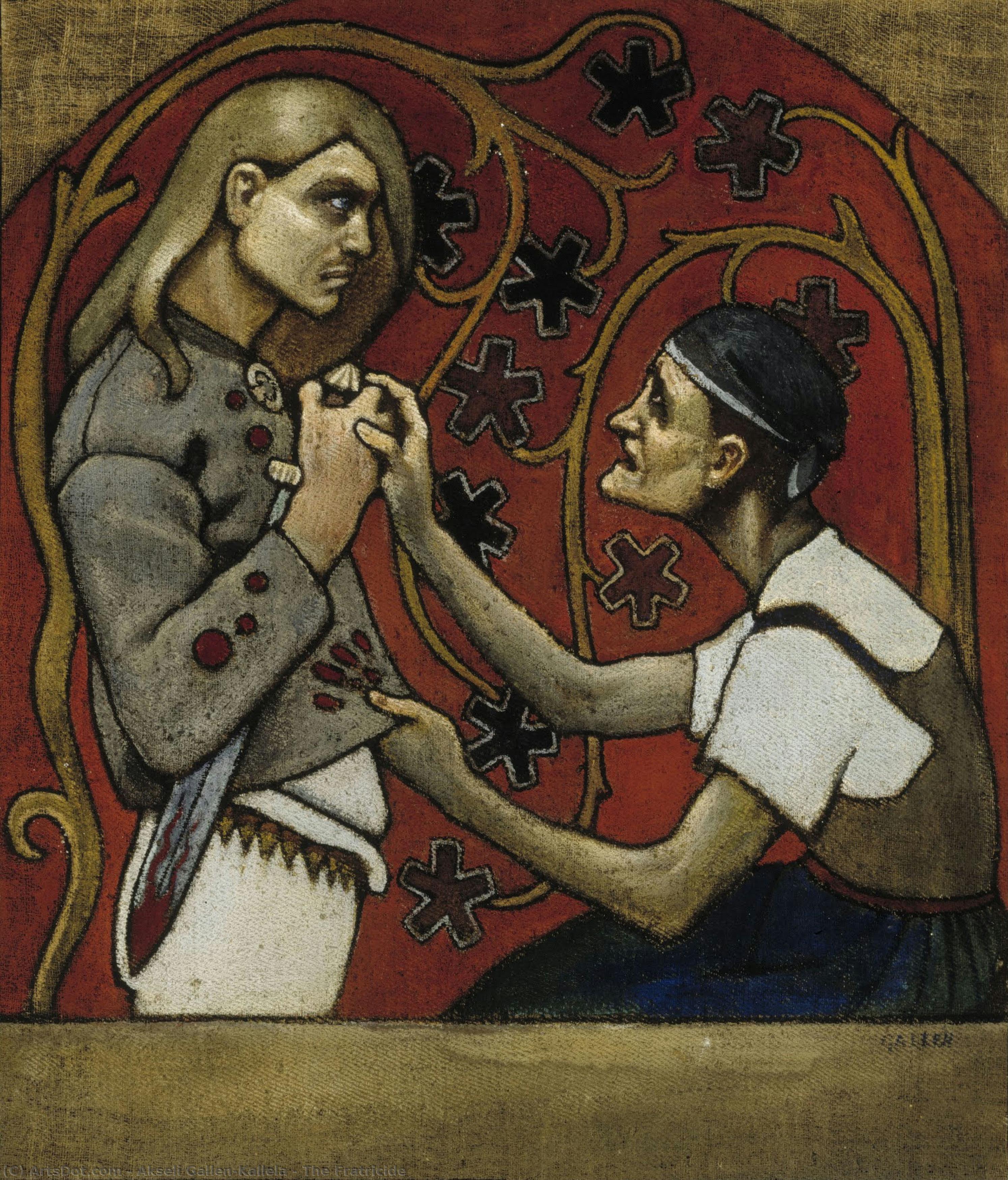
In the quiet intensity of Akseli Gallen-Kallela’s 1897 masterpiece, The Fratricide, viewers are not merely observing a scene from folklore, but are thrust into a visceral moment of profound psychological tension. This monumental work, rendered with the stark, haunting clarity of a black and white print, captures a confrontation that feels both ancient and urgently contemporary. The composition centers on two figures locked in a silent yet explosive struggle, their presence heavy with the weight of an impending tragedy. Through his masterful command of light and shadow, Gallen-Kallela transforms a moment of familial discord into a universal study of conflict, making it a captivating centerpiece for any collection that seeks to evoke deep contemplation and emotional resonance.
The subject matter is deeply rooted in the Kalevala, the Finnish national epic, which serves as the heartbeat of the artwork. By depicting a scene of fratricide—the killing of one's own brother—Gallen-Kallela taps into the primal anxieties of identity and betrayal. The figures, caught in a moment of frozen motion, embody the struggle for self-determination that was so prevalent in the Finnish consciousness during the late 19th century. For the discerning collector or interior designer, this piece offers more than just visual interest; it provides a narrative anchor, a conversation starter that bridges the gap between mythological legend and the raw human experience of isolation and aggression.
The Mastery of Symbolism and Technique
Technically, The Fratricide is a triumph of the Symbolist movement. Gallen-Kallela employs a meticulous etching-like technique, utilizing intricate hatching and cross-hatching to build a sense of rugged texture and atmospheric depth. This method allows for a breathtaking tonal range, where the deepest blacks seem to swallow the light, and the subtle grays suggest the misty, somber landscapes of the Finnish soul. The sharp, cold glint of the knife held by one of the men serves as a piercing symbol of division and violence, cutting through the composition just as the act itself cuts through the bonds of kinship.
The positioning of the men is equally deliberate; they face away from one another, a visual metaphor for the irreparable fracture caused by conflict. This sense of alienation is palpable, creating an emotional impact that lingers long after the first glance. For those looking to adorn a sophisticated space, such as a study, a gallery, or a curated living area, this reproduction brings with it an air of historical gravity and artistic prestige. The vintage, monochromatic aesthetic lends itself beautifully to modern minimalist or classic traditional interiors, offering a timeless elegance that complements both contemporary art collections and more storied, academic environments.