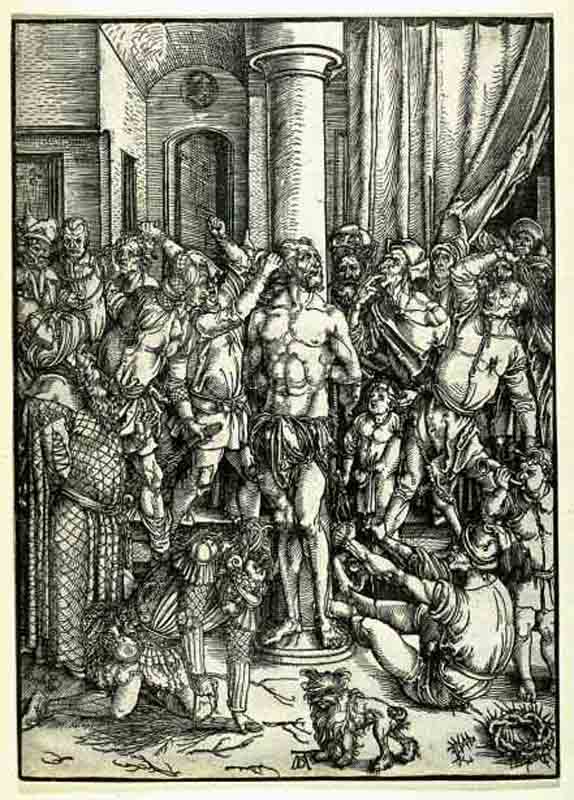
A Descent into Suffering: Dürer's Flagellation of Christ
Albrecht Dürer’s 1497 depiction of the Flagellation of Christ is not merely a religious scene; it’s a profoundly unsettling meditation on human suffering, power, and faith. Executed during a pivotal moment in the artist’s career – a period marked by intense self-reflection and experimentation with printmaking – this painting transcends simple narrative illustration, becoming a deeply psychological exploration of pain and humiliation. The image immediately confronts the viewer with the brutal reality of Christ's torment, rendered with an almost photographic precision that was revolutionary for its time. Dürer’s meticulous attention to detail, from the strained muscles of Jesus to the grim expressions of the Roman soldiers, creates a visceral experience that continues to resonate powerfully today.
- Subject Matter: The Flagellation of Christ is a traditional Christian depiction of the Last Judgment event, specifically the moment when Jesus was scourged by Roman guards before his crucifixion.
- Style: Dürer’s style exemplifies the Northern Renaissance, characterized by its realism, detailed observation, and expressive use of line. It anticipates the later developments of German Expressionism in its focus on emotional intensity.
Technical Mastery and Innovative Techniques
Dürer's technical prowess is immediately apparent in every aspect of this work. He employed oil paint – a relatively new medium at the time – allowing for unprecedented levels of detail, tonal variation, and luminosity. The use of sfumato, a technique borrowed from Leonardo da Vinci, subtly blurs the edges of forms, creating an atmospheric depth that enhances the scene’s dramatic impact. Crucially, Dürer's mastery extends beyond mere representation; he meticulously rendered textures – the rough wool of the soldiers’ tunics, the smooth stone of the pedestal – imbuing the painting with a remarkable sense of physicality. The artist’s innovative use of perspective and his ability to convey movement and emotion through gesture are hallmarks of his genius.
- Medium: Oil on panel
- Technique: Dürer utilized meticulous layering, glazing, and detailed rendering techniques characteristic of the Northern Renaissance.
Symbolism and Historical Context
The Flagellation of Christ was a highly charged symbol within the religious landscape of 15th-century Europe. It served as a potent reminder of Christ’s sacrifice and suffering, but also represented the vulnerability of humanity before divine judgment. The scene's depiction of Roman soldiers underscores the themes of injustice, oppression, and betrayal – anxieties prevalent during a period marked by political instability and religious reform. Dürer himself was deeply concerned with moral and spiritual questions, evident in his numerous self-portraits and explorations of biblical themes. This painting reflects his desire to grapple with profound theological issues and to offer viewers a powerful visual commentary on the human condition.
- Religious Symbolism: The Flagellation represents Christ's suffering as atonement for humanity’s sins, a central tenet of Christian theology.
- Historical Context: Created during a time of religious and political upheaval in Europe, the painting reflects anxieties about power, justice, and faith.
Emotional Impact and Artistic Legacy
“Flagellation of Christ” is not a comfortable image; it’s deliberately unsettling. Dürer doesn't shy away from depicting the brutality of the scene, forcing the viewer to confront the uncomfortable realities of human suffering. The painting’s emotional power lies in its raw honesty and its unflinching portrayal of pain. Dürer’s work profoundly influenced generations of artists, establishing him as one of the most important figures in the history of Northern Renaissance art. Its influence can be seen in subsequent depictions of religious subjects, demonstrating Dürer's lasting impact on artistic expression and his ability to capture the essence of human emotion with unparalleled skill.