A Spiritual Odyssey in Ink
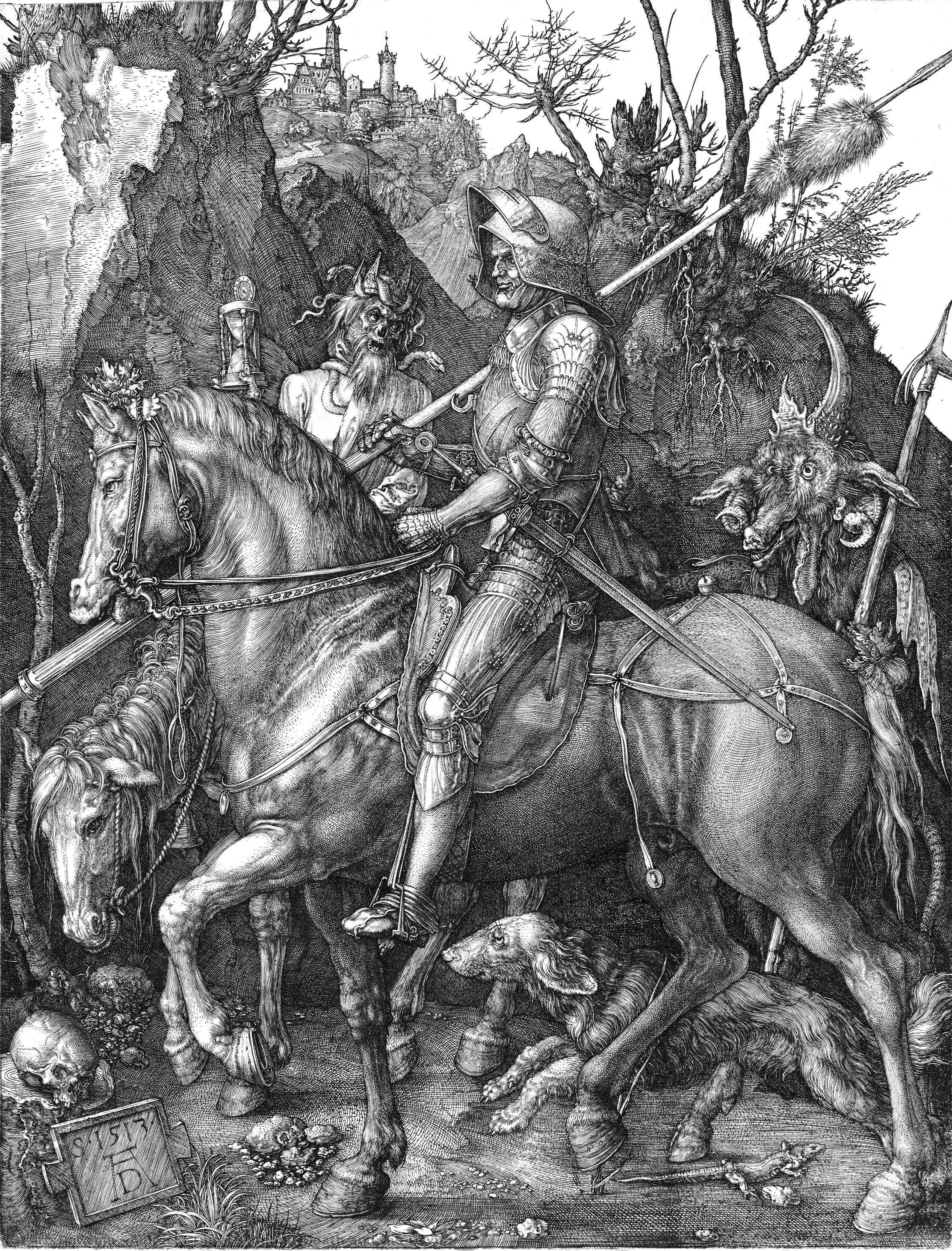
In the annals of the Northern Renaissance, few works command the same visceral intensity as Albrecht Dürer’s 1513 masterpiece, Knight, Death and the Devil. This monumental engraving is far more than a mere technical feat; it is a profound psychological landscape where the boundaries between the physical and the metaphysical dissolve. As the viewer encounters this intricate scene, they are immediately thrust into a dramatic confrontation that feels as urgent today as it did five centuries ago. The composition centers on a resolute knight, clad in gleaming armor, riding steadfastly through a desolate, rocky terrain. He is flanked by the chilling presence of Death—a skeletal figure perched upon a pale horse—and the grotesque, mocking visage of the Devil. It is a scene of profound tension, capturing that singular, breathless moment where courage meets the inevitable shadows of mortality.
The emotional resonance of this work lies in its masterful use of allegory to explore the human condition. Dürer does not merely depict a battle; he illustrates the internal struggle for righteousness amidst temptation and decay. The knight’s unwavering gaze serves as a symbol of faith and spiritual resilience, refusing to be swayed by the grotesque distractions of the demonic or the terrifying reminder of the grave. For the collector or the enthusiast of fine art, this piece offers a deep well of contemplation, inviting one to reflect on the strength required to navigate life's most turbulent passages. It is an evocative narrative of triumph over darkness, making it a powerful centerpiece for any space dedicated to thought and introspection.
The Mastery of the Burin
To behold this engraving is to witness the pinnacle of printmaking technique. Dürer, a virtuoso of the copperplate, utilized the precision of the burin to create a world defined by light and shadow without the use of a single drop of color. Through the meticulous application of cross-hatching and varying line densities, he achieved an astonishing range of textures that seem almost tactile. One can sense the cold, hard smoothness of the knight’s plate armor, the coarse roughness of the jagged rocks, and the organic, bristling texture of the horses' manes. This monochromatic brilliance relies entirely on the interplay of black ink and white paper, creating a sense of depth and volume that rivals much more complex oil paintings.
The technical sophistication of this work is a testament to Dürer’s training in Nuremberg, blending the precision of a goldsmith with the vision of a master storyteller. The way light appears to catch the edges of the knight's helmet or illuminate the skeletal ribs of Death creates a dramatic chiaroscuro effect that guides the eye through the composition. For interior designers and art lovers seeking a high-quality reproduction, this level of detail is what makes the piece so captivating; even in a printed format, the intricate linework retains a sense of movement and life. It is an enduring example of how technical mastery can elevate a simple medium into a profound vessel for human emotion and historical significance.