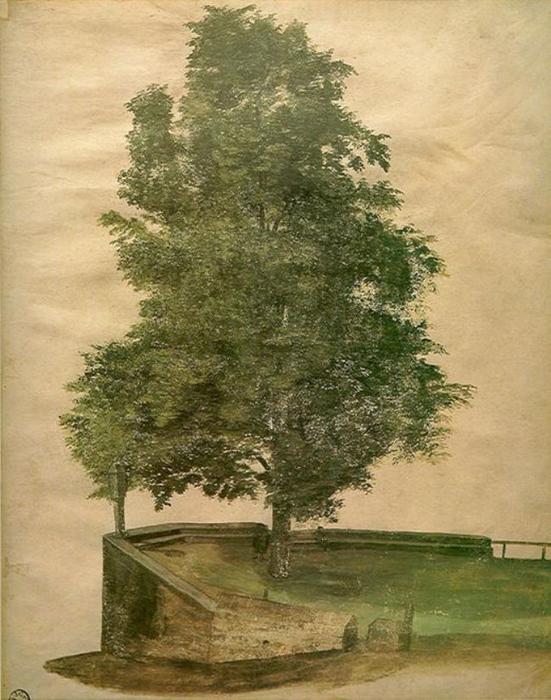
A Timeless Emblem of Nature's Resilience: Albrecht Dürer’s *Linden Tree on a Bastion* (1494)
Albrecht Dürer’s Linden Tree on a Bastion, completed in 1494, stands as a pivotal work within the burgeoning Northern Renaissance landscape. More than simply a depiction of a tree – specifically, a linden – it embodies a profound meditation on nature's enduring strength and the delicate balance between the wild and the constructed world. Executed during a period of immense artistic innovation, this painting reflects Dürer’s meticulous observation and his burgeoning mastery of perspective and detail, hallmarks that would define his career.
- Subject Matter: The central focus is undeniably the linden tree itself, a species deeply resonant with symbolism across European cultures. Lindens were traditionally associated with protection, peace, and fertility – qualities Dürer subtly conveys through the tree’s imposing presence and the serene quality of its form.
- Composition & Technique: Dürer employs a masterful use of linear perspective, drawing the viewer's eye into the scene with remarkable precision. The brick wall in the foreground isn't merely a backdrop; it actively shapes the composition, creating depth and emphasizing the tree’s dominance. His meticulous attention to detail – from the individual leaves to the texture of the brick – demonstrates his commitment to realism, a key element of the Northern Renaissance style.
Historical Context & The Rise of Landscape Painting
1494 marks a crucial moment in art history. While landscape painting existed prior, Dürer’s work is considered one of the earliest and most influential examples of the genre within the German Renaissance. The rise of humanist thought during this period encouraged artists to move beyond purely religious subjects and explore the beauty of the natural world. Dürer's patron, Emperor Maximilian I, was a fervent collector of art and actively promoted artistic innovation, fostering an environment where such explorations were not only tolerated but celebrated.
- Northern Renaissance Influence: Unlike the idealized landscapes of Italy, Dürer’s work reflects the Northern European emphasis on observation and detail. The slightly rugged quality of the landscape suggests a connection to the Rhineland region, reflecting the artist's own environment.
- Symbolic Significance of the Bastion: The presence of the brick bastion adds another layer of meaning. Bastions were fortifications – symbols of power, defense, and human control over nature. Their inclusion here subtly juxtaposes the tree’s natural authority with the imposing structure, prompting contemplation on humanity's relationship to the environment.
Dürer’s Artistic Legacy & Emotional Impact
Linden Tree on a Bastion is more than just a beautiful painting; it’s a testament to Dürer’s artistic genius and his profound understanding of human emotion. The tree's solitary grandeur evokes feelings of peace, resilience, and perhaps even melancholy – a recognition of the transient nature of beauty and life. Dürer’s ability to capture this emotional resonance through meticulous detail is what elevates this work beyond mere representation.
- Mastery of Detail: Dürer's dedication to rendering texture, light, and shadow is breathtaking, showcasing his unparalleled skill as a draftsman.
- Enduring Appeal: The painting’s timeless appeal lies in its ability to connect with viewers on a deeply emotional level – reminding us of the enduring power and beauty of nature.
Perfect for Display & Collection
ArtsDot offers meticulously crafted hand-painted reproductions of Albrecht Dürer's *Linden Tree on a Bastion*, allowing you to bring this iconic masterpiece into your home or office. Each reproduction is created using the highest quality materials and techniques, ensuring exceptional detail and color accuracy. Whether you are an art collector, interior designer, or simply someone who appreciates beauty, this reproduction offers a stunning tribute to one of history’s greatest artists.