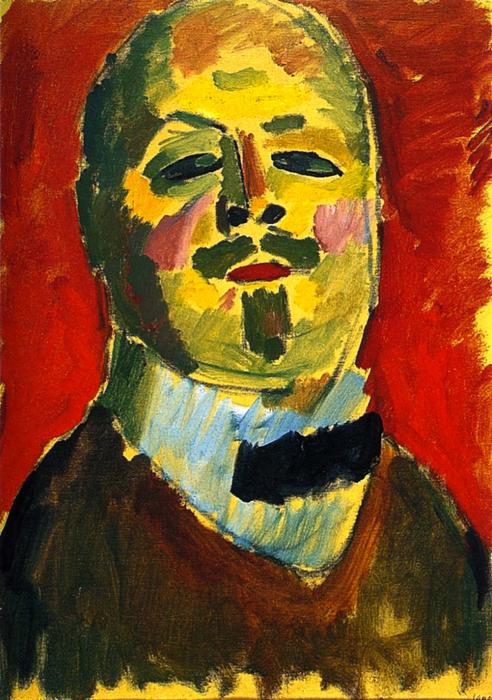
Experience Alexej von Jawlensky’s intense Self-Portrait, a dramatic Expressionist study in restrained emotion from 1914. This raw and unsettling piece captures the artist's profound worldview through bold colors and distorted forms – discover this iconic artwork.
A Study in Restrained Emotion: Alexej von Jawlensky's Self-Portrait
This arresting self-portrait, painted in 1914 by the German Expressionist artist Alexej von Jawlensky, offers a profound glimpse into the artist’s intensely personal and emotionally charged worldview. Jawlensky, a key figure in the development of Expressionism, rejected academic realism in favor of conveying raw feeling through distorted forms and jarring color combinations – techniques that would profoundly influence generations of artists to come. This particular work exemplifies his commitment to distilling human experience into its most essential, often unsettling, elements.

Expressionist Techniques and a Dramatic Palette
The painting’s dramatic impact stems directly from Jawlensky's masterful use of Expressionist techniques. Notice the deliberate flattening of perspective, the simplified forms, and the almost brutal honesty with which he renders his subject. The intense red and yellow hues are not merely decorative; they represent a conscious effort to evoke specific emotional responses – passion, anger, perhaps even a sense of impending doom. Jawlensky employed thick impasto, building up layers of paint that create a tactile surface and intensify the colors’ vibrancy. This technique adds to the painting's physicality and reinforces its emotional intensity.
Historical Context: The Dawn of Expressionism
Created in 1914 – a year marked by global upheaval and rising anxieties – this self-portrait reflects the broader artistic currents of the time. Jawlensky was part of a group of artists, including Gerhardt Richter and Karl Schmidt-Rottluff, who sought to break away from the prevailing trends of Impressionism and Post-Impressionism. They were deeply influenced by Byzantine icons and primitive art, seeking spiritual truth through direct emotional expression rather than representational accuracy. The painting’s starkness and intensity align perfectly with the growing sense of unease and disillusionment that characterized Europe on the brink of World War I.
Symbolic Weight and Personal Vision
The subject's serious gaze, coupled with the carefully rendered features – the pronounced mustache, the simple brown shirt – invites contemplation. Jawlensky was known for his deliberate avoidance of overt symbolism, preferring to let the raw emotion of the image speak for itself. However, some scholars suggest that the intense colors and distorted form might represent a struggle between inner turmoil and a desire for spiritual clarity—a common theme in Jawlensky’s oeuvre. Ultimately, this self-portrait is not merely a likeness; it's a powerful statement about the artist’s deeply held beliefs and his unwavering commitment to expressing the complexities of human experience.