A Soul Rendered in Gold: The Emotional Depth of Jawlensky’s Vision
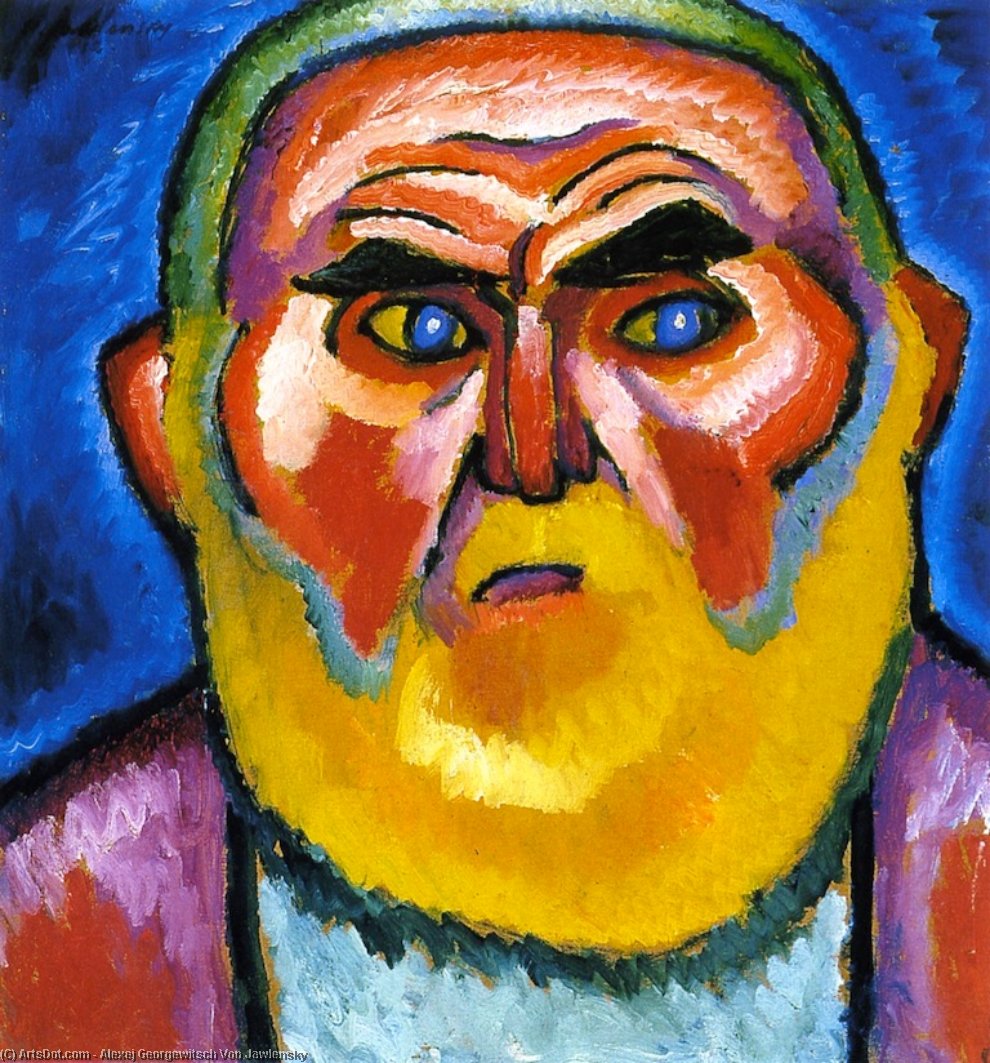
In the realm of early twentieth-century Expressionism, few works possess the arresting, spiritual gravity found in Alexej von Jawlensky’s 1912 masterpiece, The Old Man. Also affectionately known as Yellow Beard, this oil on panel painting transcends the boundaries of mere portraiture to become a profound meditation on the human condition. At first glance, the viewer is struck by the striking contrast between the vibrant, sun-drenched yellow of the subject's beard and the deep, contemplative blue of the background. Yet, as one lingers before the canvas, it becomes clear that this is not simply a depiction of an elderly man, but a distillation of psychological depth and spiritual illumination. Jawlensky, a pivotal figure in the Der Blaue Reiter movement, invites us to look past the physical surface and into the very essence of the subject's weathered existence.
The painting serves as a cornerstone of the Expressionist movement, a period defined by a rejection of academic realism in favor of raw, subjective experience. Jawlensky utilizes deliberate distortion to heighten the emotional resonance of the piece; the disproportionately enlarged head and the prominent, protruding nose do not aim for anatomical accuracy, but rather for an intensified sense of presence and solemnity. This stylistic choice forces the viewer into a direct, almost confrontable encounter with the subject's unwavering gaze. The yellow hue that dominates the beard is far from arbitrary—it acts as a symbolic beacon of enlightenment, suggesting a character shaped by wisdom and internal light, even amidst the shadows of age.
Mastery of Texture and the Tactile Experience
For the discerning collector or interior designer, the physical presence of this work offers an unparalleled sensory experience. Jawlensky’s technical prowess is most evident in his masterful use of impasto. The artist applied pigment with a thick, rhythmic intensity, creating palpable ridges and valleys across the panel's surface. This heavy texture does more than just catch the light; it gives the painting a sculptural quality that mirrors the rugged, weathered life of the man depicted. When viewing a high-quality reproduction, these textural nuances are essential, as they allow the play of light and shadow to animate the canvas, bringing a dynamic energy to any curated space.
The interplay between color and form in The Old Man creates a visual tension that is both unsettling and deeply captivating. The way the bold yellow permeates the surrounding composition suggests a spiritual aura, a concept central to Jawlensky's later explorations of the soul. This piece is not merely an object of decoration but a conversation starter—a window into a period of profound artistic upheaval. Whether placed in a quiet study or as a focal point in a modern gallery setting, this artwork commands attention through its ability to evoke a sense of timeless contemplation and emotional truth.