A Divine Intimacy: The Soul of Florentine Mannerism
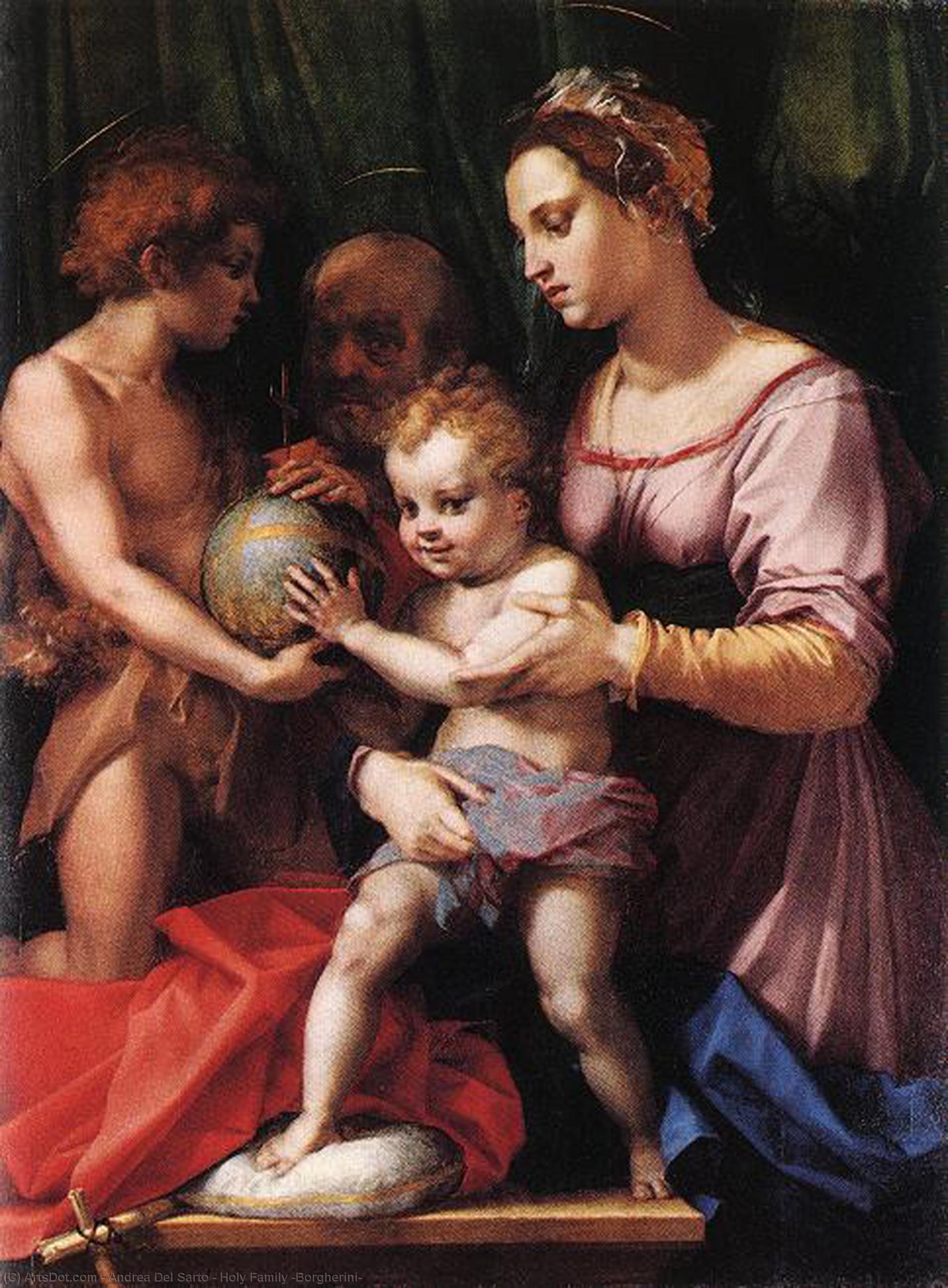
In the quiet, hallowed halls of the Museo del Cenacolo di San Salvi in Florence, there exists a window into a moment of profound spiritual tenderness. Andrea del Sarto’s “Holy Family (Borgherini),” completed around 1529, is far more than a mere religious icon; it is a masterclass in the transition from the balanced perfection of the High Renaissance to the emotive, complex language of Mannerism. As one gazes upon this masterpiece, the initial impression is not one of distant divinity, but of an overwhelming, palpable human connection. The central trio—Mary, Joseph, and the infant Jesus—are gathered within an intimate interior, their figures bathed in a diffused, soft light that seems to emanate from the very sanctity of their bond.
Del Sarto, often celebrated as the “painter without errors,” moves beyond the idealized, static compositions of his predecessors to imbue his subjects with a psychological depth that resonates across centuries. There is a weight to the silence in this painting, a solemnity that invites the viewer to lean in and witness the quiet gravity of familial piety. For the discerning collector or interior designer, this piece offers a rare opportunity to introduce a sense of historical prestige and contemplative calm into a space, acting as an anchor of grace and intellectual depth.
Symbolism and the Mastery of Light
Every element within this composition is meticulously choreographed to convey a deeper theological narrative. While the scene appears domestic, it is rich with deliberate symbolism designed to elevate the mundane to the miraculous. Most striking is the infant Jesus, cradled securely in Mary’s arms, holding aloft a small globe. This subtle yet powerful gesture serves as a profound metaphor for Christ’s role as the savior of mankind and his dominion over all creation. It transforms the intimate family portrait into a cosmic statement of faith.
The artist’s technical prowess is most evident in his handling of light and texture. Eschewing the unnaturally smooth surfaces favored by some of his contemporaries, del Sarto employs a sophisticated Mannerist technique characterized by meticulous layering and glazing. This creates a luminous, almost breathing surface that captures the subtle nuances of shadow and highlight. The palette, dominated by muted reds, earthy browns, and deep ochres, creates a harmonious and somber atmosphere, ensuring that the viewer's focus remains fixed on the emotional interplay between the figures rather than being distracted by garish color.
An Enduring Legacy for the Modern Collector
To possess a reproduction of this caliber is to bring a piece of Florentine history into the contemporary home. The "Holy Family" represents a pivotal moment in art history, capturing the tension and beauty of an era defined by artistic experimentation and intellectual ferment. Its presence in a room provides more than just decoration; it offers a conversation piece that speaks to the enduring human desire for connection, protection, and spiritual meaning.
Whether placed in a curated gallery setting or used as a focal point in a sophisticated living space, this work inspires awe through its technical brilliance and emotional honesty. For those seeking to surround themselves with art that possesses both historical weight and aesthetic elegance, del Sarto’s vision remains an unsurpassed choice, bridging the gap between the sacred traditions of the 16th century and the refined tastes of the modern era.