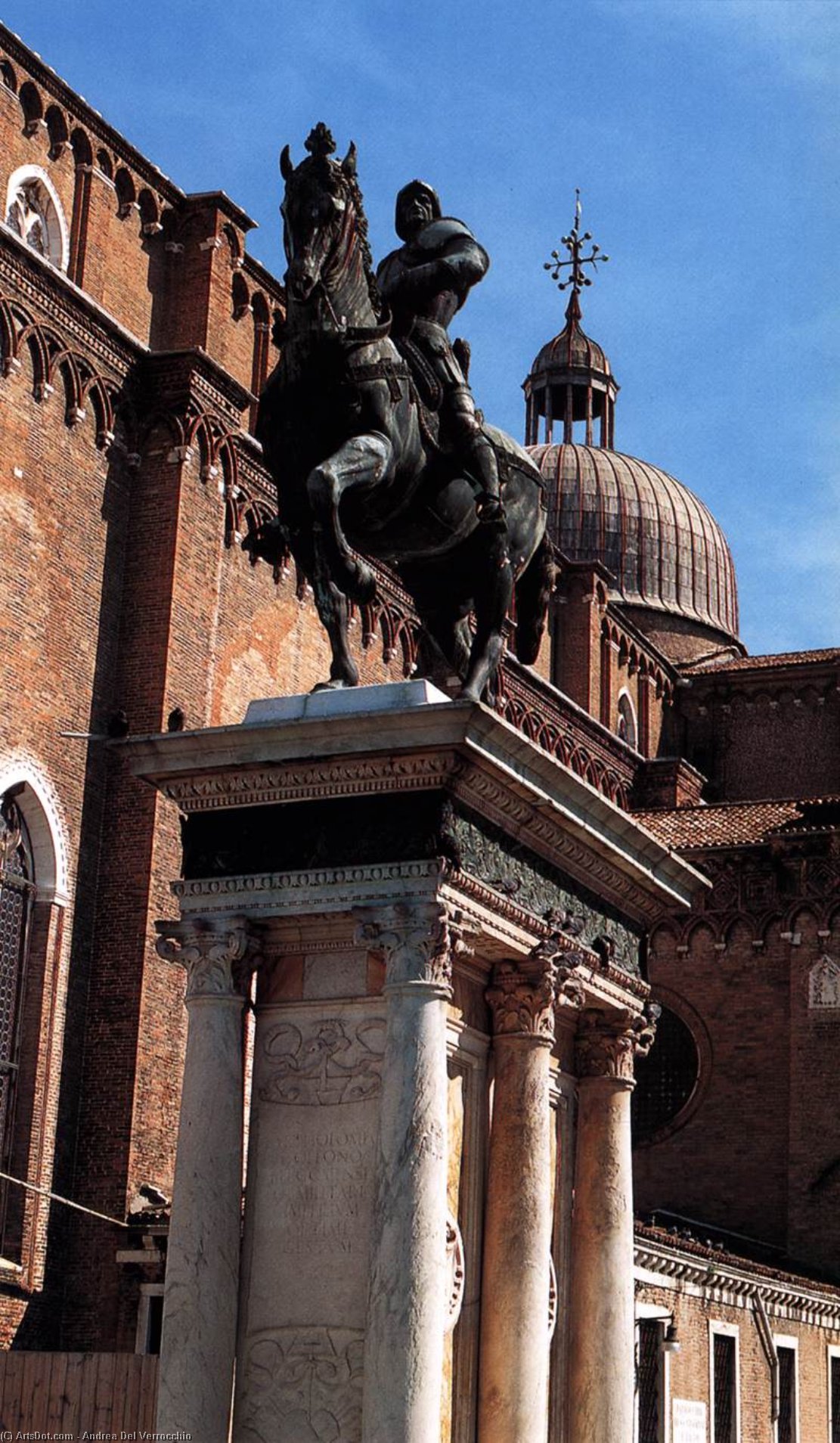
Andrea del Verrocchio’s monumental Equestrian Statue of Colleoni, a Renaissance masterpiece depicting the Venetian hero in dynamic motion, showcases unparalleled bronze artistry and captures the spirit of 15th-century Venice. Discover this iconic sculpture and bring its grandeur into your space.
A Bronze Legend: The Command of Verrocchio’s Masterpiece
In the heart of Venice, amidst the storied stones of Campo Santi Giovanni e Paolo, stands a monument that captures the very essence of Renaissance vigor. Andrea del Verrocchio’s Equestrian Statue of Bartolomeo Colleoni is not merely a tribute to a military leader; it is a breathtaking dialogue between metal and movement. Created around 1481, this monumental bronze work transcends the traditional boundaries of commemorative sculpture. While many equestrian monuments of the era favored a static, dignified repose, Verrocchio chose a path of dynamic intensity. The figure of the legendary condottiero, Colleoni, is depicted with an arresting sense of forward momentum, his warhorse captured in a powerful, spirited stride that seems to vibrate with the energy of a battlefield charge.
To behold this sculpture is to witness the pinnacle of lost wax casting technique. Verrocchio, a master goldsmith by training, infused the bronze with an unparalleled level of anatomical precision and textural richness. Every ripple of the horse's musculature, every subtle tension in the rider's posture, and the intricate details of the heavy drapery speak to a profound understanding of organic form. The natural patina that has developed over centuries adds a soulful depth to the work, casting shadows that accentuate the heroic contours of the bronze. For the discerning collector or designer, this piece represents more than an object of beauty; it is a fragment of history that brings a sense of gravitas and timeless strength to any curated space.
The Intersection of Humanism and Heroism
Beyond its technical brilliance, the statue serves as a profound symbol of the humanist ideals that flourished during the Italian Renaissance. The commission itself was an act of civic pride, intended to immortalize the military prowess of Colleoni and his service to the Venetian Republic. Verrocchio masterfully weaves together the themes of individual glory and state authority. The rider’s gaze is resolute, embodying the virtù—the masculine excellence and courage—celebrated by the intellectuals of the age. There is an undeniable emotional weight to the work; it evokes a sense of awe, reminding the viewer of an era when art was used to bridge the gap between the mortal achievements of men and the eternal grandeur of myth.
The architectural backdrop of the Venetian Gothic landscape further elevates the sculpture's impact. The soaring arches and ribbed vaults of the surrounding basilicas provide a rhythmic, vertical counterpoint to the horizontal power of the equestrian figure. This interplay between the heavy, grounded bronze and the ethereal, light-filled architecture creates a dramatic tension that is visually captivating. For those seeking to incorporate such profound historical resonance into their interior environments, a high-quality reproduction of this masterpiece offers an opportunity to anchor a room with a sense of narrative depth, commanding attention through its sophisticated blend of strength, movement, and classical elegance.