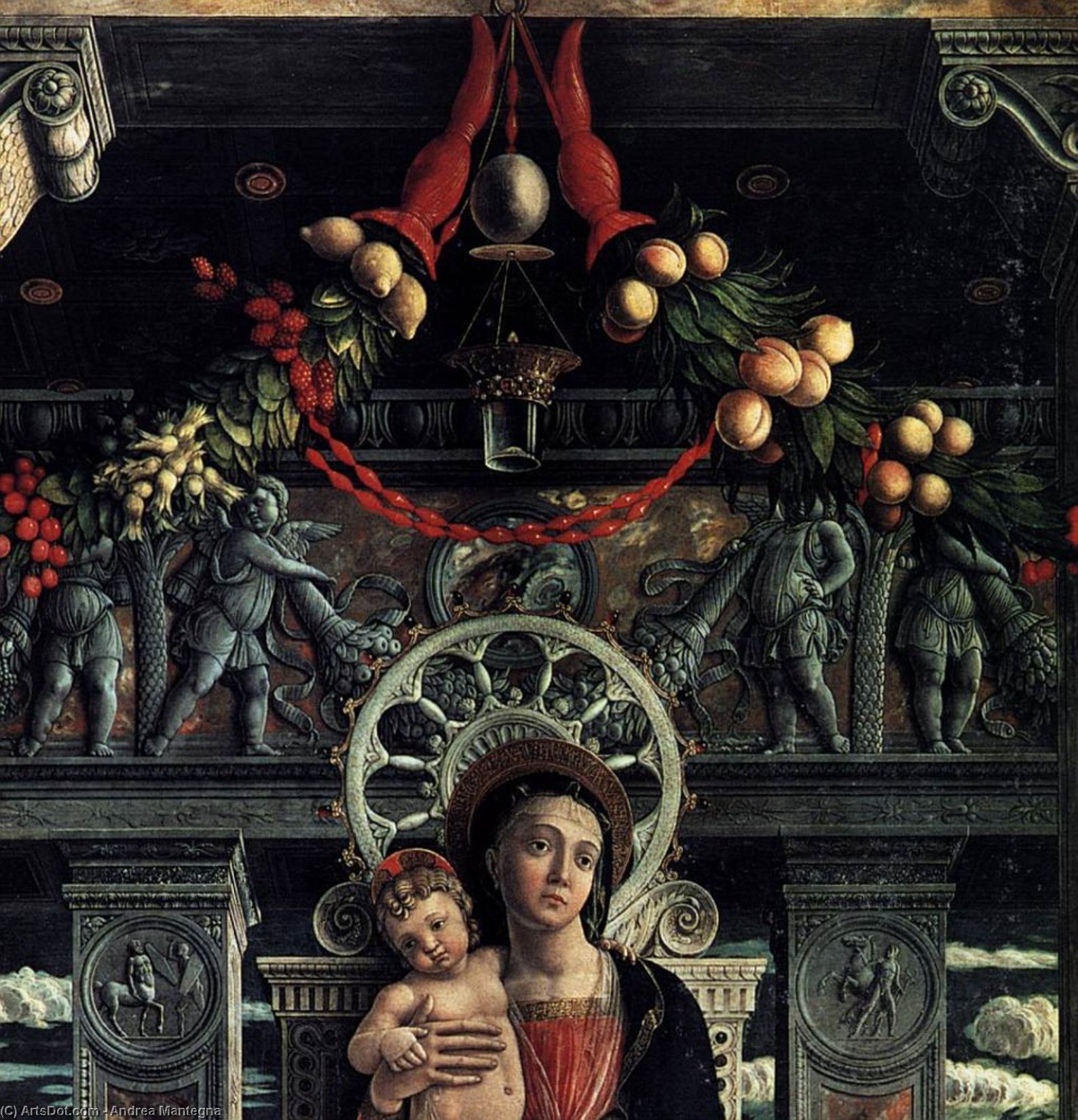
A Renaissance Vision of Grace: Andrea Mantegna’s San Zeno Polyptych (detail)
Andrea Mantegna's detail from the San Zeno Polyptych, completed in 1457, is not merely a painting; it’s a window into the burgeoning Renaissance spirit of Northern Italy. Created for the high altar of the Basilica di San Zeno in Verona – a UNESCO World Heritage site steeped in Romanesque and early Renaissance architecture – this fragment offers a compelling glimpse into a larger masterpiece that redefined religious art. The scene, centered around the Virgin Mary cradling the infant Jesus, is rendered with an astonishing level of detail and a profound sense of reverence, embodying the artistic ideals of its time.
The Language of Forms: Style and Technique
Mantegna’s style is immediately recognizable – a masterful blend of classical antiquity and Christian iconography. He wasn't simply depicting religious figures; he was reconstructing an idealized world informed by his deep study of Roman sculpture and architecture. The architectural framework surrounding Mary and Jesus isn’t merely decorative, but actively participates in the composition, creating a sense of sacred space. The use of linear perspective, though still evolving during this period, establishes depth, while the precise lines and geometric shapes – rectangles, circles, arches – echo classical principles of harmony and proportion. The technique employed, primarily fresco secco (dry fresco) combined with tempera and possibly oil paint, allowed for meticulous detail and vibrant color application. Notice how the light seems to emanate from an unseen source, subtly modeling the figures and enhancing the three-dimensionality of the scene. The textures – in the drapery, the sculpted details, even the fruit suspended above Mary’s head – are rendered with a palpable sense of realism achieved through layered brushstrokes.
Symbolism Woven into Every Detail
Every element within this composition carries symbolic weight. The abundance of fruit—peaches, grapes, and pomegranates—are not merely decorative additions; they represent fertility, prosperity, and the sweetness of divine grace. The red drapery, a color associated with passion and sacrifice, subtly foreshadows Christ’s future suffering. The flanking angels, their wings outstretched in offering or blessing, connect the earthly realm to the divine. Even the choice of saints included within the full polyptych (though only hinted at here) was carefully considered, reflecting local patronage and religious devotion. Mantegna wasn't simply creating a beautiful image; he was constructing a complex theological statement designed to inspire piety and contemplation.
A Legacy of Innovation
Andrea Mantegna’s San Zeno Polyptych stands as a pivotal work in the Early Renaissance, bridging the gap between Gothic traditions and the emerging humanist ideals. His dedication to anatomical accuracy, his innovative use of perspective, and his masterful integration of classical motifs profoundly influenced subsequent generations of artists. The altarpiece remains *in situ* at the Basilica di San Zeno, though portions were dispersed to museums like the Louvre in Paris and the Musée des Beaux-Arts in Tours following Napoleonic conquests; however, its enduring power continues to captivate viewers today. Owning a hand-painted reproduction of this detail allows one to bring a piece of Renaissance history and artistic brilliance into their own space—a testament to Mantegna’s lasting legacy.