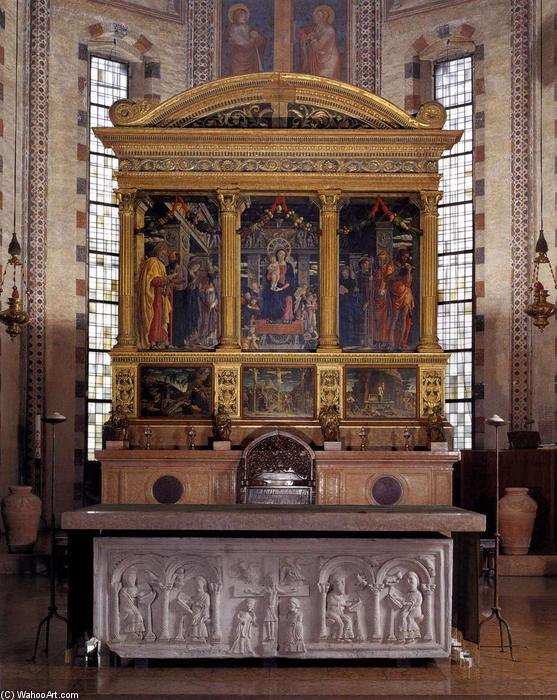
A breathtaking window into Roman antiquity, Andrea Mantegna’s San Zeno Polyptych is a monumental High Renaissance masterpiece that invites you to discover its profound depth and sculptural beauty.
Andrea Mantegna (1431-1506): Renesansni majstor perspektive i skulpturalnog detalja! Otkrijte remek-dela poput 'Lamentacije' i fresaka u Camera degli Sposi – revolucionarno delo koje je oblikovalo renesansnu umetnost!
Otkrijte Baziliku San Zeno u Veroni, UNESCO lokalitet! Divite se Mantegninom remek-delu, složenim bronzanim vratima i zapanjujućoj romanici posvećenoj Sv. Zenonu.
A Window into the Glory of Rome
Andrea Mantegna’s The San Zeno Polyptych is far more than a mere religious altarpiece; it is a profound archaeological excavation rendered in pigment and wood. Completed in 1457, this monumental work serves as a breathtaking bridge between the fading echoes of the Middle Ages and the burgeoning intellectual fervor of the Renaissance. For the discerning collector or art lover, the piece offers an unparalleled glimpse into a period defined by the feverish rediscovery of classical antiquity. Mantegna, shaped by the scholarly atmosphere of Francesco Squarcione’s workshop, brought an almost obsessive attention to Roman ruins, inscriptions, and sculptural forms to his panels. Every architectural detail feels less like a painted ornament and more like a rediscovered fragment of a lost empire, breathing life into the spirit of ancient Rome through a lens of breathtaking precision and historical reverence.
The Architecture of Illusion
Beyond its historical significance, the polyptoch is a masterclass in technical innovation and spatial manipulation. Mantegna utilized a revolutionary approach to perspective, creating an architectural framework that appears to exist independently of the painted surface. Through his mastery of illusionistic depth, the viewer is drawn into a space where the boundaries between the physical room and the painted realm begin to dissolve. The technique—a meticulous application of pigments on wood, often incorporating marble dust for a unique luminosity—gives the figures a stony, sculptural quality that is both heavy and ethereal. For interior designers seeking a centerpiece with true presence, this artwork offers a commanding structural grandeur; it does not merely hang upon a wall but seems to command the very architecture of the space, offering a sense of profound realism that defies conventional boundaries.
Sacred Grace and Eternal Presence
At its heart, the San Zeno Polyptych remains a deeply spiritual encounter. The central focus—the Virgin Mary enthroned with the infant Jesus, flanked by Saint Zeno and Saint Apollonia—is arranged in a pyramidal composition that mirrors the stability and strength of Roman temples. This geometric harmony reinforces themes of permanence, divine order, and eternal grace. There is an emotional weight to the work, a solemnity that arises from Mantegna’s ability to marry religious iconography with classical austerity. To surround oneself with a reproduction of such a masterpiece is to invite a sense of timelessness into a home or gallery, capturing the quiet strength of faith and the enduring beauty of human achievement. It is a piece that speaks of devotion, not just to the divine, but to the relentless pursuit of artistic perfection.