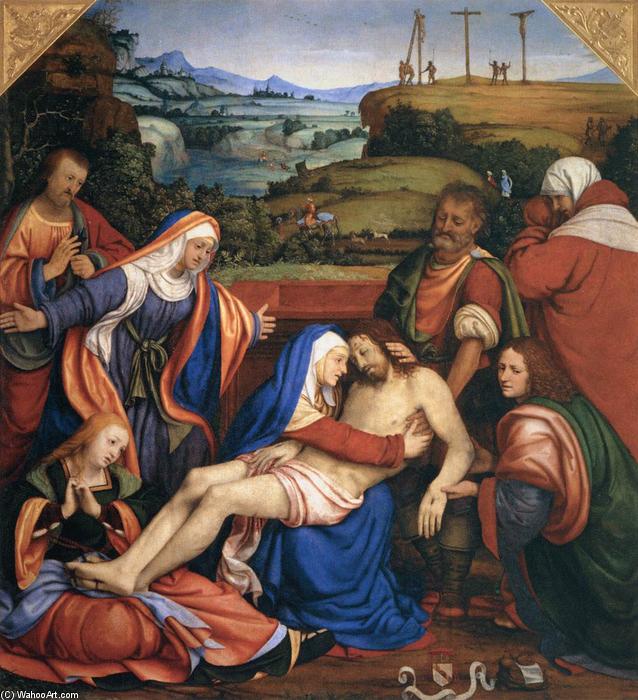
Istražite upečatljive slike Andree Solarija (1460-1524), renesansnog majstora poznatog po portretima i religioznim scenama koji dočaravaju italijansku eleganciju i ljudske emocije.
Louvre
(Paris, France)
Otkrijte bezvremenske remek-dela Louvra! Putujte kroz istoriju umetnosti od drevnog Egipta do renesansnih ikona – Mona Liza, Venere Miloska i još mnogo toga. Pariško kulturno blago čeka na vas!
A) Kraljevskom dvorcem isključivo za Luja XIV.
B
Prema datom tekstu, šta je bila prvobitna svrha palate Louvre?
A Moment of Profound Grief: Lamentation over the Dead Christ
To stand before this depiction of the Lamentation is to be enveloped in an atmosphere so thick with sorrow that it feels almost tangible. Andrea Solario’s Lamentation over the Dead Christ, painted in 1509, transcends mere religious narrative; it is a profound meditation on loss, sacrifice, and enduring human connection. The composition immediately draws the eye to the central figures—Mary cradling the body of her son, Jesus—a tableau vivant of ultimate heartbreak. Surrounding this core grief are supporting characters whose presence anchors the scene in the solemnity of early Renaissance devotion. Observe the man bearing the cross, a potent symbol of the Passion, and the figure holding the book, perhaps representing scripture or contemplation. These elements work together to build a narrative tapestry woven from piety and human suffering.
The Echoes of Style: Bridging Milanese Grace and Mannerist Tendencies
Andrea Solario himself stands as an intriguing conduit in art history—a painter whose career spanned the vibrant artistic currents moving between Milan and France. This work, dating to 1509, captures him at a pivotal moment in his development. While rooted firmly in the devotional intensity of Italian Renaissance painting, one can detect hints of the emerging Mannerist sensibility. The figures possess a certain elongated grace, an emotional heightened quality that moves beyond the serene balance of earlier High Renaissance masters. Solario masterfully blends the rich storytelling tradition inherited from his Milanese roots with a developing sense of dramatic tension, giving the scene both monumental weight and intimate vulnerability.
Symbolism Woven into the Scene
The symbolism within this canvas is richly layered, inviting prolonged study. Beyond the central tragedy, the inclusion of elements like the two horses in the background adds an unexpected dynamism to the otherwise static grief. They suggest a world continuing its rhythm even as divine sorrow grips the foreground. Furthermore, the solitary bird taking flight above the scene acts as a delicate counterpoint—a fragile note of life persisting over death. The clothing, rendered with meticulous detail suggesting medieval attire, grounds the sacred event in a specific cultural moment, allowing the viewer to connect the timeless themes of sacrifice to a tangible historical setting.
Technique and Emotional Resonance for the Modern Collector
The technical execution speaks to Solario’s skill as a painter. The handling of drapery is exquisite; the folds of cloth seem weighted by sorrow, catching the light in ways that suggest masterful oil application. For those considering bringing this powerful piece into their own space—whether through an original reproduction or a high-quality print—the emotional impact is undeniable. It is art that does not merely decorate a wall but rather deepens the contemplation within a room. The depth of color, combined with the dramatic interplay between light and shadow across the figures’ faces, ensures that this Lamentation remains a focal point of profound, contemplative beauty.