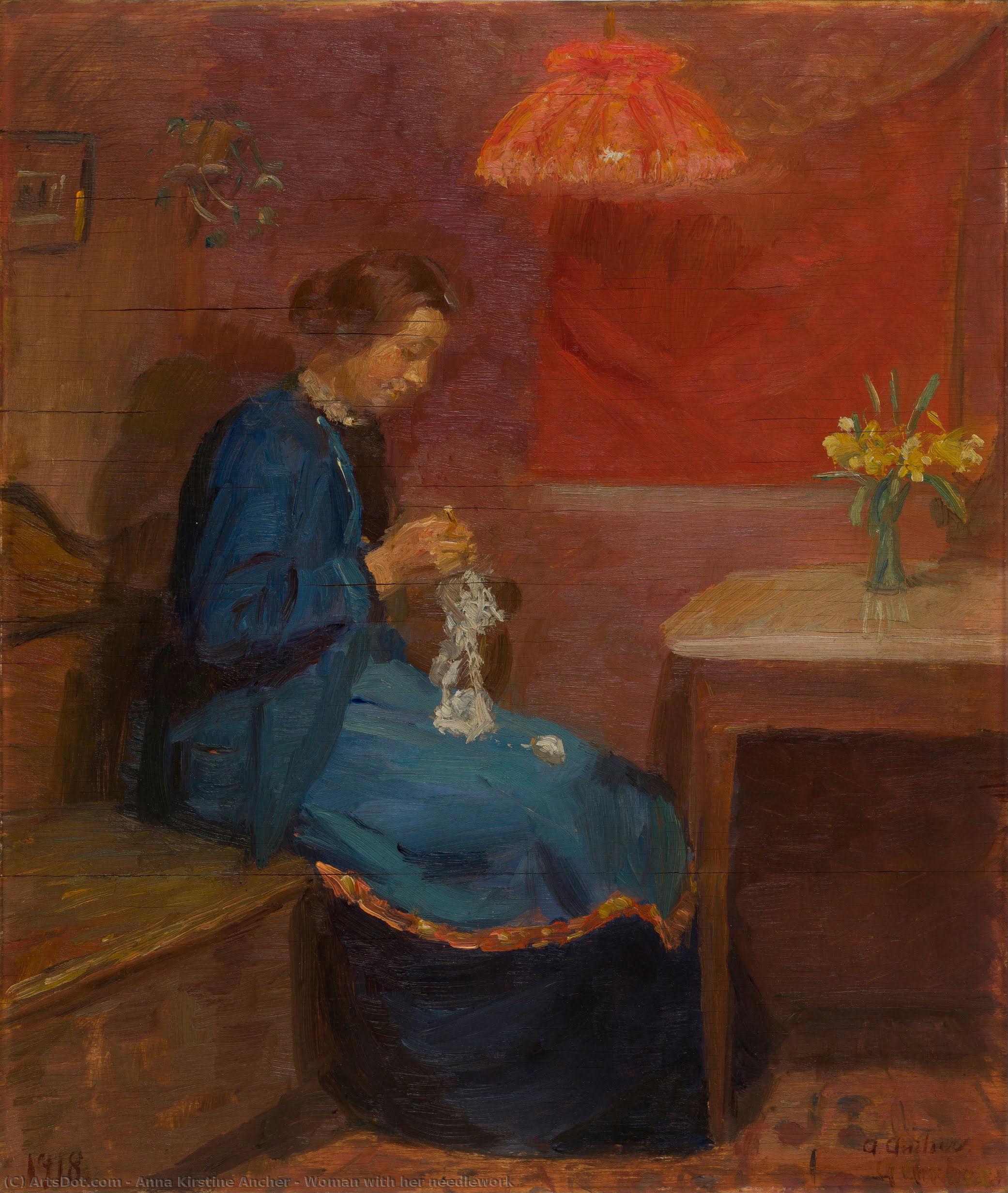
Anna Kirstine Brøndum Ancher (Anna Ancher), born in 1859 in Skagen, Denmark, was a prominent Danish Impressionist painter and sculptor. She resided in Skagen her entire life, deeply connected to the landscape and artistic community.
Otkrijte Anu Anher (1859-1935), ključnu danske impresioniste i slikarku iz Skagena. Istražite svetlostne enterijere, žanrovske scene i majstorske efekte svetlosti koji dočaravaju svakodnevni život u Danskoj.
Istražite Skagens Muzej u Danskoj – dom najveće kolekcije remek-dela Skagen slikara! Uronite u impresionizam i naturalizam među istorijskim prostorima i živopisno umetničko nasleđe.
A Portrait Steeped in Light and Community: Exploring Anna Ancher’s “Woman with Her Needlework”
The painting "Woman with Her Needlework," executed by Anna Kirstine Brøndum Ancher (1859-1935), stands as a cornerstone of Skagen Impressionism and embodies the spirit of Denmark's artistic renaissance. More than just a depiction of a woman engaged in domestic craft, it’s a window into a specific moment—and indeed, a way of life—captured with remarkable sensitivity by Ancher herself. Born in Skagen, a coastal village renowned for its dramatic sunsets and vibrant artist colony, Ancher wasn't merely observing the landscape; she was *living* within it, inextricably linked to its rhythms and traditions. This formative experience profoundly shaped her artistic output, resulting in works that resonate with an unparalleled immediacy.
The Style of Skagen Impressionism: Capturing Fleeting Moments
Ancher’s approach aligns perfectly with the tenets of Skagen Impressionism—a movement characterized by a deliberate rejection of academic conventions and a fervent pursuit of capturing the ephemeral qualities of light and atmosphere. Unlike artists striving for idealized representations, Ancher prioritized conveying the sensory experience of Skagen: the cool hues of the sea air, the warm glow emanating from the lamp illuminating the room, and crucially, the subtle nuances of color within the woman’s textile work. This technique—characterized by broken brushstrokes and layering of pigments—allowed her to achieve a luminous effect that transcends mere visual accuracy, imbuing the painting with an emotional resonance.
Technique and Material: Ancher's Delicate Brushwork
The artist employed a masterful blend of oil paints on canvas, utilizing thin glazes to build up color gradually and create depth. Her brushstrokes are remarkably delicate, meticulously blending hues to achieve subtle gradations that capture the texture of wool fibers and the diffused light filtering through the windowpane. Notably, Ancher’s palette leans heavily towards muted reds—a deliberate choice reflecting the influence of Skagen’s fiery sunsets and mirroring the warmth of domestic life within Brøndums Hotel. The careful layering of paint demonstrates a profound understanding of optical principles, elevating “Woman with Her Needlework” beyond a simple portrait into an exploration of visual perception itself.
Historical Context: The Skagen Painter Colony and Artistic Innovation
“Woman with Her Needlework” emerged during the height of the Skagen Painter colony’s influence—a period marked by unprecedented artistic experimentation and collaboration. Artists like Michael Ancher, Edvard Munch, Karl August Lorentz Kähler, and Wilhelm Hammershøi flocked to Skagen seeking inspiration from its unparalleled natural beauty and fostering a dynamic environment conducive to creative breakthroughs. This collective spirit fueled innovation across disciplines, challenging established norms and redefining the boundaries of Impressionistic painting. Ancher’s work stands as testament to this transformative era—a symbol of artistic freedom and unwavering devotion to capturing authentic experience.
Symbolism: Domestic Tranquility and Artistic Reflection
Beyond its aesthetic qualities, “Woman with Her Needlework” carries symbolic weight. The woman herself represents domestic tranquility—the quiet dignity of everyday life—while simultaneously embodying the artist’s own contemplative gaze. The needlework serves as a motif for creativity and craftsmanship, mirroring Ancher's dedication to her craft and subtly referencing the broader artistic traditions of Denmark. Furthermore, the lamp symbolizes illumination—both literal and metaphorical—representing the pursuit of knowledge and artistic insight within a community united by shared passion.
Emotional Impact: A Moment Frozen in Time
Ultimately, “Woman with Her Needlework” succeeds in conveying a profound emotional impact. The painting evokes feelings of warmth, serenity, and intimacy—capturing a fleeting moment of domestic harmony bathed in the ethereal glow of Skagen’s twilight. It invites viewers to contemplate the beauty of simplicity and the enduring power of artistic observation. Reproductions of this masterpiece offer an opportunity to bring home a piece of Danish art history—a visual reminder of a time when artists dared to embrace spontaneity and celebrate the transformative influence of place on creative expression.