A Portrait of Authority and Mystery: Anne-Louis Girodet’s "The Bard"
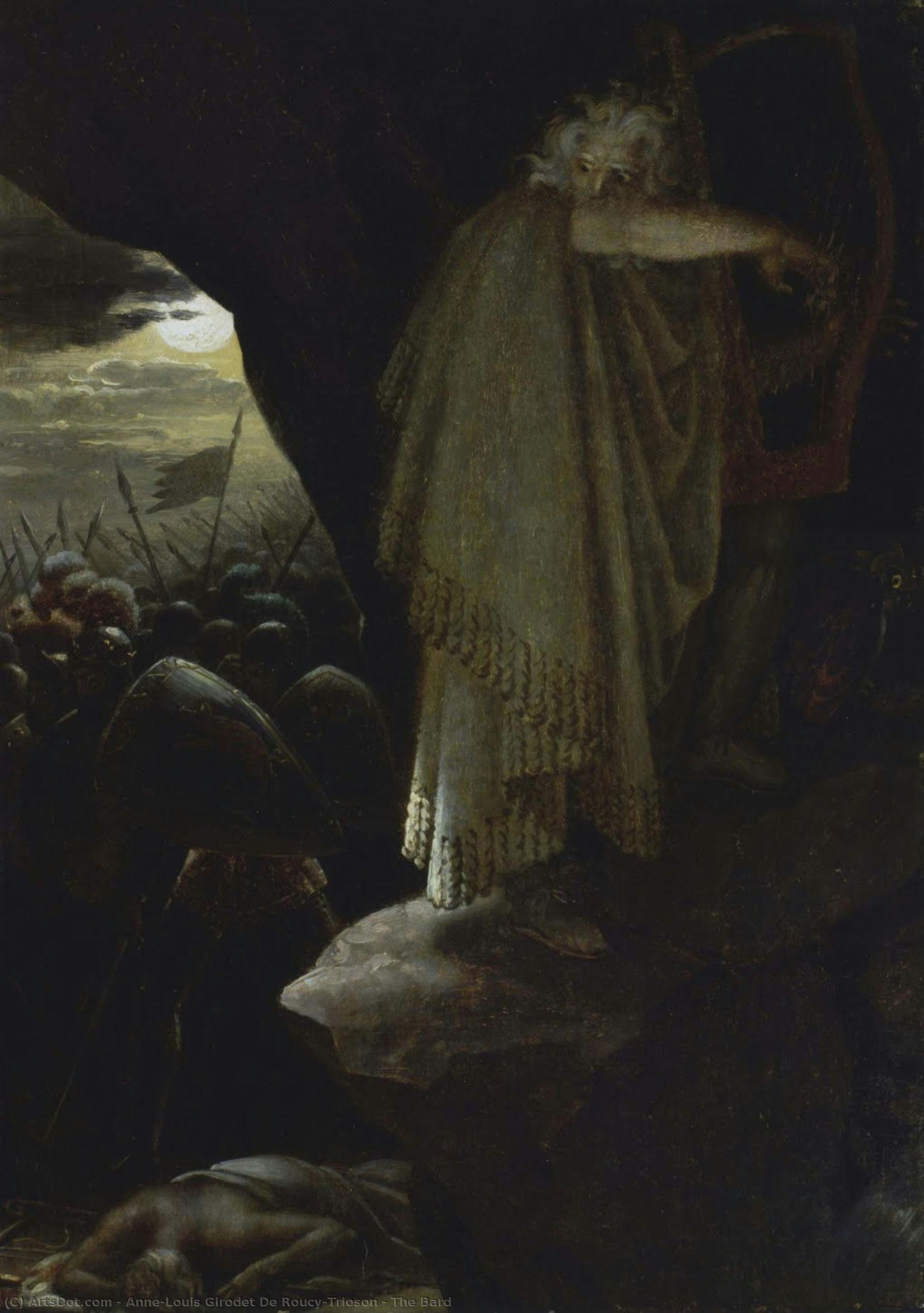
Anne-Louis Girodet's “The Bard,” a meticulously rendered portrait measuring 34 x 25 cm, offers a compelling glimpse into the artistic currents swirling between Neoclassicism and the nascent Romanticism of early 19th-century France. Executed around 1800, this work transcends a simple depiction of a man; it’s an exploration of power, contemplation, and the subtle drama inherent in human interaction. The painting captures a moment frozen in time – a figure, draped in a dark robe that suggests both religious reverence and aristocratic status, stands before a diverse group of onlookers. His gaze, directed downwards towards the assembled crowd, immediately establishes a dynamic tension, inviting us to question his intentions and the nature of their relationship.
- Subject Matter: The central figure embodies authority – a "Bard" evoking images of ancient poets and storytellers, but also hinting at a more secular leader or judge.
- Composition: Girodet masterfully employs spatial depth, with figures positioned at varying distances to create a sense of realism and narrative flow. The moonlit background adds an element of mystery and elevates the scene beyond a mere portrait.
- Technical Skill: Girodet’s meticulous attention to detail is evident in the rendering of fabrics, textures, and facial expressions – hallmarks of his rigorous Neoclassical training under Jacques-Louis David.
The Artist's Context: Girodet and the Transition
Anne-Louis Girodet de Roussy-Trioson’s life was intrinsically linked to the artistic shifts occurring in France during this period. Born in Montargis in 1767, he benefited from a privileged upbringing shaped by his father's influence as a physician and art patron. This familial connection profoundly impacted his career, leading him to adopt “Trioson” as part of his name in 1806 – a testament to the enduring bond between artist and family. Girodet’s artistic journey was marked by a fascinating tension: he received an exceptionally thorough Neoclassical education from David, yet he consistently pushed beyond the rigid formalism of the style, foreshadowing the emotional depth and subjective experience that would characterize Romanticism.
His early interest in architecture – a common pursuit for aspiring artists of the time – ultimately paved the way for his exploration of portraiture. Girodet’s ability to capture not just physical likeness but also psychological nuance is what distinguishes him as a significant artist, bridging the gap between the intellectual precision of Neoclassicism and the burgeoning emotional currents of Romanticism.
Symbolic Layers and Emotional Resonance
The painting's symbolism is rich and layered. The dark robe worn by the figure suggests authority, perhaps even divine sanction or judicial power. The moonlit background contributes to a sense of drama and mystery, transforming the scene into something almost mythical. The diverse group of onlookers – their varied activities and postures – hints at multiple interpretations and invites speculation about the purpose of the gathering. Girodet skillfully uses light and shadow to create a palpable atmosphere of tension and anticipation, drawing the viewer into the heart of the moment.
The downward gaze of the central figure is particularly compelling. It suggests both a deliberate act of addressing his audience and a profound sense of observation – perhaps even judgment. This combination of power and vulnerability creates an emotional resonance that continues to captivate viewers today.
A Hand-Painted Reproduction: Bringing "The Bard" Home
This meticulously crafted hand-painted reproduction of “The Bard” by Anne-Louis Girodet offers a unique opportunity to own a piece of art history. Each reproduction is created using traditional techniques, faithfully replicating the artist’s original style and attention to detail. The high-quality materials ensure that this artwork will retain its beauty and vibrancy for generations to come. Whether adorning a formal study, a contemporary living room, or serving as a striking statement piece in a commercial space, “The Bard” is sure to be a timeless addition to any collection.