Анибале Карачи, истакнути представник болоњске школе барока, револуционисао је сликарство синтезом флорентинског цртежа и венецијанских боја. Познат по фрескама у Палацу Фарнезе и обнови класичних идеала.
Откријте краљевски дворец Каподимонте у Напуљу! Погледајте Каравађа, Тиција и други у Италијином највећем музеју – резиденцију краља пуну уметности и историје.
Дворец Каподимонте, Напуљ, Италија, Музеј уметности, Каравађо, Тицијан, Рафаел, Барок, Краљевска колекција, Фарнеска колекција, Скулптуре, Фрескове, Архитектура, Неокласицизам, Итальянски уметност
Дворец Каподимонте
Италија
Напуљ
Дворе
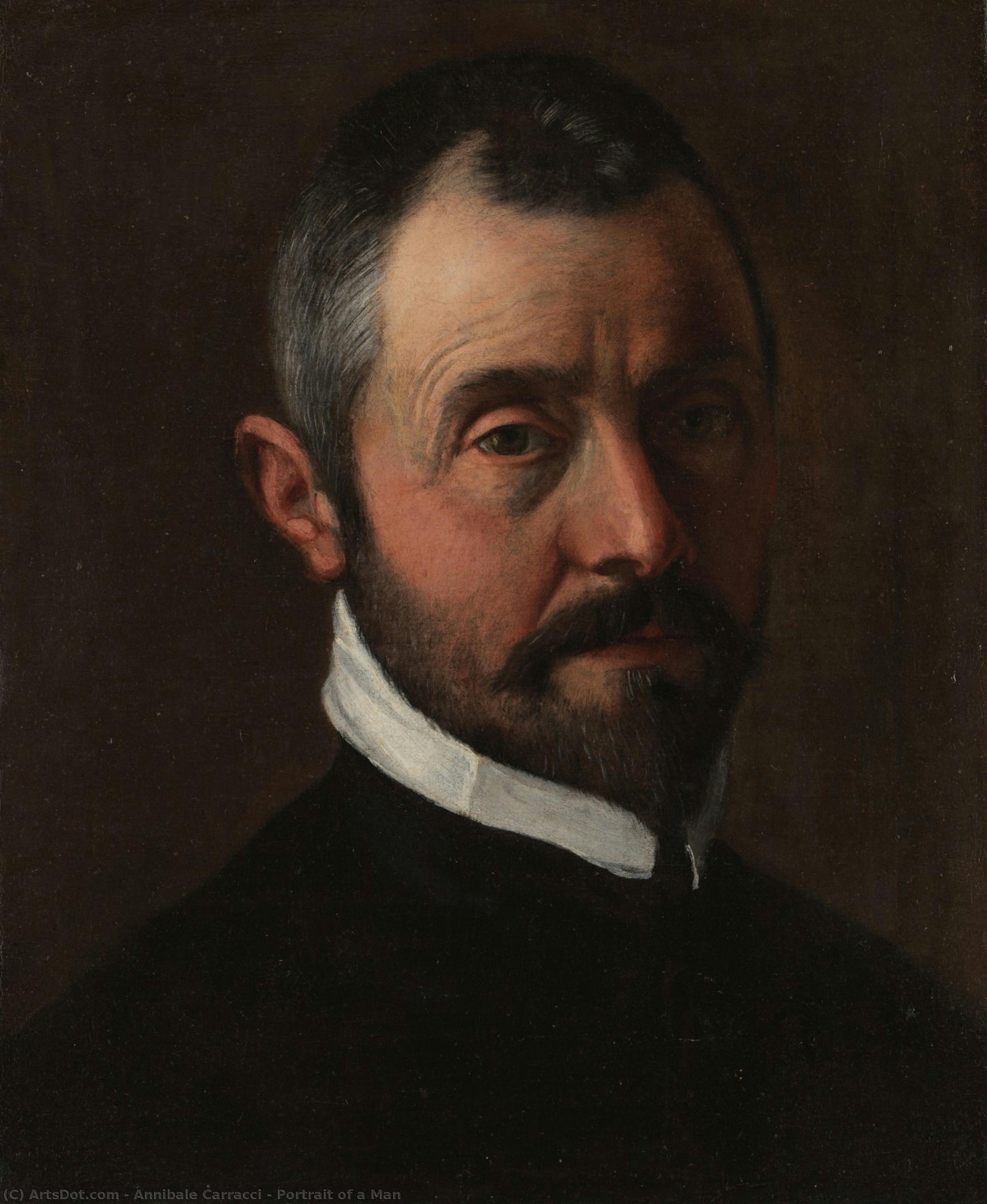
A Study in Thought: Annibale Carracci’s ‘Portrait of a Man’
Annibale Carracci's “Portrait of a Man,” painted circa 1590, is not merely a likeness; it’s a carefully constructed meditation on age, wisdom, and the quiet dignity of introspection. This anonymous bust-sized portrait, currently residing in the Palazzo dei Pitti in Florence, immediately draws the viewer into a world of subtle observation and profound psychological depth. Carracci, working within the burgeoning Baroque style, masterfully employs a technique that balances meticulous detail with an expressive dynamism rarely seen in portraits of this era.
The painting’s foundation lies in Carracci's deep understanding of classical principles, inherited from his training alongside his brothers Agostino and Ludovico at the Accademia degli Incamminati. However, unlike the idealized forms often associated with High Renaissance portraiture, Carracci introduces a palpable sense of realism – a deliberate departure that would become a hallmark of the Bolognese school. The sitter’s face is not smoothed into an unattainable perfection; instead, it bears the marks of time and experience: furrowed brows, slightly downturned lips, and the subtle graying of his hair all contribute to a compelling portrayal of a man who has contemplated life's complexities.
The Language of Brushstroke
Carracci’s technique is immediately arresting. Thick, rapid brushstrokes dominate the rendering of the collar, the nose, and most notably, the eyes – areas where he invests an extraordinary amount of attention. These aren’t simply lines defining features; they are imbued with a sense of movement and energy, suggesting a mind actively engaged in thought. The use of chiaroscuro—the dramatic interplay of light and shadow—further enhances this effect, sculpting the face and creating a palpable sense of volume. Notice how the shadows deepen around the eyes, intensifying their gaze and drawing the viewer into the sitter’s inner world.
The palette is restrained yet sophisticated, relying on earthy tones – browns, grays, and ochres—to create a muted, contemplative atmosphere. The subtle variations in color contribute to the overall sense of realism, while also hinting at the passage of time. Carracci’s masterful control of pigment allows him to capture not just the appearance of the sitter but also his character and mood.
A Window into the 1580s
“Portrait of a Man” offers a fascinating glimpse into the social and artistic landscape of the 1580s. Carracci, along with his brothers, was part of a movement that sought to revive classical ideals while simultaneously embracing a more naturalistic approach to painting. Portraits were increasingly commissioned by wealthy merchants and civic leaders, reflecting the growing importance of individual identity in this era. As documented by Annibale’s biographer Malvasia, Carracci frequently accepted commissions from local tradesmen – barbers, cobblers, even hatmakers—demonstrating a willingness to engage with the diverse clientele of Bologna.
The painting's provenance, tracing back to the Palazzo Magnani in Bologna and later residing at the Palazzo dei Pitti, speaks to its enduring appeal. It’s a testament to Carracci’s skill and his ability to capture not just a likeness but also the essence of human character.
Symbolism and Emotional Resonance
Beyond its technical brilliance, “Portrait of a Man” resonates with profound emotional depth. The sitter's pensive gaze invites speculation about his thoughts and experiences. The slight furrow in his brow suggests a man burdened by contemplation, perhaps wrestling with philosophical questions or reflecting on the challenges of life. There’s an inherent melancholy to the portrait—a sense of quiet dignity tinged with sadness—that transcends mere representation.
Ultimately, “Portrait of a Man” is more than just a painting; it's a powerful meditation on the human condition – a timeless exploration of thought, experience, and the enduring beauty of introspection. It remains a captivating work, inviting viewers to engage with its subtle complexities and contemplate the mysteries of the human soul.