A Baroque Revelation: The Divine Radiance of Annibale Carracci
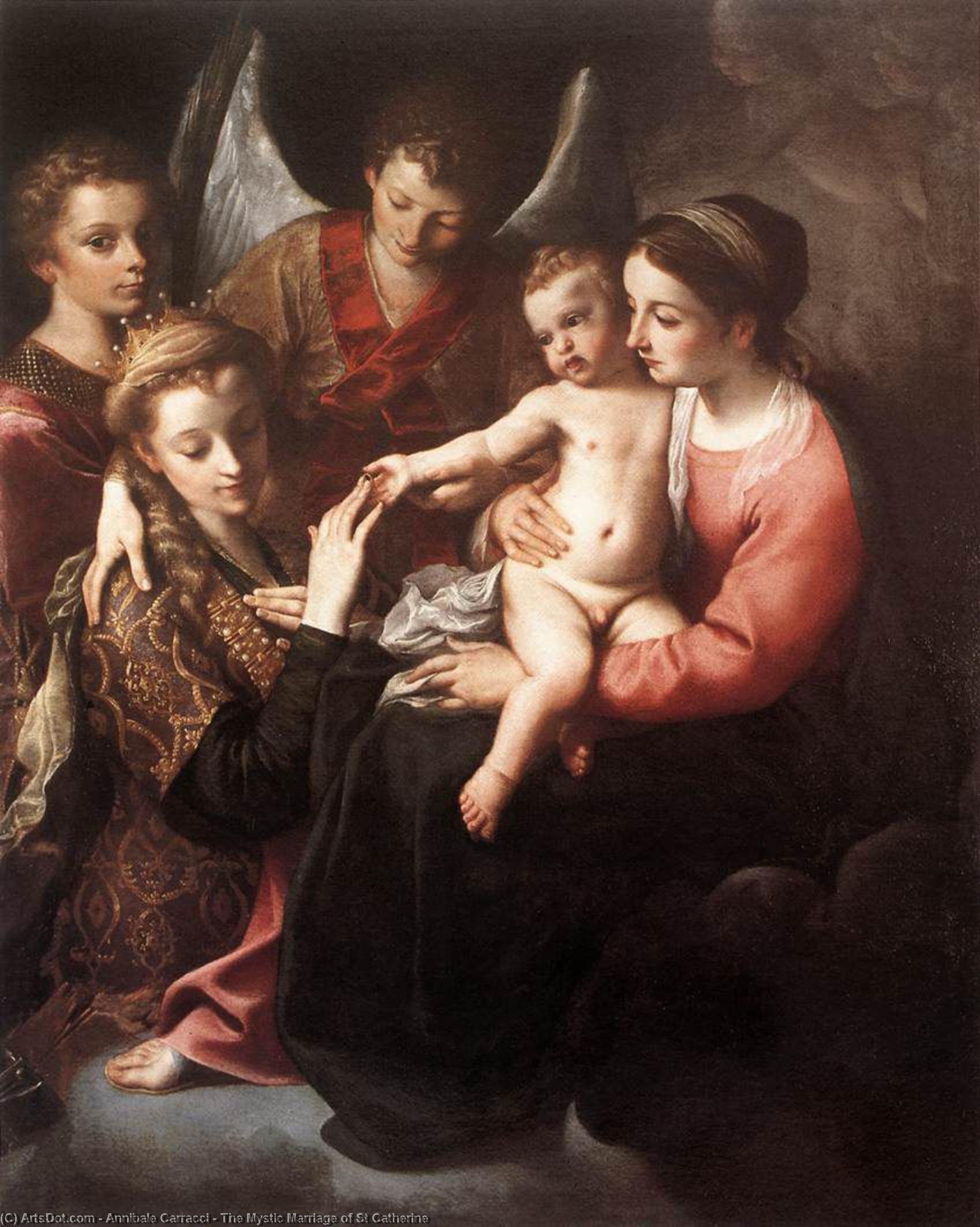
In the quiet corridors of the Museo Nazionale di Capodimonte in Naples, there exists a window into a moment of profound celestial intimacy. Annibale Carracci’s The Mystic Marriage of St Catherine, completed around 1585, is far more than a mere religious tableau; it is a breathtaking cornerstone of the Bolognese Baroque that captures the very essence of divine grace. As viewers approach this monumental canvas, they are not simply observing a historical event but are being drawn into a sacred circle where the boundaries between the earthly and the divine begin to dissolve. The painting serves as a masterful testament to Carracci’s ambition to breathe new life into classical ideals, replacing the rigid, often detached Mannerist style of his predecessors with a vibrant, breathing naturalism that resonates through the centuries.
The visual language of the piece is defined by Carracci’s unparalleled command of chiaroscuro. By utilizing a stark, velvety black background, the artist creates an infinite void that pushes the luminous figures toward the spectator, granting them an almost sculptural presence. This dramatic interplay between deep shadow and brilliant light does not merely provide depth; it directs the soul's eye toward the radiant infant Jesus, who sits at the heart of the composition. Through the meticulous application of thin oil glazes, Carracci achieves a tonal accuracy that captures the soft glow of skin and the rich textures of regal fabrics, reminiscent of the subtle nuances perfected by Leonardo da Vinci. For the discerning collector or interior designer, this technique offers a sense of profound drama and sophisticated elegance, making it a centerpiece capable of commanding any room with its quiet yet powerful intensity.
Symbolism and the Tapestry of Faith
Beyond its technical brilliance, the painting is a complex tapestry of humanist thought and Christian iconography. Every figure within this sacred assembly serves a specific purpose in narrating the themes of devotion and redemption. St Catherine, draped in attire that speaks of her noble spirit, receives the Christ child in a gesture that signifies her spiritual union with the divine. Surrounding her, the presence of figures such as Mary Magdalene, Saint Jerome, and Saint Augustine adds layers of theological depth—representing repentance, monastic piety, and intellectual contemplation, respectively. This careful arrangement of saints creates a hierarchy of holiness that invites the viewer to contemplate the universal human aspiration toward spiritual purity.
The emotional impact of the work lies in its ability to evoke a sense of profound connection and tenderness. Despite the grand scale of the narrative, there is an undeniable intimacy in the way the figures interact; the gazes are filled with reverence, and the gestures are imbued with a gentle, nurturing love. It is this balance of monumental scale and human emotion that makes Carracci’s work so enduringly relevant. For those seeking to adorn a space with art that inspires reflection and peace, a high-quality reproduction of this masterpiece offers an opportunity to bring a piece of the Italian Renaissance's twilight and the Baroque's dawn into the modern home, fostering an atmosphere of timeless beauty and spiritual grace.