A Divine Struggle Captured in Copper
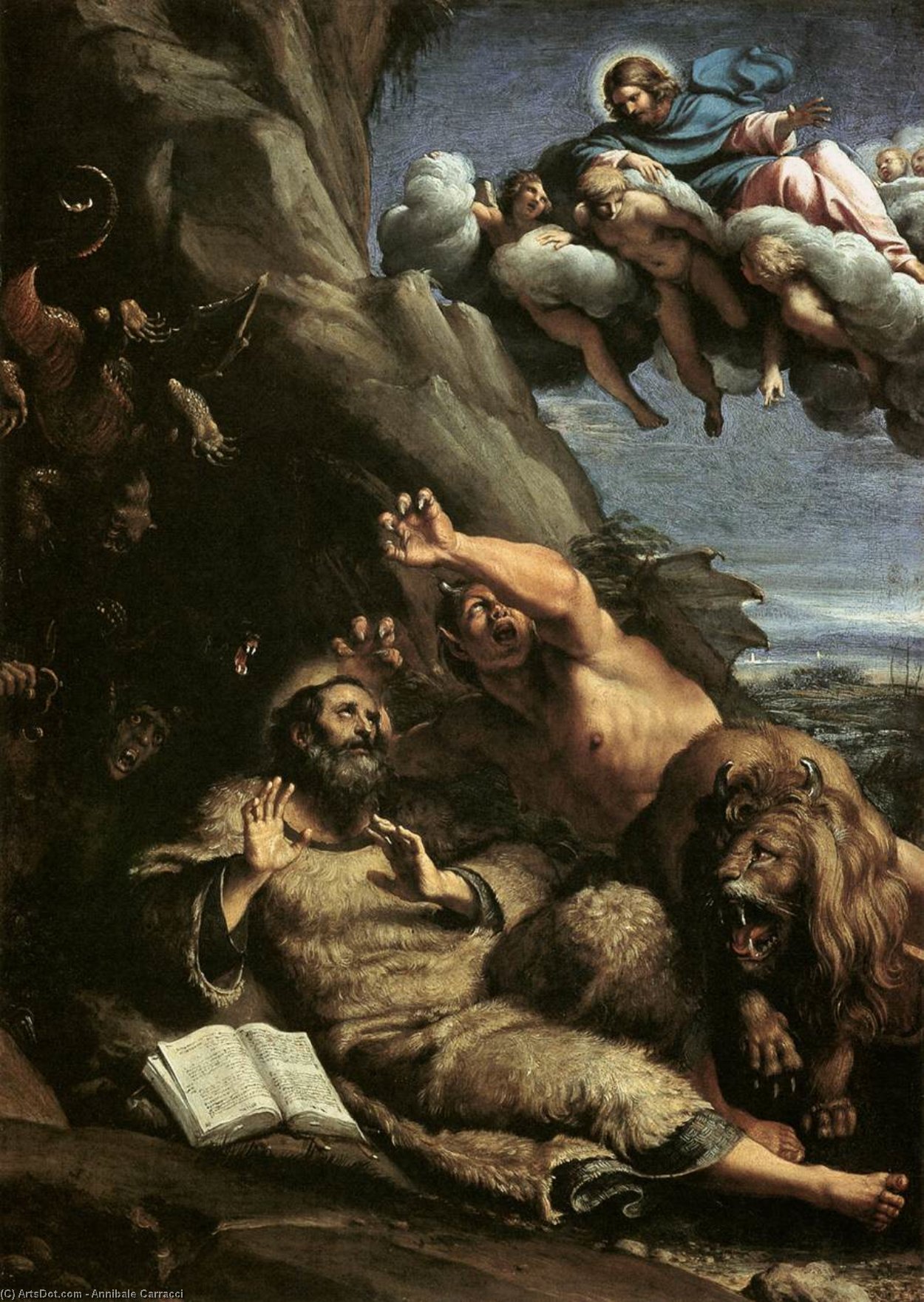
In the quiet intensity of Annibale Carracci’s 1597 masterpiece, The Temptation of St Anthony Abbot, we are invited into a realm where the boundaries between the earthly and the supernatural dissolve. This exquisite oil painting on copper serves as a profound window into the soul of the Baroque era, capturing a moment of spiritual crisis with unparalleled dramatic flair. At its heart lies the venerable St. and Anthony, depicted in a posture of profound vulnerability; he reclines upon his stomach, his hands clasped in fervent prayer, embodying the very essence of humility. Yet, this stillness is far from peaceful. The canvas vibrates with an unseen tension as the saint finds himself besieged by the insidious whispers of the demonic. Carracci does not merely paint a scene; he orchestrates a psychological battlefield where the light of faith clashes against the encroaching shadows of temptation.
The brilliance of this work lies in its masterful use of chiaroscuro, a technique that allows Carracci to sculpt form out of darkness. The dramatic interplay of light and shadow does more than provide depth; it serves as a narrative engine, pulling the viewer’s gaze through the fragmented apparitions of the devil. Rather than presenting a single, monolithic monster, Carracci employs a more sophisticated, unsettling approach. Grotesque faces emerge from the murky recesses of the background, and spectral, demonic hands reach out from the gloom to grasp at the saint's resolve. This fragmentation mirrors the internal chaos of St. Anthony’s struggle, making the viewer an active participant in his spiritual trial. Above this earthly turmoil, however, the presence of celestial beings offers a glimmer of hope, their soft, luminous forms providing a divine counterpoint to the jagged, terrifying energy of the underworld.
The Renaissance Revival and Baroque Dynamism
To understand the profound impact of this painting, one must look to the revolutionary spirit of the Bolognese Academy. Annibale Carracci, alongside his brother Agostino and cousin Ludovico, sought to breathe new life into Italian art by rejecting the artificiality of Mannerism. They looked backward to the classical grandeur of Raphael and the naturalism of the High Renaissance, yet they pushed these influences forward into a more visceral, emotional reality. In The Temptation of St Anthony Abbot, we see this synthesis perfected. The meticulous rendering of textures—the weathered, rugged skin of the saint contrasted against the ethereal, velvety drapery of the angels—demonstrates a technical virtuosity that celebrates the physical world even while depicting the metaphysical.
For the discerning collector or interior designer, this piece offers much more than mere decoration; it provides a focal point of intellectual and emotional depth. The painting’s intimate scale, originally executed on copper, lends it an extraordinary jewel-like quality, where every brushstroke feels intentional and potent. Whether placed in a curated gallery setting or as a commanding statement piece within a sophisticated study, the work commands attention through its narrative complexity. It is a testament to the enduring power of the Baroque style—a style that does not just ask to be seen, but demands to be felt, offering a timeless meditation on the eternal struggle between light and dark, virtue and vice.