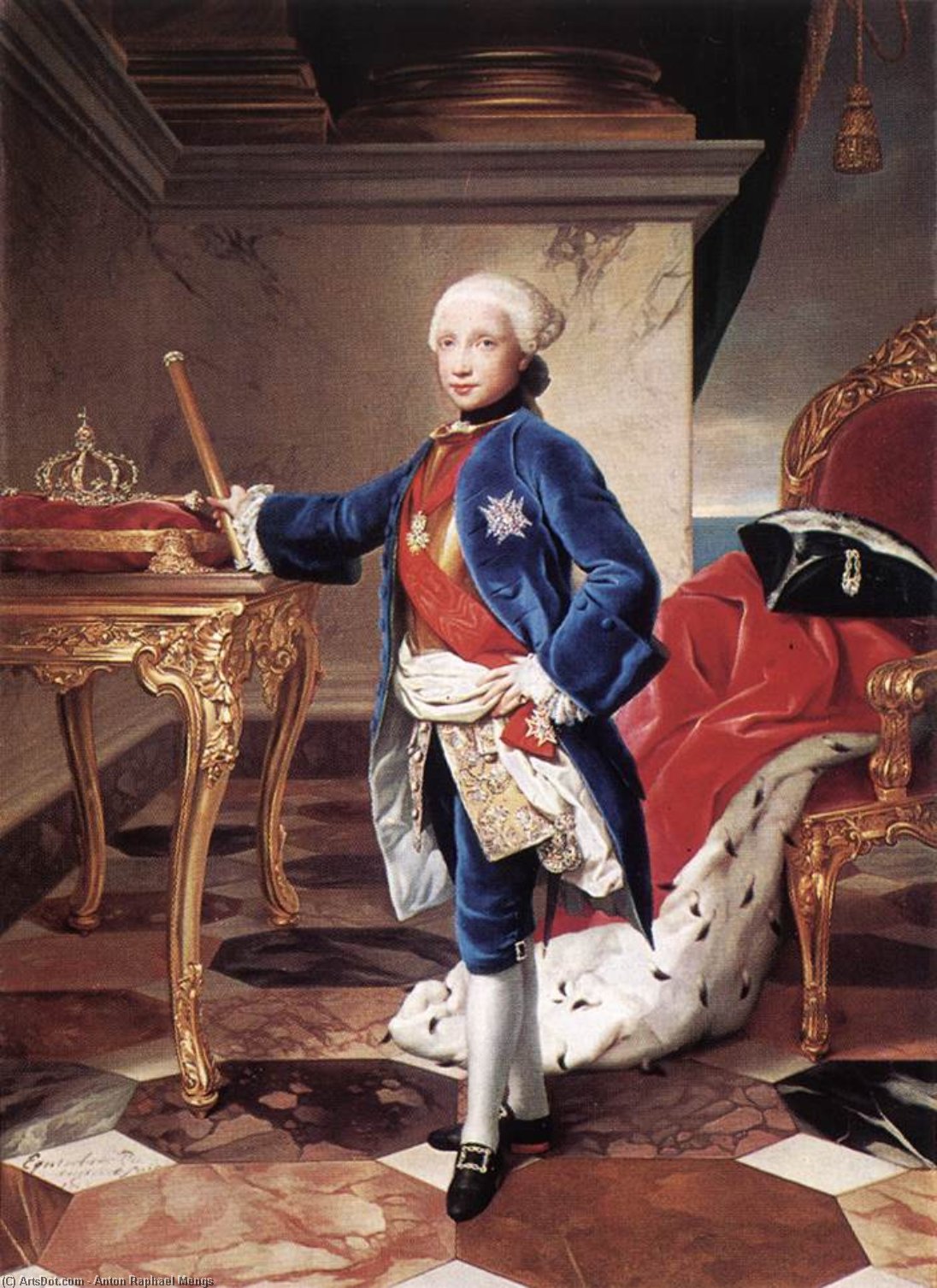
Ferdinand IV, King of Naples – A NeoClassical Portrait Reflecting Royal Dignity
Anton Raphael Mengs’ “Ferdinand IV, King of Naples” stands as a testament to the burgeoning Neoclassical movement in 18th-century art—a deliberate return to the grandeur and clarity championed by artists like Michelangelo Buonarroti and Raffaello Sanzio da Urbino. Completed in 1760 at the behest of Maria Amalia of Saxony, Ferdinand IV’s mother, this monumental canvas embodies not merely a likeness of the young king but also an assertion of royal authority and virtue.
- Subject Matter: The portrait depicts Ferdinand IV, heir to the throne of Naples, presented in a dignified stance alongside a chair adorned with a crimson cushion. This deliberate positioning underscores his role as ruler—seated upon power, yet radiating composure.
- Style & Technique: Mengs skillfully employs oil paint on canvas, utilizing meticulous detail and tonal gradation to achieve remarkable realism. The artist’s mastery is evident in the subtle rendering of textures – from the velvet upholstery of the chair to the folds of Ferdinand’s uniform—demonstrating a commitment to classical ideals of observation and representation.
- Historical Context: Created during a period of significant political upheaval, “Ferdinand IV” reflects the anxieties surrounding succession and the desire for stability within the Bourbon monarchy. The painting served as a visual declaration of Ferdinand’s legitimacy—a symbol of continuity amidst turbulent times.
Symbolism & Composition – Echoes of Antiquity
Mengs' compositional choices are infused with symbolism rooted in classical tradition. The central placement of Ferdinand IV emphasizes his importance as the bearer of royal lineage and responsibility. The chair itself—a recurring motif in Neoclassical art—represents dignity, majesty, and the seat of governance. Furthermore, the cane held by Ferdinand symbolizes wisdom and experience – qualities deemed essential for a monarch.
- Color Palette: Dominant hues of blue and red contribute to the portrait’s solemn atmosphere. Blue conveys trustworthiness and nobility, while crimson embodies royal power and passion—creating a harmonious balance that reinforces the subject's status.
- Lighting & Shadow: Mengs utilizes chiaroscuro – dramatic contrasts between light and shadow – to sculpt Ferdinand IV’s form and imbue the scene with depth and emotion. This technique harkens back to Renaissance masters who employed similar methods to convey psychological realism.
A Legacy of Artistic Influence
"Ferdinand IV" is more than just a portrait; it's a cornerstone of Neoclassical art’s revival—a reaction against the frivolity of Rococo and an affirmation of humanist values. Mengs’ work profoundly impacted subsequent generations of artists, notably Johann Joachim Winckelmann, who championed the pursuit of ideal beauty and timeless form. This painting continues to inspire admiration for its technical brilliance and its enduring representation of royal dignity.
- Location: Currently housed at Museo del Prado (Madrid, Spain), “Ferdinand IV” remains accessible to scholars and art enthusiasts alike—a tangible connection to a pivotal moment in European artistic history.
- Reproductions: High-quality reproductions of Mengs’ masterpiece offer collectors and interior designers the opportunity to experience the grandeur and sophistication of Neoclassical style within their own homes.