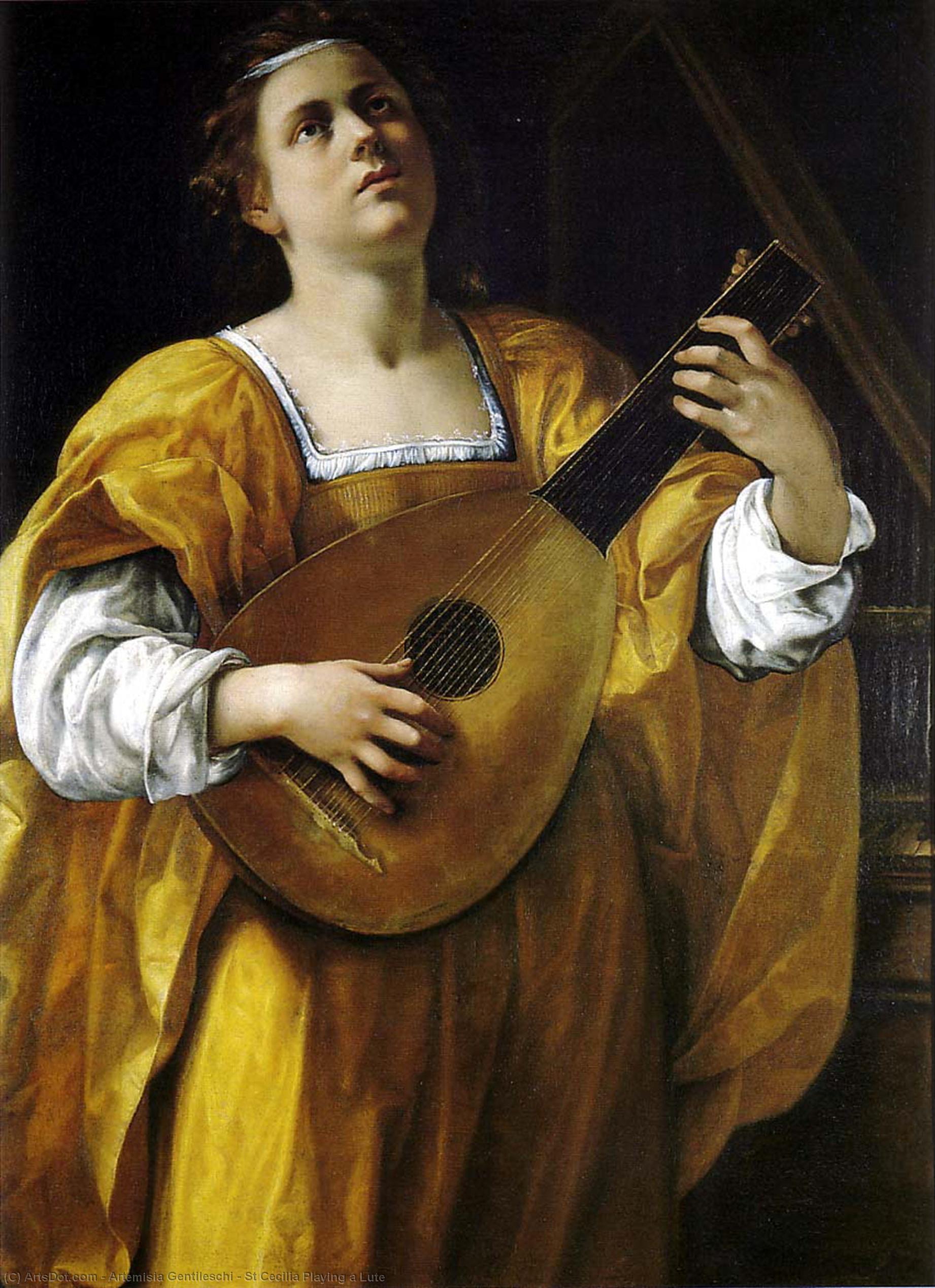
A Portrait of Faith and Artistic Brilliance: Artemisia Gentileschi’s St Cecilia
Artemisia Gentileschi’s “St Cecilia Playing a Lute,” painted circa 1620, stands as a testament to the extraordinary achievements possible for women in the artistic landscape of Baroque Rome. More than just a depiction of Saint Cecilia—a revered martyr venerated for her piety and musical devotion—the painting embodies a profound exploration of femininity, spirituality, and masterful technique that continues to captivate audiences centuries later.
- Subject Matter: The artwork portrays St Cecilia, the patron saint of musicians, seated gracefully at an organ while delicately holding a lute. This juxtaposition speaks volumes about the sanctity of artistic pursuits within religious belief during the period.
- Style and Technique: Gentileschi’s signature style—characterized by dramatic chiaroscuro—is vividly evident in “St Cecilia.” Caravaggio’s influence is palpable, particularly in the masterful use of light to sculpt the figure's form and create a sense of theatrical depth. The artist skillfully employs tenebrism, highlighting Cecilia’s face and hands while plunging the background into darkness, amplifying the emotional intensity of the scene.
- Historical Context: Created during a time when artistic patronage was largely dominated by male figures, Gentileschi's success defied convention. Her work reflects the broader societal shifts occurring in Rome—a burgeoning interest in humanist ideals alongside enduring religious fervor—and underscores her determination to assert herself as a serious artist within a restrictive environment.
- Symbolism: The lute itself symbolizes musical harmony and divine inspiration, reflecting Cecilia’s role as protector of musicians. The organ represents the sacred realm and reinforces the saint's connection to God. Furthermore, Cecilia’s serene expression conveys inner peace and spiritual contemplation—a powerful visual representation of faith.
Provenance indicates that “St Cecilia” began its journey in Alessandro Biffi’s collection by 1637 and subsequently passed through the Spada family archives. Its attribution has been debated over time, with scholars suggesting connections to Titian, Angelo Caroselli, Giovanni Baglione and Rutilio Manetti before settling on Artemisia Gentileschi as its rightful creator in 1911.
Today, “St Cecilia Playing a Lute” resides in the Galleria Spada in Rome, offering visitors an unparalleled glimpse into the artistic genius of Artemisia Gentileschi. Its enduring appeal stems from its ability to convey both intellectual contemplation and visceral emotion—a remarkable achievement that cements its place as one of Baroque art’s most iconic masterpieces.