The Echoes of Stone: Unveiling the Majesty of Ehecatl
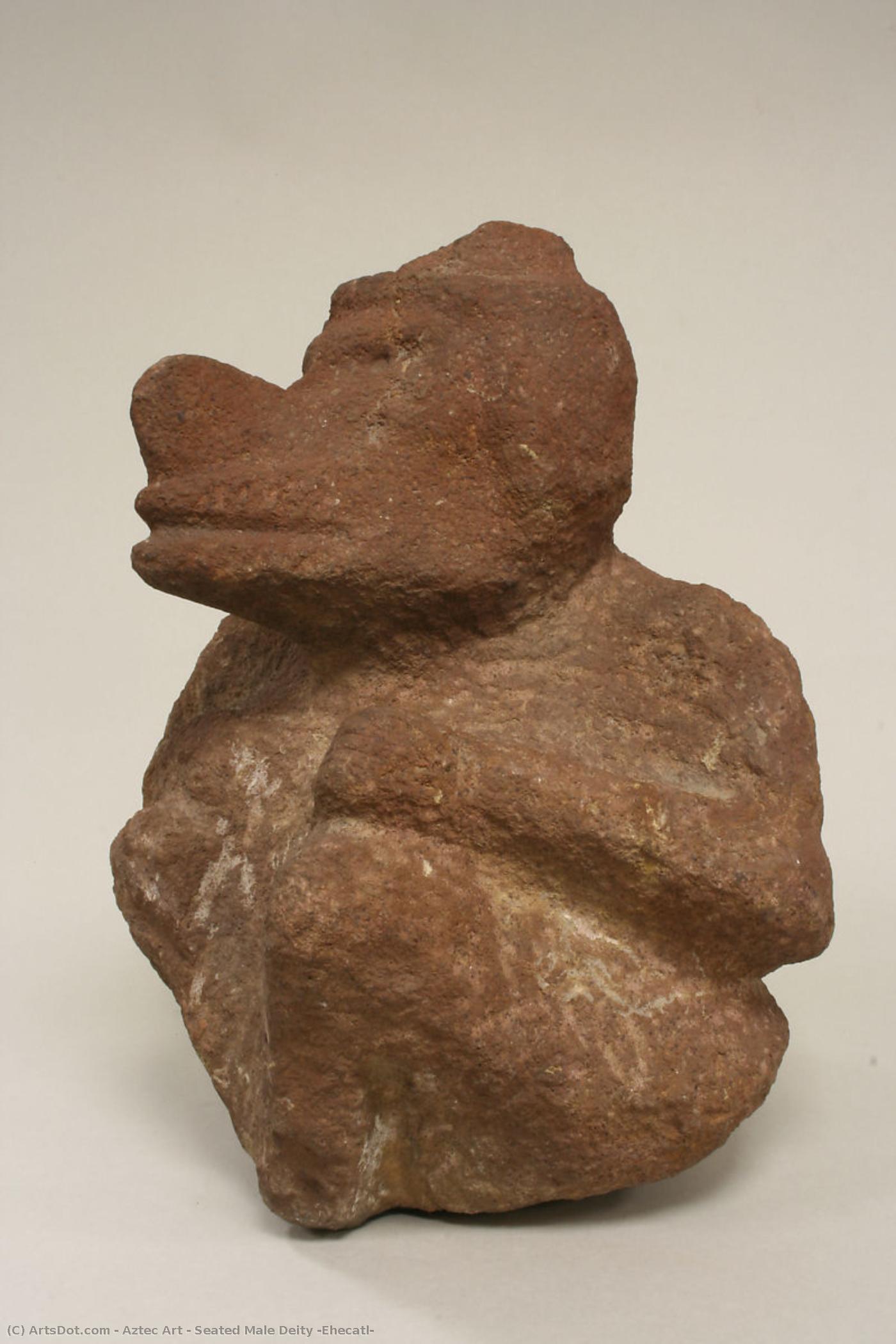
Standing before this remarkable sculpture, carved from volcanic stone or terracotta nearly six centuries ago, is akin to stepping back in time – directly into the heart of the Aztec Empire. The “Seated Male Deity (Ehecatl),” a masterpiece of Mexica artistry, transcends mere representation; it’s a potent symbol of power, spirituality, and the intricate cosmology that governed this sophisticated civilization. More than just a portrait of a god, it embodies the very essence of Aztec belief, offering a glimpse into their understanding of the world and their place within it.
The sculpture depicts Ehecatl, a figure deeply intertwined with the rhythms of existence. Often translated as “Wind God,” Ehecatl was far more than just a deity associated with breezes; he represented breath itself – the life force that animated all things. His distinctive features—a duck-like bill, prominent ears, and a serene yet commanding expression—are instantly recognizable hallmarks of Aztec artistic style. The careful detailing, particularly in the hands resting on his knees, speaks to an appreciation for human form and a desire to capture not just likeness but also character.
A Symphony of Form and Texture
The sculpture’s power lies not only in its subject matter but also in the masterful execution of its technique. The artist skillfully employed subtractive carving, patiently removing material from the stone to reveal the figure within. This process is evident in the pronounced texture of the surface – a network of ridges and valleys that speaks to the hands of a skilled artisan and the raw materiality of the medium. The use of earthy tones—ranging from reddish-browns to beiges—creates a sense of age and authenticity, as if the sculpture has weathered centuries of exposure to the elements.
Close examination reveals subtle nuances in the carving: the gentle curve of the torso, the delicate lines defining the facial features, and the carefully rendered folds of the loincloth. These details demonstrate an acute understanding of anatomy and a commitment to capturing both the physical form and the spiritual essence of Ehecatl. The composition is remarkably balanced, with the figure occupying a central position within the frame, drawing the viewer’s eye directly to its serene countenance.
Symbolism Woven into Stone
Beyond its aesthetic qualities, the sculpture is rich in symbolic meaning. The pose itself—seated and contemplative—suggests authority and wisdom. Ehecatl's hands resting on his knees convey a sense of calm control, reflecting the god’s dominion over the winds and breath. The presence of the duck-like bill has been interpreted as a symbol of communication – perhaps representing the ability to speak with the gods or to carry messages between worlds. The sculpture is also believed to be connected to the Aztec calendar system, with certain elements potentially referencing specific dates or cycles.
Furthermore, the sculpture’s creation reflects the Aztecs' deep connection to their environment and their reverence for nature. Volcanic stone was a readily available resource in central Mexico, and its use underscores the importance of natural materials in Aztec art and architecture. The sculpture serves as a tangible reminder of the empire’s reliance on the earth’s bounty and its respect for the forces that shaped their world.
A Legacy Enduring Through Time
Created during the final years of the Aztec Empire, around 1521, this sculpture offers a poignant glimpse into a civilization on the brink of collapse. The Spanish conquest would soon shatter the empire’s political and cultural foundations, but the artistic legacy of the Aztecs—embodied in works like this—continues to resonate today. The “Seated Male Deity (Ehecatl)” stands as a testament to the ingenuity, artistry, and spiritual depth of the Mexica people – a powerful reminder of their enduring influence on Mesoamerican culture.