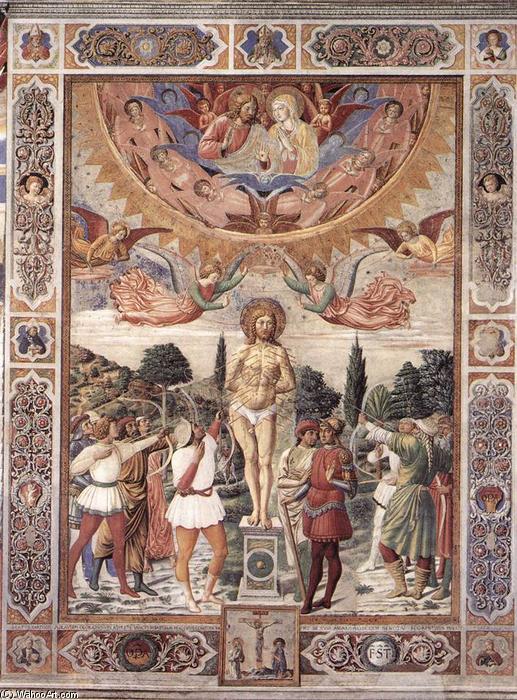
The Martyrdom of St Sebastian: A Symphony of Color and Faith
Benozzo Gozzoli’s “Martyrdom of St Sebastian,” completed in 1465, stands as a cornerstone of Early Renaissance art—a testament to Florence’s artistic fervor during the humanist revival. Currently residing within the Collegiate Church of San Gimignano, Italy, this monumental tempera on panel painting transcends mere depiction; it embodies a profound meditation on suffering and divine grace.
Style & Technique: Gozzoli masterfully blends elements of International Gothic style with burgeoning Renaissance ideals. The meticulous detail evident in every brushstroke speaks to the artist’s unwavering commitment to realism, yet simultaneously imbues the scene with an ethereal luminescence characteristic of the period. Observe how Gozzoli utilizes vibrant hues—particularly reds and golds—to convey both passion and sanctity. His technique is characterized by layering pigments thinly onto the panel surface, creating a remarkable depth and luminosity that captures the essence of Florentine artistic innovation.
Historical Context: Painted during Lorenzo Medici’s reign, “Martyrdom of St Sebastian” reflects the broader cultural landscape of Renaissance Italy. The patronage of the Medicis fueled artistic experimentation and encouraged artists to explore themes rooted in Christian piety—a response to the anxieties surrounding papal authority and religious reform. Gozzoli's work aligns perfectly with the humanist movement’s emphasis on human dignity and moral virtue, presenting St Sebastian as a symbol of resilience and unwavering faith.
Symbolism & Narrative: The painting recounts the gruesome martyrdom of Saint Sebastian—a Roman soldier miraculously healed from plague after being pierced by arrows – a poignant reminder of Christian sacrifice. Surrounded by angels and populated by figures representing various social strata, Gozzoli’s composition is deliberately complex. The radiant light emanating from the upper register symbolizes divine grace illuminating earthly suffering. The depiction of St Sebastian himself embodies humility and acceptance of God's will—a powerful visual representation of spiritual fortitude.
Emotional Impact: “Martyrdom of St Sebastian” continues to resonate with viewers centuries later due to its masterful execution and evocative symbolism. Gozzoli’s ability to convey emotion through color and gesture elevates the artwork beyond mere historical record, inviting contemplation on themes of faith, suffering, and redemption. It serves as an enduring emblem of Renaissance artistic achievement—a celebration of beauty intertwined with solemn spiritual reflection.
Further Exploration: For a deeper understanding of Benozzo Gozzoli’s oeuvre and the broader context of Early Renaissance art, visit WGA or explore WikiArt for high-quality reproductions and scholarly analyses.