A Moment Frozen in Crimson: The Soul of Meninsky’s Portraiture
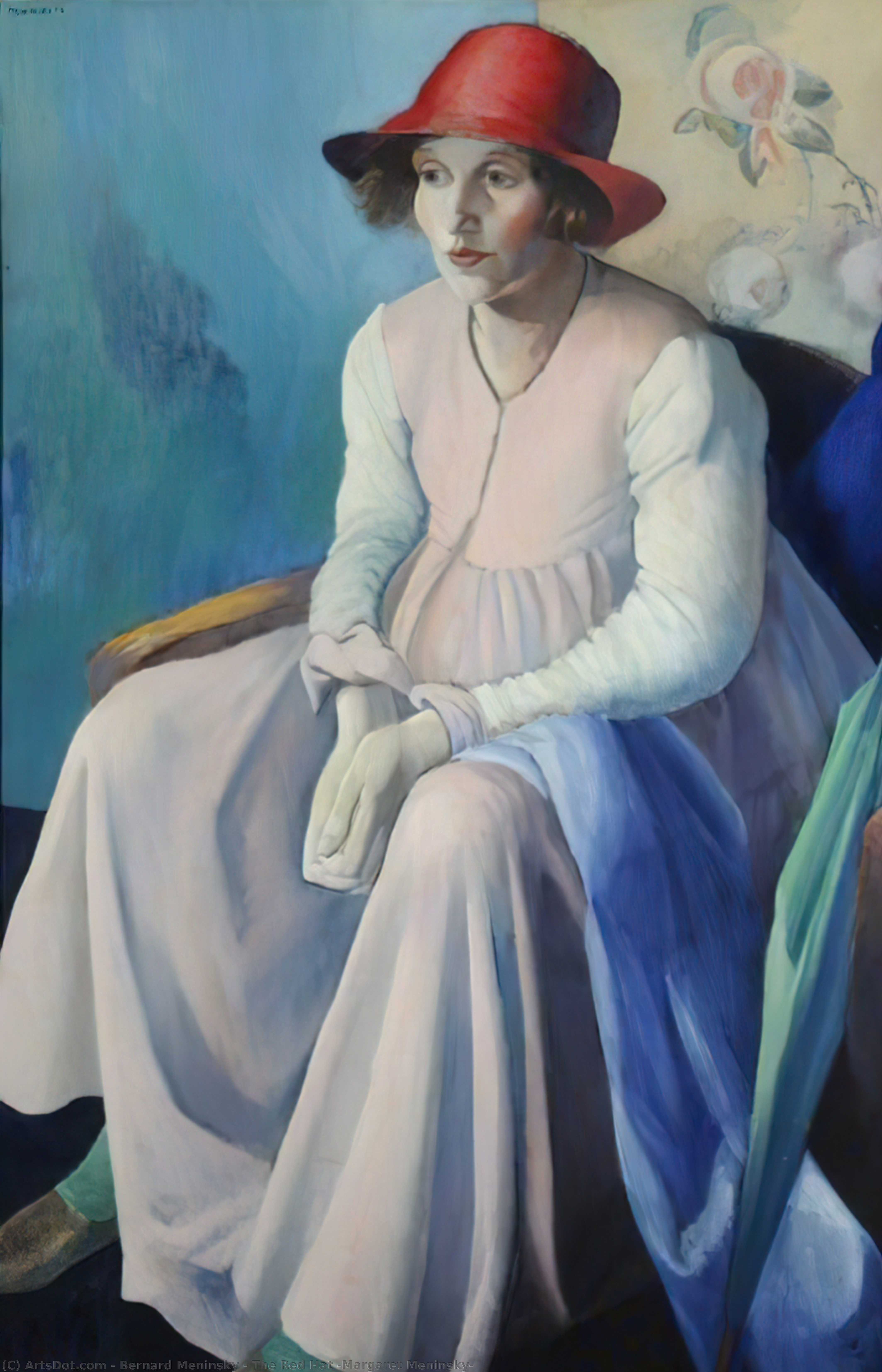
In the quiet intimacy of The Red Hat, painted in 1919, we are invited into a world that feels both profoundly personal and timelessly poised. Bernard Meninsky, an artist whose life was shaped by the shifting shadows of early 20th-century Europe, captures here more than just a seated figure; he captures a breath held in time. The focal point is a woman, her presence commanding yet contemplative, draped in the striking brilliance of a red hat that serves as the painting's emotional and visual heartbeat. As she gazes downward at something cradled in her hands, there is an unmistakable sense of introspection, a private moment of reflection that pulls the viewer into her silent dialogue with herself.
The composition is masterfully layered, creating a sense of depth that extends far beyond the primary subject. While the woman occupies the heart of the frame, the background breathes with the subtle presence of others—a standing figure and a seated companion—suggesting a larger social tapestry from which this moment has been momentarily carved out. A delicate bird flutters near the upper periphery, adding a touch of ephemeral life, while a decorative vase on the left anchors the scene with a sense of domestic permanence. This interplay between the singular focus of the woman and the soft, receding details of her surroundings creates a rich, atmospheric environment that feels lived-in and authentic.
Technique and the Post-Impressionist Legacy
Executed during the transformative years following the Great War, this work reflects the nuanced influence of Post-Impressionism. Meninsky avoids the fractured geometry of Cubism, opting instead for a style that prioritizes form, light, and emotional resonance. The technique is characterized by a deliberate use of color and texture; the vibrant crimson of the hat is not merely a pigment but a structural element that directs the eye and sets the tonal temperature of the entire piece. Through careful brushwork, Meninsky achieves a tactile quality, where the weight of the fabric and the softness of the skin feel almost tangible to the observer.
For the discerning collector or interior designer, this painting offers a sophisticated balance of bold color and muted subtlety. The way the light interacts with the various elements of the composition—the sheen on the vase, the soft contours of the figures in the background—demonstrates a mastery of chiaroscuro that brings a sense of drama to any space. It is a piece that does not merely hang on a wall; it commands the room, providing a focal point that invites long periods of study and quiet admiration.
An Eternal Elegance for Modern Interiors
Beyond its historical significance, The Red Hat possesses an enduring aesthetic appeal that transcends the era of its creation. It embodies a sense of "quiet luxury"—a sophisticated elegance that complements both classical and contemporary interior design schemes. Whether placed in a sunlit gallery or a moody, library-style study, the painting’s rich palette and narrative depth provide a layer of intellectual and emotional sophistication.
Owning a high-quality hand-painted reproduction of this masterpiece allows one to bring the poignant beauty of Meninsky’s vision into the modern home. It serves as a bridge to the past, offering a window into the soulful, emotive art of 1919. For those seeking to curate a collection that speaks of history, human connection, and the timeless allure of color, this work stands as an incomparable choice, promising to inspire anyone who pauses to look upon its crimson crown.