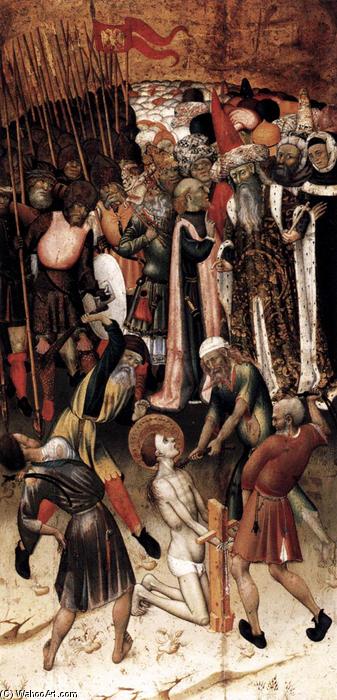
The
Bernat Martorell painting,
The Flagellation of St George, is a stunning example of Gothic art from the 15th century. Created in 1435, this wooden panel painting measures 107 x 53 cm and is now housed in the
Musée du Louvre in Paris, France.
Artistic Style and Technique
The painting showcases
Bernat Martorell's mastery of the International Gothic style, characterized by its use of vivid colors, intricate details, and emotive expressions. The scene depicts the flagellation of St George, a saint revered for his bravery and martyrdom. The artist's use of
oil painting techniques creates a sense of depth and luminosity, drawing the viewer into the dramatic scene.
Historical Significance
The Flagellation of St George is not only a remarkable work of art but also an important historical artifact. It provides insight into the artistic and cultural developments of 15th-century Catalonia, where
Bernat Martorell was a leading figure. The painting's style and themes reflect the influence of Flemish and Italian art on Catalan artists during this period.
- The painting is characterized by its use of symbolism and allegory, adding layers of meaning to the scene.
- The artist's attention to detail and use of color create a sense of tension and drama, drawing the viewer into the scene.
- Bernat Martorell's work had a significant impact on the development of Catalan art, influencing future generations of artists.
ArtsDot.com offers handmade oil painting reproductions of
The Flagellation of St George, allowing art lovers to own a piece of history. For more information on
Bernat Martorell and his works, visit
ArtsDot.com or
Wikipedia.
The
Musée du Louvre is one of the world's most famous museums, housing an impressive collection of art and artifacts from around the globe. To learn more about the museum and its collections, visit
Wikipedia.