A Symphony of Geometry: Rediscovering Noise of a Fish
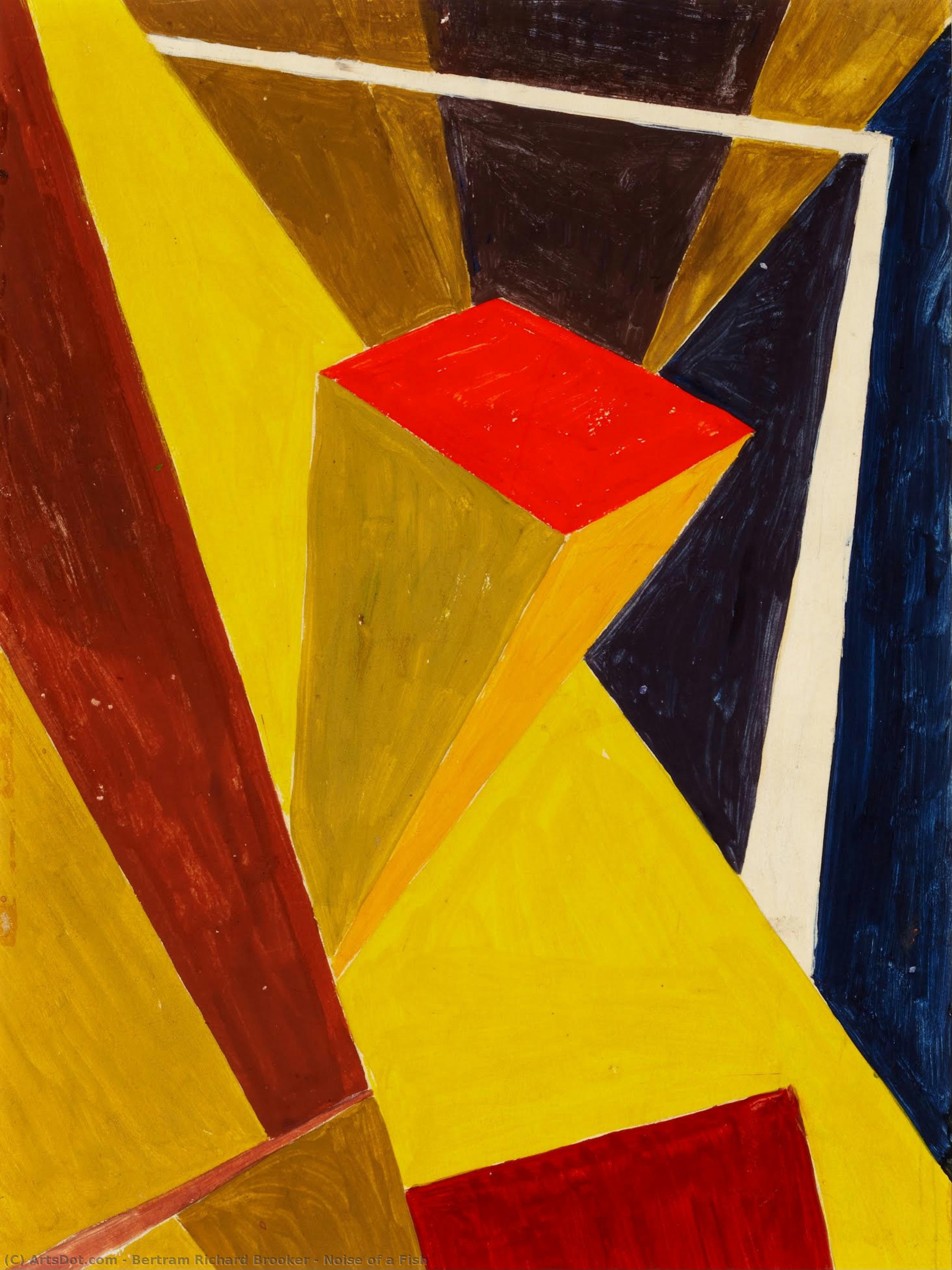
In the realm of early twentieth-century abstraction, few works capture the rhythmic pulse of modernism as vibrantly as Bertram Richard Brooker’s Noise of a Fish. Created in 1924, this masterpiece serves as a profound testament to the era's departure from representational reality toward a language of pure form and color. At first glance, the viewer is met with a striking composition dominated by a bold red triangle that commands the canvas. Set against a luminous yellow background, the geometric figure is not a static shape but a dynamic entity, divided into distinct sections that suggest movement and internal structure. A singular, piercing blue line cuts through the warmth of the primary palette, acting as a visual conductor that orchestrates the tension between the heavy reds and the radiant yellows.
The technique employed by Brooker reflects his deep immersion in the avant-garde movements of his time, particularly the influence of Cubism and Primitivism. Rather than seeking to replicate the physical texture of a fish or the literal sound of water, Brooker utilizes flattened perspectives and simplified forms to evoke a sensory experience. The painting operates through a deliberate rejection of academic depth, opting instead for a powerful, graphic immediacy. This approach allows the colors—vibrant, saturated, and unapologetically bold—to carry the emotional weight of the piece. For the discerning collector or interior designer, this work offers a sophisticated interplay of light and shape that can serve as a commanding focal point in any contemporary space.
Beyond its aesthetic brilliance, Noise of a Fish invites a deeper philosophical inquiry into the relationship between sight and sound. The title itself suggests a synesthetic experience, where the visual elements are meant to trigger an auditory sensation—the "noise" of a living, breathing world translated into the silent language of geometry. Brooker, a pioneer of Canadian abstract art, masterfully uses the contrast of his palette to create this sensory overlap. The heat of the red and yellow evokes a certain energy, while the cool blue line provides a rhythmic interruption, much like a sudden note in a musical composition. It is an evocative piece that transcends its era, offering timeless inspiration through its ability to turn abstract shapes into a profound emotional resonance.