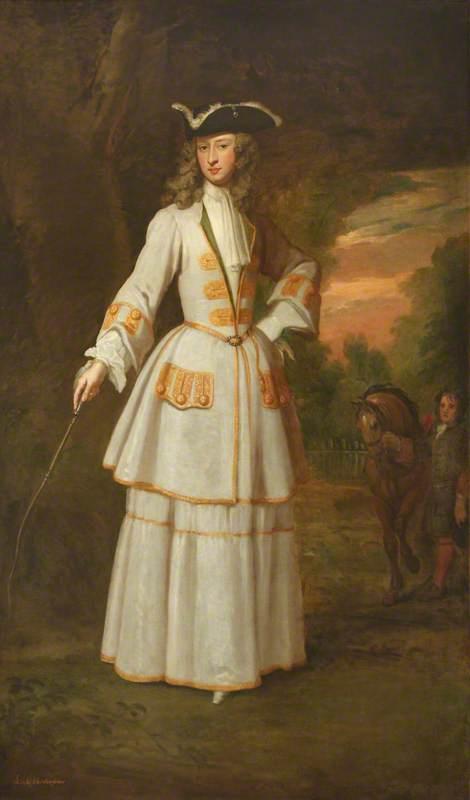
Lady Henrietta Cavendish, Viscountess Huntingtower: A Portrait of Enlightenment Curiosity
The painting by Sir Godfrey Kneller depicts Lady Henrietta Cavendish, Viscountess Huntingtower (1693 – 1744), a prominent figure in the scientific world and a pioneer of experimental physics. Completed in 1715 during the reign of George I, this portrait transcends mere likeness; it embodies the spirit of the Enlightenment—a period characterized by intellectual fervor, rational inquiry, and a fascination with observation and experimentation. Kneller’s masterful technique captures not only Cavendish's physical appearance but also her gaze, conveying an air of intelligence and determination that speaks volumes about her character.
- Style: Baroque – Kneller adhered to the Grand Manner style prevalent in Georgian Britain, prioritizing clarity, balance, and idealized representation. This aesthetic favored monumental compositions and meticulous detail, reflecting a desire for grandeur and sophistication.
- Technique: Oil on Canvas – Kneller employed oil paints on canvas—a technique that allowed for rich color saturation and subtle gradations of tone—essential for achieving the luminous quality characteristic of Baroque portraiture. His painstaking layering of paint created depth and texture, enhancing the realism of his subjects.
- Composition: The painting’s pyramidal structure lends stability and formality to the image, directing the viewer's eye towards Cavendish’s face – a focal point that emphasizes her expression and intellect. The horse beneath her feet symbolizes power and status, reinforcing the aristocratic context of the portrait.
The inclusion of a dog leash suggests Lady Cavendish’s domestic life—a deliberate choice by Kneller to portray her as both an intellectual and a woman of refined sensibilities. Furthermore, the subtle background details – including two other figures – contribute to the narrative richness of the scene, hinting at social connections and reinforcing the portrait's status as a document of its time.
Symbolism: The horse represents nobility and authority, mirroring Cavendish’s position within the aristocratic hierarchy. Her gaze directs attention inward, conveying confidence and intellectual curiosity—qualities that align with her groundbreaking work in physics, where she conducted experiments on gases and challenged prevailing scientific theories. Kneller's depiction underscores Lady Cavendish's role as a champion of reason and observation during an era marked by significant advancements in science and philosophy.
Historical Context: Created during the reign of George I, this portrait reflects the broader cultural landscape of Enlightenment Britain—a period devoted to scientific discovery and philosophical debate. Kneller’s work exemplifies the artistic ideals of his time, aligning with a desire for idealized representation and conveying intellectual prestige. It stands as a testament to the enduring fascination with royal patronage and its influence on artistic production.
The painting's luminous quality and meticulous detail continue to captivate viewers today, serving as an inspiring reminder of the power of art to capture both physical likeness and psychological character—a legacy cemented by Sir Godfrey Kneller’s unparalleled skill and artistic vision.