A Tender Encounter in Oil: The Legacy of Charles Willson Peale
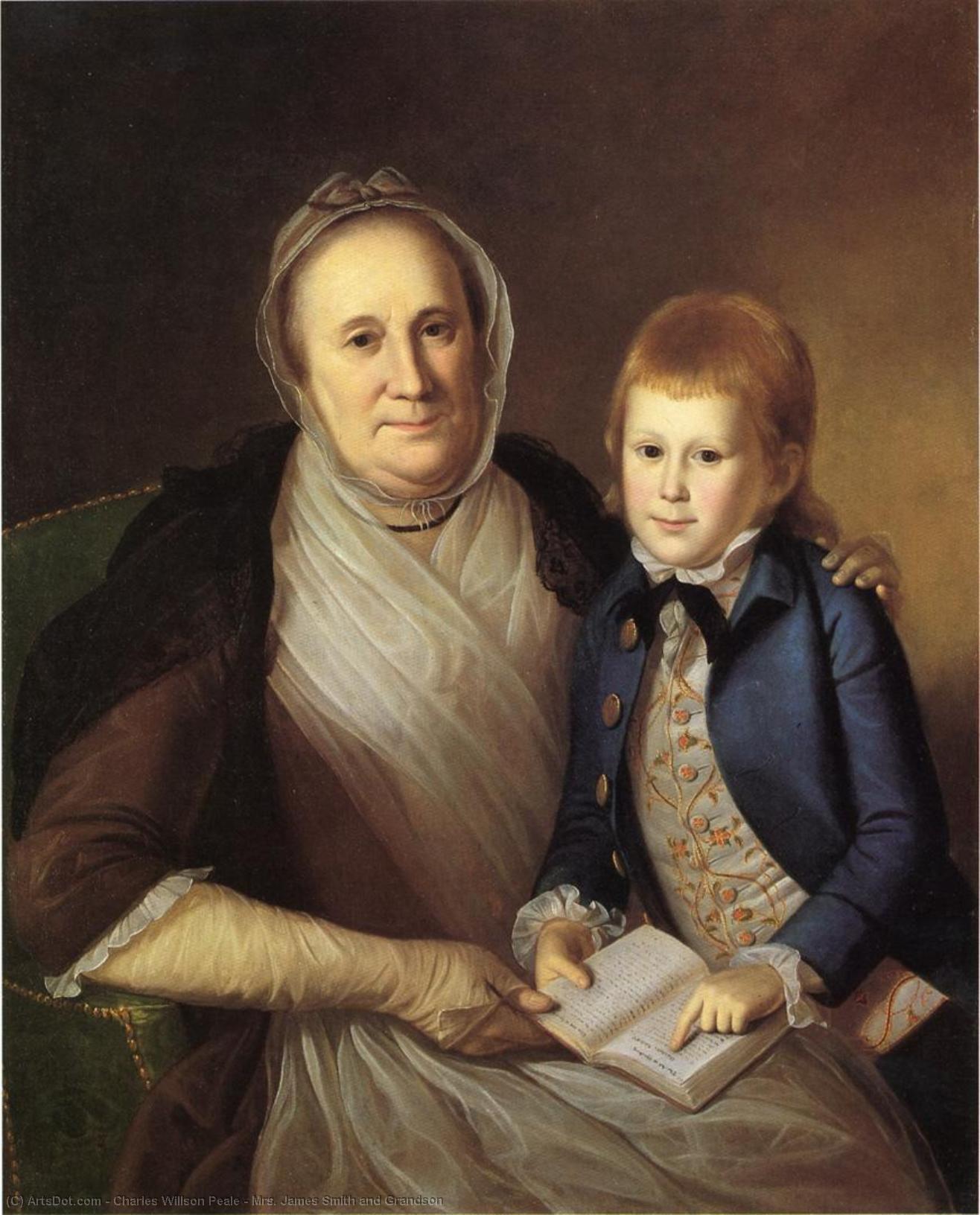
In the quiet intimacy of Mrs. James Smith and Grandson, we are transported back to the year 1776, a pivotal moment in American history when the strokes of a brush could capture not just a likeness, but the very soul of a burgeoning nation. Created by the legendary Charles Willson Peale, this masterpiece serves as a profound window into the domestic warmth and familial devotion of the 18th century. As one gazes upon this oil on canvas, there is an immediate sense of being a silent witness to a private, tender moment between generations. The painting does not merely depict two figures; it weaves a narrative of continuity, love, and the quiet dignity that defines the human experience.
The composition is a masterclass in classical portraiture, utilizing a centered, balanced arrangement that draws the viewer into the personal orbit of the subjects. Peale, an artist renowned for his ability to document the faces of the American Revolution, here turns his gaze toward the domestic sphere. The elderly Mrs. James Smith and her young grandson are positioned with a graceful proximity that suggests a deep, unbreakable bond. While the background remains dark and indistinct—a technique that strips away the distractions of the outside world—the focus remains intensely fixed on the subjects. This use of chiaroscuro, or the dramatic interplay between light and shadow, lends a sculptural volume to their forms, making the figures emerge from the darkness with a lifelike presence that feels almost tactile.
Technically, the painting is a triumph of meticulous brushwork and sophisticated color theory. Peale employs a palette dominated by muted, sophisticated earth tones—rich browns, creamy highlights, and subtle blues—which imbue the work with an air of timelessness and historical weight. The texture of the clothing, from the soft drapery of the woman's attire to the delicate features of the child, reveals the artist's incredible command over oil paint. Every highlight on a cheekbone or fold in fabric is rendered with such precision that it creates a sense of luminosity, as if the subjects are lit by a soft, natural candlelight. For the collector or interior designer, this piece offers a sophisticated anchor for any room, providing a sense of established heritage and classical elegance.
Beyond its aesthetic brilliance, the painting is rich with subtle symbolism that speaks to the values of the era. The presence of the book held by the young boy serves as a poignant emblem of education, curiosity, and the passing of knowledge from the old to the new. It suggests a future built upon the foundations of wisdom and literacy, mirroring the intellectual aspirations of the American spirit during the late 18th century. To possess a reproduction of this work is to invite more than just decoration into a home; it is to bring in a piece of history that celebrates the enduring strength of family ties and the quiet beauty of a life well-lived.