A Moment Frozen in the Laurentian Light
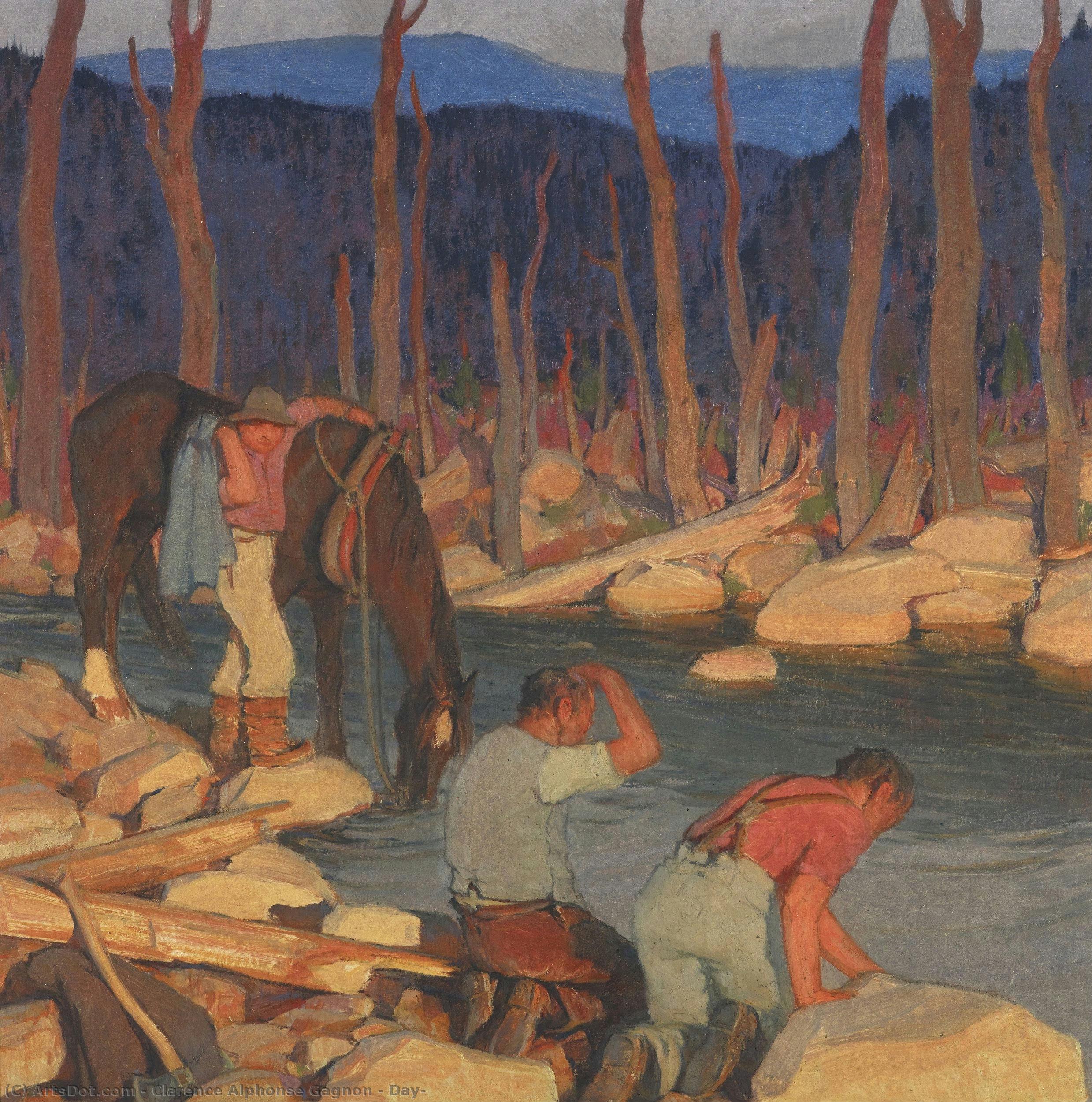
Clarence Alphonse Gagnon’s “Day,” painted in 1933, isn't merely a depiction of a landscape; it’s an immersion into the heart of Quebec’s wilderness – specifically, the serene beauty of the Laurentian Mountains and Charlevoix region. The painting captures a fleeting moment, a quiet tableau of rural life bathed in the soft, diffused light characteristic of Gagnon’s signature style. It's a scene brimming with nostalgia, inviting the viewer to step into a world where time seems to slow, and the rhythms of nature dominate.
The composition is masterfully divided into distinct layers. A foreground of weathered rocks and logs establishes a sense of groundedness, while a meandering stream acts as a central artery, drawing the eye deeper into the scene. Figures – likely cowboys or laborers – are subtly integrated into this landscape, engaged in quiet activities near the water’s edge. In the distance, the majestic peaks of the Laurentians rise against a pale blue sky, creating an atmospheric backdrop that emphasizes the vastness and solitude of the region. The horizontal lines of the mountains and river create a sense of stability and harmony, while vertical elements – the trees – add a touch of dynamism.
Impressionism Rooted in Canadian Identity
Gagnon’s artistic approach is firmly rooted in Impressionism, yet he uniquely infuses it with a distinctly Canadian sensibility. He eschews sharp detail and precise representation in favor of capturing the *feeling* of a place – the light, the atmosphere, the essence of the Laurentians. His brushstrokes are loose and expressive, layering thin washes of oil paint to build up color and form gradually. This technique creates a shimmering effect, particularly noticeable in the water and sky, lending the painting an ethereal quality. The muted palette—dominated by browns, greens, blues, and greys—further contributes to the tranquil mood.
Born in Montreal in 1881, Gagnon’s artistic journey was shaped by a confluence of influences. Early encouragement from his mother fostered a love for drawing, while mentorship from William Brymner at the Art Association of Montreal provided crucial guidance. His time in Paris exposed him to the innovations of Impressionism and Post-Impressionism, but he ultimately developed a style that remained deeply connected to his Canadian heritage. His work often explores themes of rural life, the relationship between humanity and nature, and the spirit of Quebec.
Symbolism of Labor and Landscape
Beyond its aesthetic beauty, “Day” carries subtle symbolic weight. The figures near the stream represent a connection to the land – a tradition of labor and resourcefulness deeply embedded in Canadian culture. The river itself symbolizes life’s flow, while the mountains stand as enduring witnesses to time. The painting evokes a sense of quiet contemplation, inviting viewers to reflect on the simple pleasures of rural existence and the profound beauty of the natural world. It's a poignant reminder of a bygone era, when life was intimately connected to the rhythms of nature.
A Timeless Reproduction
Reproductions of “Day” offer a remarkable opportunity to bring this evocative landscape into your home or office. The painting’s serene atmosphere and rich textures translate beautifully to high-quality prints, allowing you to experience Gagnon's artistic vision firsthand. Consider framing the artwork in a natural wood frame to further enhance its connection to the Canadian wilderness. “Day” is more than just a painting; it’s a window into a captivating world—a testament to Clarence Alphonse Gagnon’s enduring legacy as one of Canada’s most celebrated landscape artists.