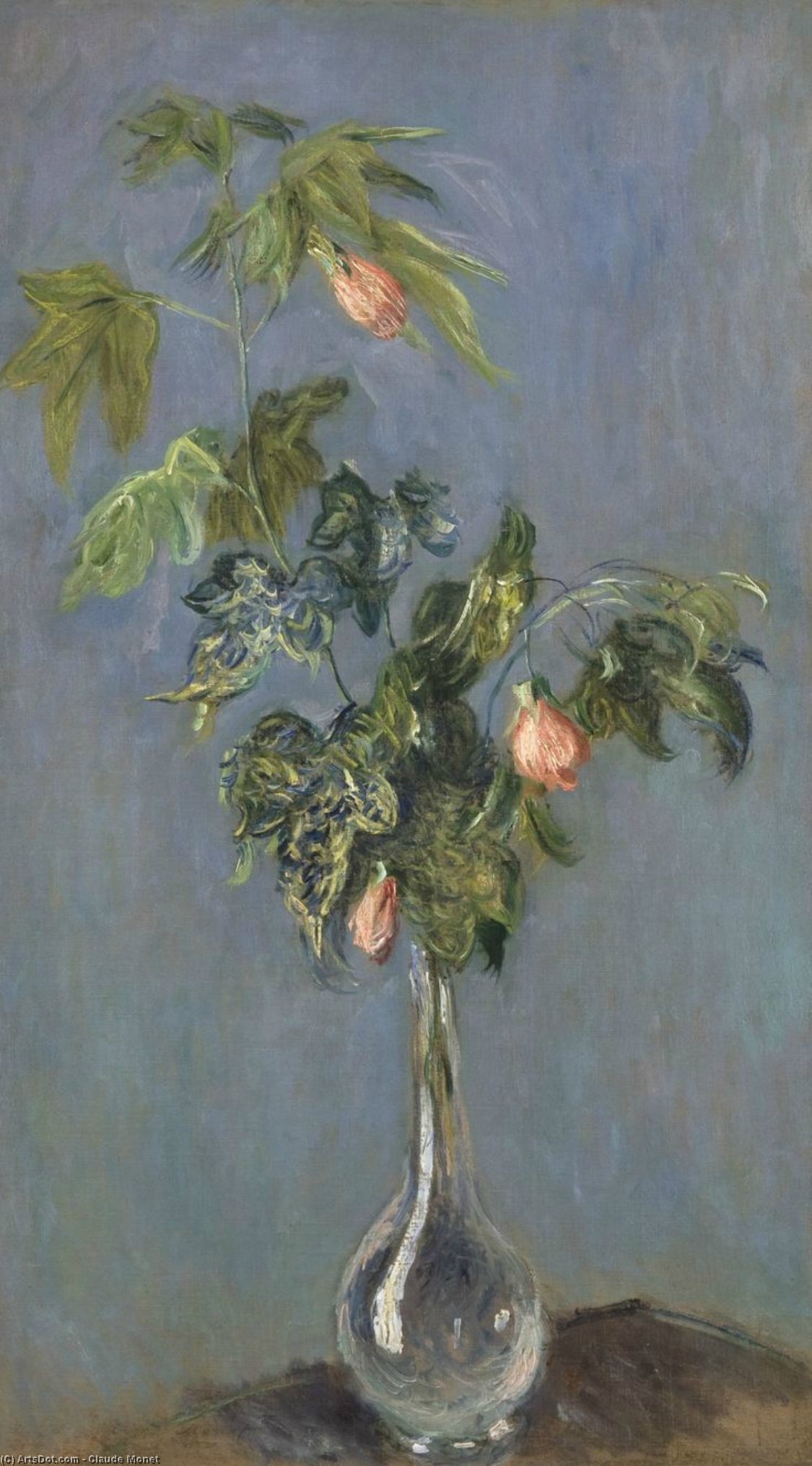
Claude Monet’s ‘Vase of Flowers,’ painted in 1882, exemplifies Impressionism's focus on capturing fleeting moments and luminous color palettes. This serene depiction showcases pink blossoms nestled within a vase brimming with water—a technique pioneered by Boudin to immerse artists directly into the beauty of nature.
A Symphony in Pastel Hues: The Luminous World of Monet’s Vase of Flowers
In the year 1882, amidst the gentle coastal breezes of Normandy, Claude Monet captured a moment that transcends mere botanical study to become a profound meditation on light. Vase of Flowers is not simply a depiction of flora arranged in glass; it is an evocative window into the very soul of Impressionism. As one gazes upon this masterpiece, the eye is immediately drawn into a dance of soft pinks, delicate violets, and sun-drenched yellows, all harmonizing within a palette that feels as fresh as a spring morning. The painting captures the ephemeral beauty of nature, frozen in time yet vibrating with an internal energy that suggests the flowers are still breathing, still reacting to the shifting sunlight of a French afternoon.
The brilliance of this work lies in Monet’s revolutionary technique, a departure from the rigid, polished finishes of the academic tradition. Eschewing precise outlines, he employed the plein air method, applying small, broken brushstrokes that allow colors to interact directly on the canvas. This technique creates a shimmering, optical effect where the viewer's eye blends the pigments—shades of azure, lemon, and rose—to perceive form and depth. There is a rhythmic quality to these strokes; they mimic the flickering movement of light through leaves and the soft texture of petals. For the collector or interior designer, this creates a sense of movement and vitality, making the piece an ideal focal point that breathes life into any sophisticated space.
Historical Resonance and Emotional Depth
To understand Vase of a Flowers is to understand the bold rebellion of the Belle Époque. During this era of optimism and artistic experimentation, Monet and his contemporaries sought to strip away the artifice of historical subjects to find beauty in the everyday. This painting serves as a testament to that movement, celebrating the quiet, domestic splendor found in a simple tabletop arrangement. The composition lacks the dramatic tension of classical landscapes, opting instead for a sense of profound tranquility and peace. The dominance of cool blue tones provides a calming foundation, allowing the warmer floral accents to emerge like sudden bursts of joy.
For those seeking to curate an environment of elegance and serenity, this artwork offers more than just visual appeal; it offers an emotional sanctuary. The symbolism of the flowers—representing growth, fragility, and the fleeting nature of time—resonates deeply with the human experience. Whether displayed in a sunlit breakfast nook or as a centerpiece in a grand salon, a high-quality reproduction of this Monet masterpiece brings with it a legacy of light and a timeless aesthetic. It is an invitation to slow down, to observe the subtle shifts in color, and to find beauty in the transient moments that define our lives.