Ključna figura impresionizma, Klod Monet slavno je prikazivao prolazne trenutke svetla i boje kroz ikonična dela poput ciklami i livada. Otkrijte njegovu umetnost koja je revolucionisala slikarstvo!
A Symphony of Light and Birdsong: Exploring Monet’s “Pheasants, Woodcocks and Partridges”
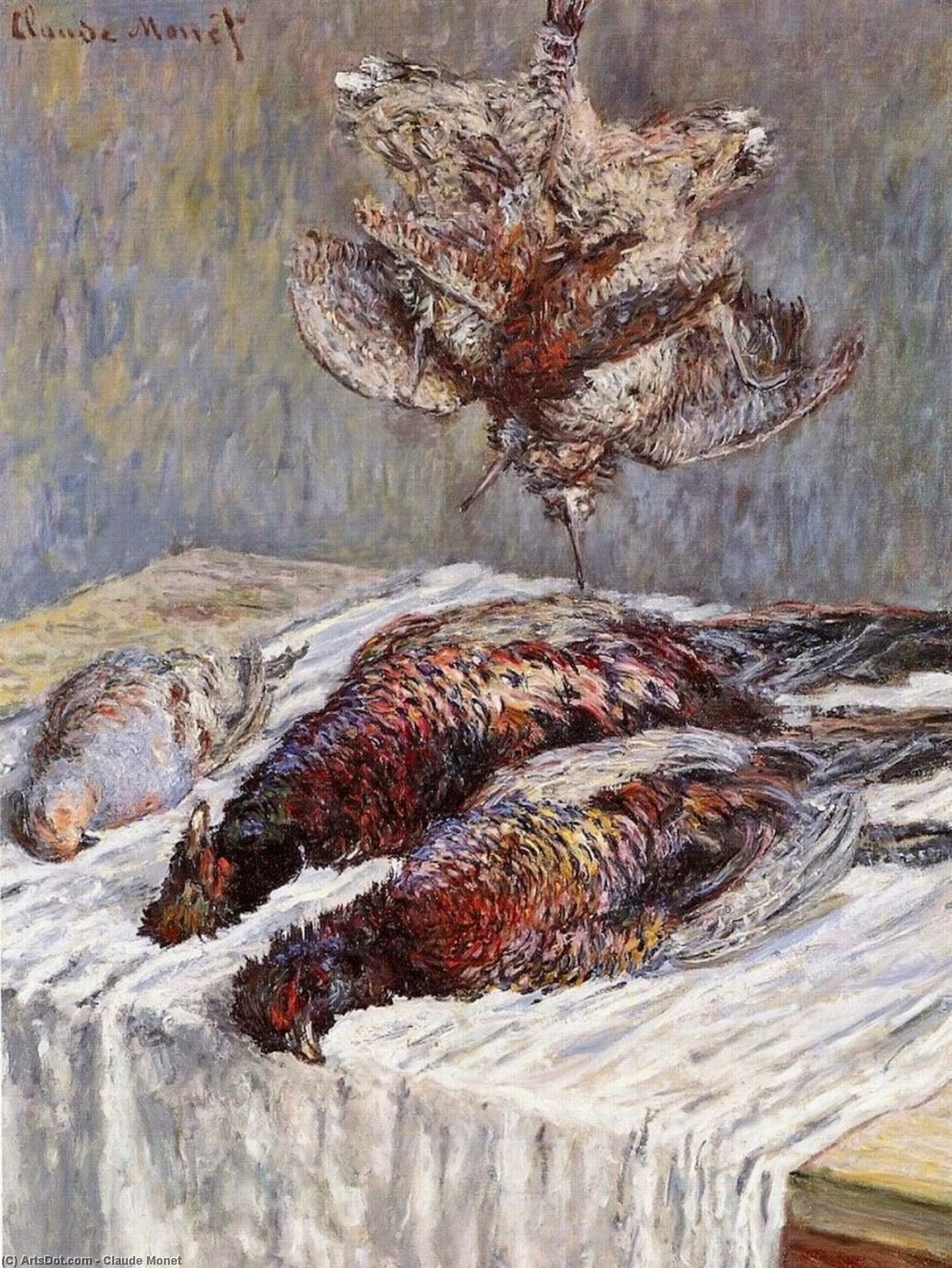
Claude Monet's "Pheasants, Woodcocks and Partridges," painted circa 1869-70, isn’t merely a depiction of avian life; it’s an embodiment of Impressionism’s core philosophy – capturing the ephemeral beauty of nature as perceived by the artist. This unassuming canvas holds within it layers of artistic innovation and symbolic resonance that continue to captivate viewers today. Initially conceived as part of Monet's ambitious series exploring the changing seasons in Argenteuil, France—a location he frequented with Boudin and fellow Impressionists—the painting transcends its immediate setting to become a meditation on tranquility and observation.
The Technique of Fleeting Impression
Monet’s masterful technique exemplifies the revolutionary approach championed by Impressionism. Abandoning traditional academic methods focused on meticulous detail and tonal gradation, Monet opted for loose brushstrokes applied in rapid succession, prioritizing color over form. He achieved this effect through *plein air* painting—working outdoors directly from nature—allowing him to capture the subtle nuances of light as it shifted across the landscape. Notice how Monet utilizes broken color – applying pigment alongside its complementary hue – creating a shimmering vibrancy that mimics the dappled sunlight filtering through foliage. The resulting surface is textured, almost vibrating with energy, conveying not just what he sees but *how* he feels when confronted by this idyllic scene.
Symbolism Rooted in Observation
Beyond its technical brilliance lies a deeper symbolic significance. The inclusion of pheasants, woodcocks and partridges—birds known for their flamboyant plumage and association with nobility—suggests a celebration of natural splendor and aristocratic grace. However, Monet’s intention wasn't simply to portray beauty; he aimed to convey a state of mind – one characterized by stillness, contemplation, and an appreciation for the simple pleasures of existence. The vases positioned strategically within the composition serve as visual anchors, grounding the scene while simultaneously introducing elements of decorative art—a conscious decision reflecting the broader aesthetic concerns of the Impressionist movement.
Historical Context: Embracing Modernity
“Pheasants, Woodcocks and Partridges” emerged during a pivotal moment in artistic history – the rise of Impressionism as a challenge to established conventions. Artists like Monet were rejecting the rigid rules of academic painting, advocating for subjective experience and prioritizing sensory perception. This painting represents a decisive break from Romantic idealism, favoring instead an honest portrayal of the observable world. It aligns perfectly with the broader cultural shift toward valuing individualism and embracing the dynamism of modern life, mirroring the spirit of Argenteuil and its burgeoning artistic community.
Emotional Resonance: A Moment Preserved
Ultimately, “Pheasants, Woodcocks and Partridges” succeeds in evoking a profound emotional response. The painting’s luminous palette and fluid brushstrokes transport viewers back to a sunlit meadow, inviting them to share in Monet's quiet contemplation. It speaks to the enduring human fascination with nature—with its beauty, its rhythms, and its capacity to inspire awe. Reproductions of this masterpiece offer an opportunity not only to adorn interiors but also to reconnect with the spirit of Impressionism – a legacy of artistic innovation that continues to resonate powerfully across generations.