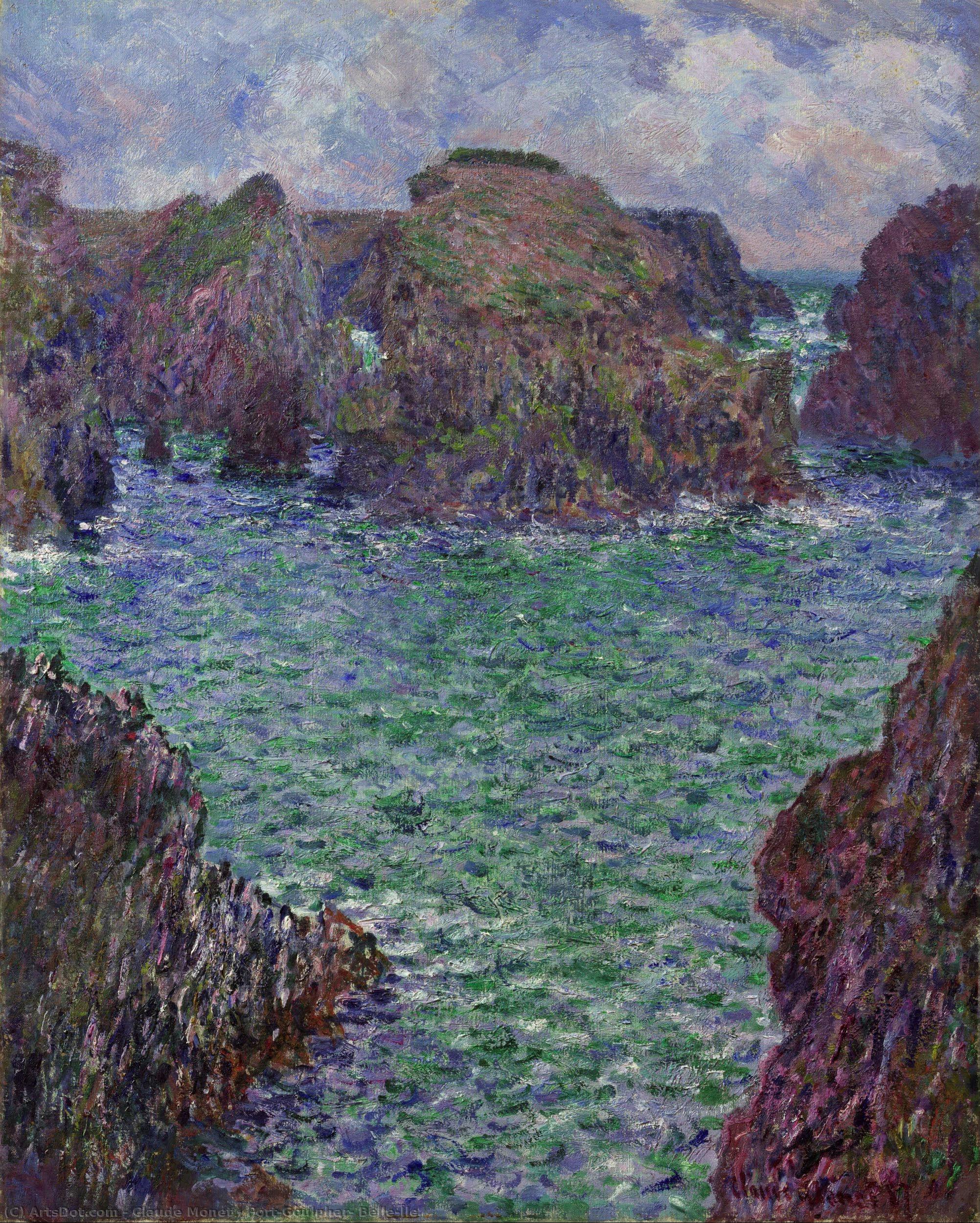
Port-Goulphar, Belle-Île: A Symphony of Light and Texture by Claude Monet
Claude Monet’s Port-Goulphar, Belle-Île, painted in 1887, transcends mere depiction; it embodies the very essence of Impressionism—a fleeting glimpse into a moment captured with unparalleled sensitivity to light and color. More than just a seascape, this canvas is an invitation to experience the transformative power of nature through Monet’s revolutionary artistic vision. Situated on Belle Île, Brittany – a landscape favored by artists like John Russell – Port-Goulphar presents a dramatic confrontation between turbulent ocean waves and imposing granite cliffs. Unlike traditional marine paintings that strive for idealized grandeur, Monet eschews convention, prioritizing observation over preconceived notions of beauty.
- Composition & Technique: Monet’s masterful brushstrokes—characterized by loose, visible pigment—are immediately apparent upon viewing the artwork. He employs a technique known as *plein air*, working directly from nature, allowing him to capture the ephemeral qualities of sunlight and atmosphere with astonishing accuracy. The canvas is dominated by horizontal bands of grey-green hues representing the sea, punctuated by jagged rock formations that ascend towards the upper register. Monet’s meticulous layering of paint—often applied in rapid succession—creates a palpable sense of movement and texture, mirroring the ceaseless rhythm of the ocean.
- Historical Context: Painted during Belle Île's artistic heyday – a period marked by an influx of expatriate artists seeking inspiration from Brittany’s rugged coastline – Port-Goulphar reflects the broader stylistic trends of Impressionism. Monet collaborated closely with fellow artist John Russell, sharing ideas and experimenting with innovative approaches to painting. This work stands alongside Pissarro’s “Peasants' Houses,” demonstrating Monet’s commitment to exploring similar themes at different times of day, furthering his exploration of how light shapes perception.
- Symbolism & Emotional Impact: Beyond its visual splendor, Port-Goulphar speaks volumes about Monet’s philosophical preoccupation with capturing the sublime—the awe-inspiring grandeur of nature that transcends rational understanding. The turbulent sea symbolizes both destructive force and regenerative potential, mirroring the cyclical rhythms of life itself. The artist's deliberate use of muted colors – predominantly grey, green, and ochre – contributes to a mood of contemplative serenity, inviting viewers to immerse themselves in the tranquility of the Belle Île landscape.
- Provenance & Display: Currently housed in the Art Gallery of New South Wales (Sydney), Port-Goulphar’s journey through art history underscores its enduring significance as a cornerstone of Impressionist painting. Its presence within the gallery ensures that future generations can appreciate Monet's groundbreaking contribution to artistic innovation and his profound connection with the natural world.
Reproductions Available: ArtsDot offers meticulously crafted oil painting reproductions of Claude Monet’s Port-Goulphar, Belle-Île, allowing art enthusiasts and collectors alike to experience the beauty and artistry of this iconic masterpiece firsthand. Explore more details on our website:
ArtsDot
Further Exploration: Delve deeper into Monet’s artistic legacy by visiting The Museum Gallery of New South Wales (Sydney, Australia):
The Museum Gallery of New South Wales
Related Works: Discover other captivating paintings by Claude Monet on Wikipedia:
List of Paintings by Claude Monet