A Glimpse into a Rainy Belle-Île: Claude Monet’s Atmospheric Masterpiece
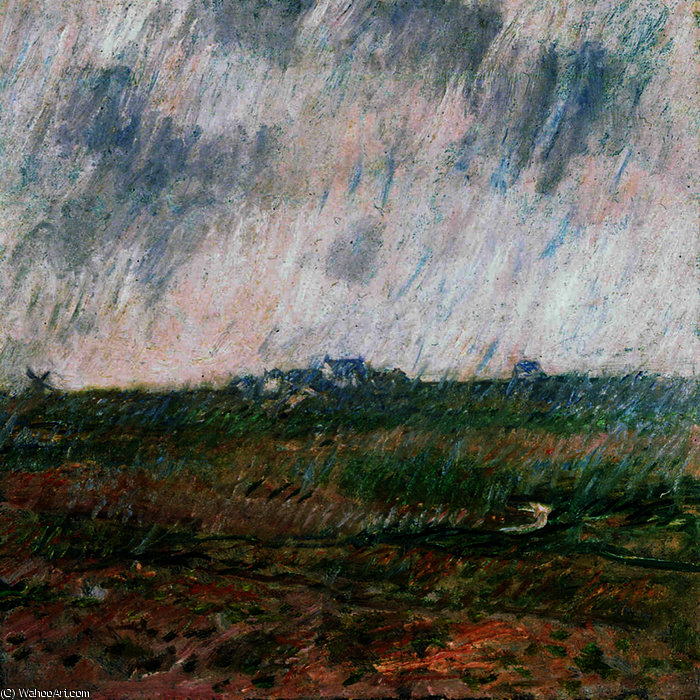
Claude Monet's “Rain in Belle-Ile,” painted in 1886, is more than just a landscape; it’s an *experience*. It encapsulates the fleeting beauty of a rainy day on the French island of Belle-Île, demonstrating Monet’s unparalleled ability to capture not merely what he saw, but how it *felt* to be present in that moment. This painting offers a serene escape, inviting viewers into a world softened by rain and imbued with quiet contemplation.
Impressionism: Capturing the Ephemeral
Monet was a pivotal figure in the Impressionist movement, a revolutionary style that rejected academic conventions in favor of depicting the subjective impression of light and color.
Impressionism, born from a desire to break free from rigid realism, sought to portray the world as perceived by the eye – fleeting, dynamic, and ever-changing. “Rain in Belle-Ile” is a quintessential example of this approach. Monet doesn’t strive for photographic accuracy; instead, he focuses on conveying the *effect* of rain: the diffused light, the muted tones, and the overall atmosphere of tranquility.
Composition and Narrative
The painting depicts a rural scene – fields dotted with houses, under a heavy, overcast sky. Three figures are subtly included, going about their daily lives despite the inclement weather, adding a touch of human presence without dominating the landscape. Two birds take flight in the distance, offering a dynamic counterpoint to the stillness of the rain-soaked ground. The composition is deliberately understated; it’s not about grand gestures or dramatic events, but rather the quiet poetry of everyday life.
Technique: A Symphony of Broken Brushstrokes
Monet's technique in “Rain in Belle-Ile” is masterful. He employs short, broken brushstrokes – a hallmark of Impressionism – to create a sense of movement and immediacy. These strokes aren’t blended smoothly; instead, they sit side-by-side, allowing the viewer’s eye to mix the colors optically. This technique creates a shimmering effect, capturing the way light dances on wet surfaces. The muted palette—grays, browns, and greens—is punctuated by subtle hints of color, adding depth and visual interest.
Historical Context: Belle-Île and Monet’s Series
“Rain in Belle-Ile” is part of a series of paintings Monet created during his stay on the island in 1886. He was fascinated by the rugged coastline and dramatic weather conditions, returning to the same motifs repeatedly to explore their changing appearances under different light. This practice – creating series based on a single subject – became a defining characteristic of Monet’s later work, exemplified by his famous Haystacks and Water Lilies. The island itself provided a rich source of inspiration for Monet, offering a unique landscape that he explored with relentless curiosity.
Symbolism and Emotional Resonance
While not overtly symbolic, “Rain in Belle-Ile” evokes a sense of peaceful solitude and introspection. Rain often symbolizes cleansing and renewal, suggesting a quiet moment of respite from the bustle of life. The muted colors and soft light contribute to a feeling of melancholy, but it’s a gentle sadness – one that is comforting rather than despairing.
The painting invites viewers to slow down, breathe deeply, and appreciate the beauty in simplicity.
Collecting & Interior Design
“Rain in Belle-Ile” lends itself beautifully to a variety of interior design schemes. Its muted palette complements neutral color palettes, adding depth and sophistication without overwhelming the space. The painting’s serene atmosphere makes it an ideal choice for bedrooms, living rooms, or studies – any room where you seek tranquility and inspiration. A high-quality reproduction captures the essence of Monet's brushwork and color nuances, bringing a touch of Impressionist elegance to your home.
- Style: Impressionism
- Subject: Landscape – Rainy Day on Belle-Île
- Medium: Oil on Canvas
- Date: 1886
- Current Location: (Information varies, often found in museum collections)
This painting is a testament to Monet’s genius and his enduring legacy as one of the most important artists in history. It's not just a beautiful image; it’s a window into a moment in time, captured with sensitivity, skill, and an unwavering dedication to capturing the beauty of the natural world.