A Symphony of Light and Stone
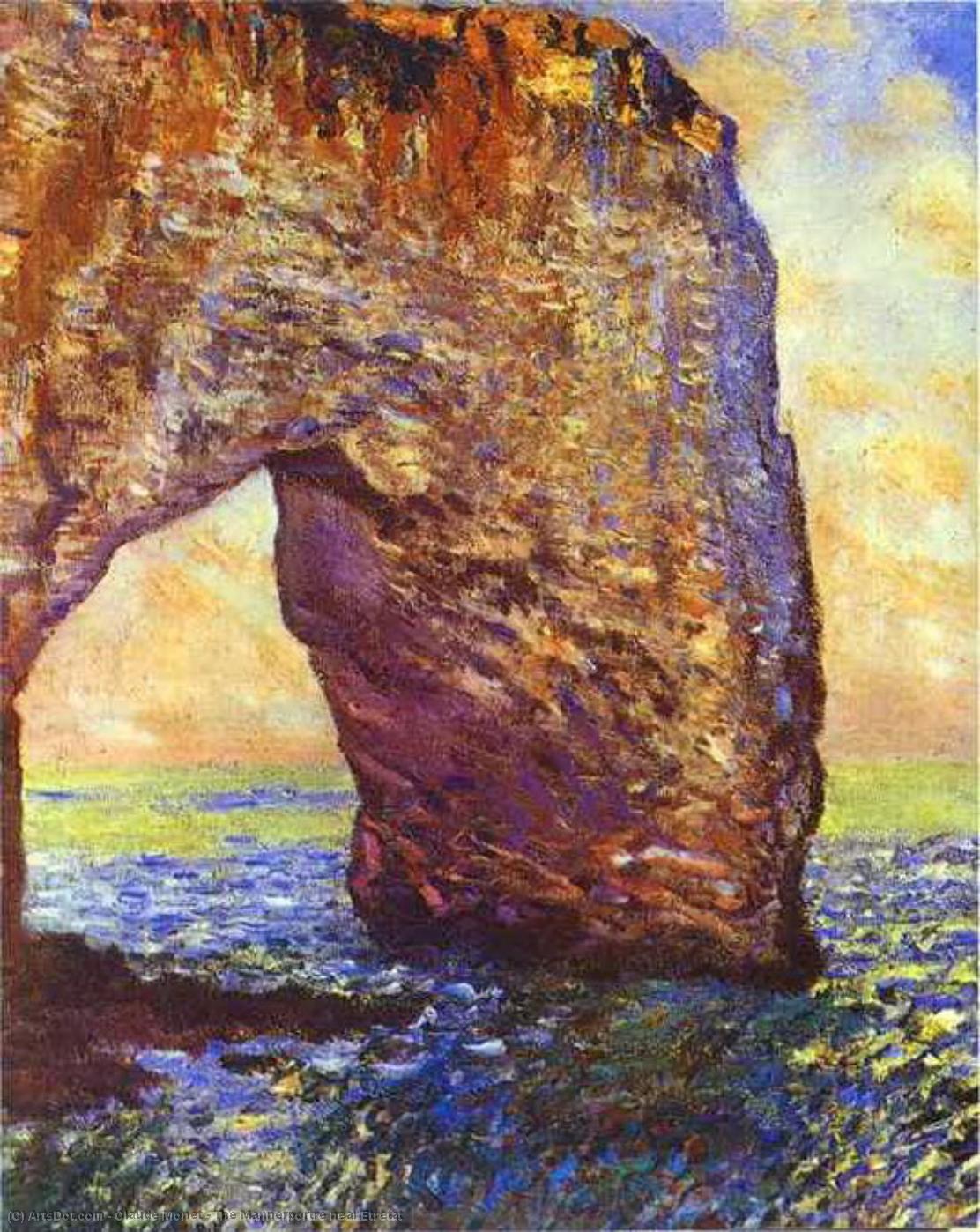
In the heart of the Normandy coastline, where the Atlantic meets the rugged cliffs of Étretat, Claude Monet captured a moment of profound atmospheric drama in his masterpiece, The Manneporte near Etretat. This evocative oil on canvas is far more than a mere seascape; it is a visceral encounter with the raw power of nature. The painting centers on the monumental Manneporte—a natural stone archway that stands as a sentinel over the churning tides. As the eye wanders through the composition, one is immediately struck by the interplay between the solid, enduring presence of the rock formations and the ephemeral, fleeting quality of the sea spray and twilight sky. Monet invites us to witness a world in constant flux, where the heavy textures of the earth meet the weightless dance of light.
The artist’s mastery is most evident in his revolutionary Impressionist technique. Eschewing the rigid lines and polished finishes of traditional academic painting, Monet employed rapid, visible brushstrokes that seem to vibrate with life. Through the use of thick impasto, he gives physical dimension to the crashing waves and the weathered surfaces of the cliffs. This tactile approach allows the viewer to feel the salt in the air and the dampness of the mist. His palette is a sophisticated arrangement of deep blues and teals for the ocean, contrasted against sudden, brilliant bursts of orange, yellow, and violet that illuminate the edges of the rocks. It is this deliberate use of color to suggest light, rather than to define form, that allows the painting to breathe with an almost sentient energy.
The Soul of Impressionism
To understand this work is to understand Monet’s lifelong devotion to plein air painting—the practice of capturing the world directly from nature. Created during a period of intense fascination with the Normandy coast, the painting reflects the artist's obsession with the "instantaneity" of light. For Monet, the subject was not merely the rock formation itself, but the way the sun’s dying rays transformed that rock at a specific second in time. This pursuit of the transient beauty of the natural world imbues the piece with a deep sense of nostalgia and wonder. There is a rhythmic quality to the composition, where the smaller rocks scattered throughout the foreground provide a sense of depth, leading the viewer's gaze through the turbulent waters toward the distant, ethereal horizon.
For the discerning collector or interior designer, The Manneporte near Etretat offers an unparalleled emotional resonance. It possesses a dual nature: it is both a powerful statement of strength and a quiet meditation on tranquility. When placed in a curated space, such as a sophisticated study or a contemporary living area, the painting acts as a window into another realm, bringing the restorative essence of the ocean indoors. Its rich textures and vibrant tones provide a focal point that can anchor an entire room, offering a sense of timelessness and prestige. Owning a high-quality reproduction of this work is not merely about acquiring art; it is about inviting the poetic, ever-changing spirit of Monet’s vision into one's daily life.