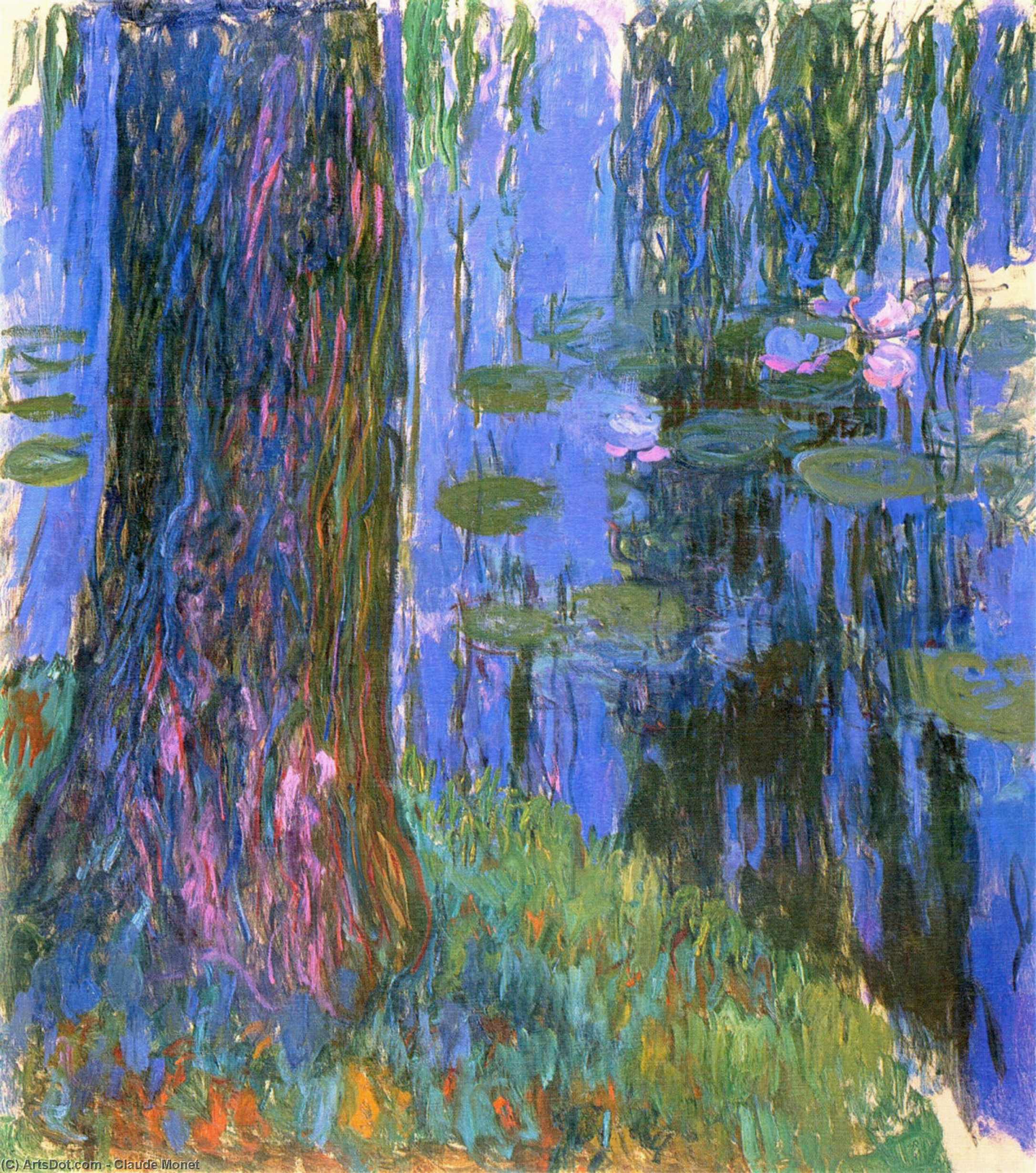
A Symphony of Light and Tranquility: Claude Monet’s Weeping Willow
Claude Monet, arguably the most influential figure in Impressionism, gifted us with “Weeping Willow and Water Lily Pond,” completed in 1919. This painting transcends mere depiction; it embodies a profound connection to nature and captures its ephemeral beauty with unparalleled grace—a testament to Monet’s unwavering dedication to portraying the world as he perceived it. More than just an image, it's an experience of serenity conveyed through masterful brushstrokes and vibrant hues.
The Painting's Composition: A Landscape Poem
At first glance, “Weeping Willow and Water Lily Pond” presents a deceptively simple scene—a solitary weeping willow tree dominating a tranquil water lily pond. However, Monet’s genius lies in his ability to transform this commonplace vista into an emotionally resonant landscape poem. The trunk of the willow rises majestically from the foreground, its branches reaching upwards like supplicating arms against the expansive sky. These branches aren't merely static elements; they ripple with movement, conveying a sense of vitality and responding dynamically to the shifting light conditions—a hallmark of Monet’s Impressionist approach. Scattered across the pond’s surface are water lilies, their delicate petals unfurling in shades of creamy white and pale pink, creating a harmonious counterpoint to the darker tones of the willow trunk. A single bird gracefully circles overhead, adding a touch of dynamism and suggesting the presence of life beyond the immediate frame.
Impressionist Techniques: Capturing Fleeting Moments
Monet’s artistic vision was fundamentally rooted in Impressionism—a movement that sought to capture not just what the eye sees but how it feels. To achieve this ambitious goal, Monet employed a revolutionary technique characterized by short, broken brushstrokes applied with loose, fluid movements. These strokes aren't blended smoothly; instead, they retain their individual texture and color, resulting in an effect of shimmering light and atmospheric haze—a deliberate departure from the academic conventions of his time. The artist’s meticulous observation of natural phenomena guided every decision, ensuring that each pigment was chosen to accurately represent its luminosity and hue. Furthermore, Monet skillfully utilized complementary colors—such as yellow and violet—to heighten visual impact and create a sense of depth and dimensionality.
Artistic Significance: Giverny's Reflection
“Weeping Willow and Water Lily Pond” holds particular significance as it represents Monet’s deeply personal connection to his garden at Giverny, France—a place he considered sacred and devoted himself to transforming into an artistic sanctuary. The painting isn’t merely a record of the landscape; it’s an expression of Monet's emotional response to its beauty. He sought to convey not just what he saw but how he felt—the quiet contemplation inspired by observing nature’s rhythms and transformations. This preoccupation with capturing fleeting moments of light and color profoundly influenced subsequent generations of artists, establishing Impressionism as a cornerstone of modern art history.
Reproductions Available at ArtsDot.com: Bringing Monet's Vision Home
For those captivated by Monet’s evocative style, ArtsDot.com offers exquisite reproductions crafted by skilled artisans who meticulously recreate the original painting with remarkable accuracy. Each piece is painstakingly hand-painted using archival pigments—ensuring that it retains its vibrancy and luminosity for decades to come. Explore more about Claude Monet and his works at
Claude Monet: Wisteria at ArtsDot.com.