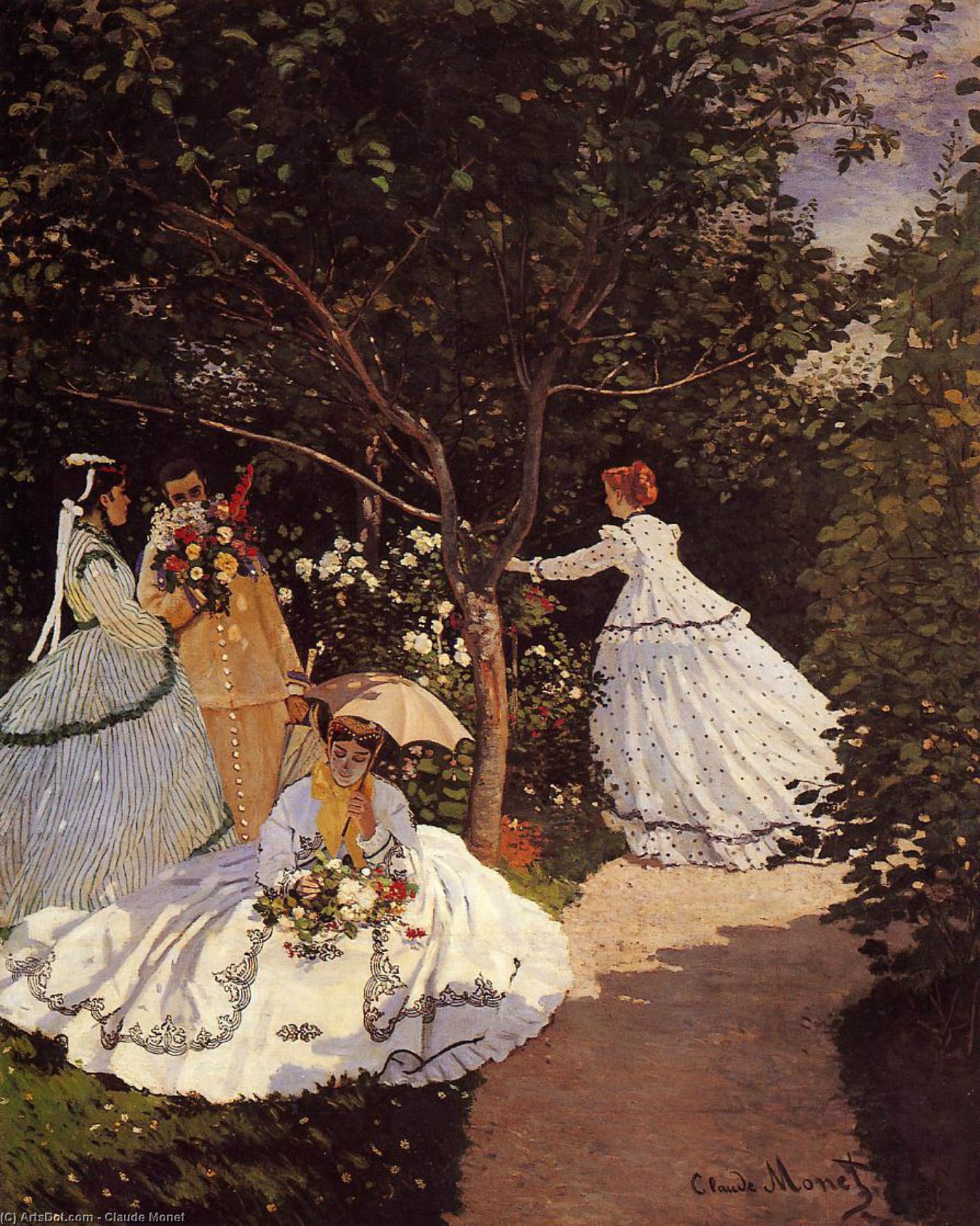
Women in the Garden: A Glimpse of Impressionist Serenity
Claude Monet's "Women in the Garden," painted in 1867, stands as a pivotal work in his artistic journey and a captivating example of early Impressionism. This large oil-on-canvas painting (over 2 meters tall) transports viewers to a tranquil garden setting, capturing a moment of leisure and companionship amidst blossoming nature.
Subject and Composition
The scene depicts three women enjoying an afternoon in the garden – one standing prominently near the center, another on the left, and a third on the right. Camille Doncieux, Monet's companion and future wife, is among them. The composition features lush greenery, including trees that frame the figures, creating depth and atmosphere. Two umbrellas provide shade, while a handbag rests casually on the ground, adding to the sense of an unhurried gathering. A fourth figure can be seen towards the top of the painting, subtly integrated into the landscape.
Impressionistic Technique and Style
Monet's innovative approach to capturing light and atmosphere is immediately apparent. He employed a technique of plein air painting – working directly from nature – which allowed him to observe and record the fleeting effects of sunlight on the scene. The use of visible brushstrokes, though initially criticized by Salon judges, foreshadowed the defining characteristics of Impressionism. Monet skillfully rendered the white dresses of the women, anchoring them within the composition's broader palette of greens and browns. He also incorporated elements from magazine illustrations to depict fashionable clothing, adding a touch of modernity to the pastoral setting.
Historical Context and Symbolism
Painted in 1867, "Women in the Garden" emerged during a period of artistic transition. The painting was initially rejected by the Paris Salon due to its unconventional subject matter and perceived narrative weakness. However, it marked an important milestone for Monet, establishing him as a leader within the burgeoning Impressionist movement. The work's purchase by fellow artist Frédéric Bazille demonstrates the close-knit community of artists during that era, highlighting mutual support amidst artistic challenges. The garden itself can be interpreted as a symbol of domestic tranquility and the beauty of everyday life, themes increasingly explored by Impressionist painters.
Emotional Impact and Legacy
Despite some critiques regarding the integration of figures within the landscape, "Women in the Garden" is widely celebrated for its masterful treatment of light and shadow. The painting evokes a sense of serenity and gentle beauty, inviting viewers to share in the peaceful moment captured by Monet. Today, housed in the Musée d'Orsay, it remains an enduring testament to Monet’s artistic vision and a significant contribution to the Impressionist canon.