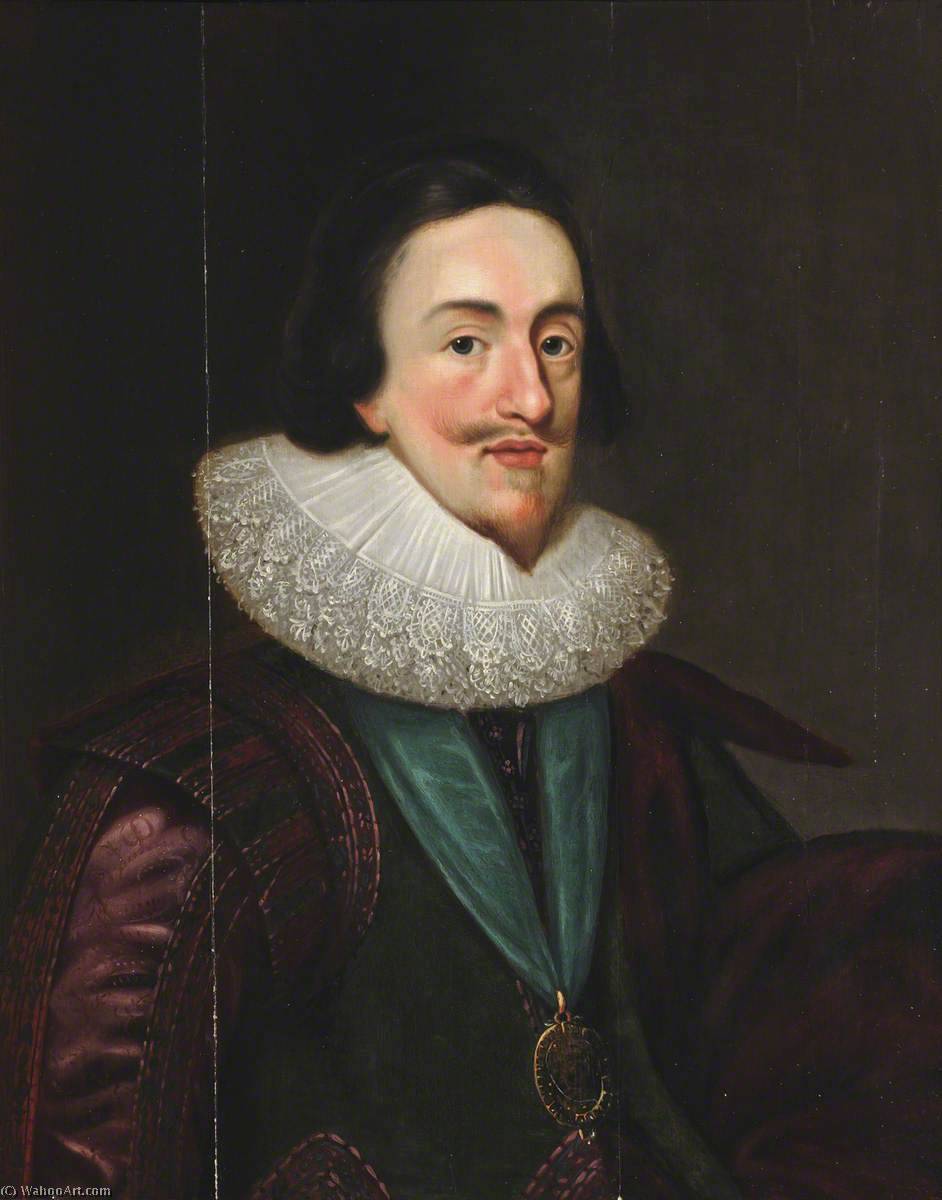
Charles I (1600–1649) (when Prince of Wales): A Portrait of Regal Dignity
Daniel Mijtens’s depiction of Charles I as Prince of Wales stands as a cornerstone of English Baroque portraiture, capturing not merely likeness but also the essence of royal authority and contemplative introspection. Painted around 1623-25, this monumental canvas transcends mere representation; it embodies the artistic sensibilities of its time—a period marked by burgeoning humanist ideals and an ambitious embrace of classical influences—resulting in a masterpiece that continues to resonate with viewers centuries later. The artwork’s careful composition—characterized by a central pyramidal arrangement—immediately establishes dominance and conveys a sense of solemn grandeur, mirroring the aspirations of James I's son for leadership and stability within his realm.
- Subject Matter: The portrait portrays Charles I in regal attire, embodying the dignity and seriousness expected of a royal heir. His gaze directs inward, suggesting contemplation and conveying an aura of quiet confidence—a deliberate contrast to the turbulent political landscape of his era.
- Style & Technique: Mijtens’s masterful use of chiaroscuro – dramatic contrasts between light and shadow – imbues the painting with palpable depth and realism. The artist skillfully renders textures, from the velvet fabric of Charles's coat to the subtle sheen of his gold chain, demonstrating a profound understanding of artistic technique.
- Historical Context: Created during James I’s reign, this portrait reflects the anxieties surrounding succession and the pressures exerted by Parliament on royal power. Mijtens’s work serves as a visual testament to the intellectual currents shaping Elizabethan England—a fascination with humanist scholarship and an admiration for the artistic achievements of antiquity.
Symbolism: The pyramidal structure symbolizes stability and divine authority, reflecting the Stuart belief in God's ordained rule. Charles’s pose exudes composure and deliberation, conveying a message of steadfastness amidst uncertainty—a characteristic that would define his reign as King. Furthermore, the inclusion of the gold chain represents royal wealth and prestige, reinforcing the image of regal splendor.
- Color Palette: Dominated by muted greens and golds, the palette evokes serenity and nobility. The subtle hues contribute to the overall atmosphere of solemn contemplation, aligning with the psychological portraiture prevalent during the Baroque period.
- Compositional Elements: Mijtens’s meticulous attention to detail—evident in the rendering of facial features and drapery folds—underscores his commitment to capturing not just appearance but also inner character. The careful positioning of Charles's hands reinforces his posture of dignified restraint.
Emotional Impact: Viewing this portrait evokes a sense of awe and admiration for artistic excellence, while simultaneously prompting reflection on themes of leadership, responsibility, and introspection. Mijtens’s ability to convey both outward grandeur and inner contemplation elevates the artwork beyond mere likeness—transforming it into an enduring symbol of royal dignity and humanist aspiration. It remains a captivating piece of art history, inviting viewers to contemplate the complexities of power and the pursuit of virtue.