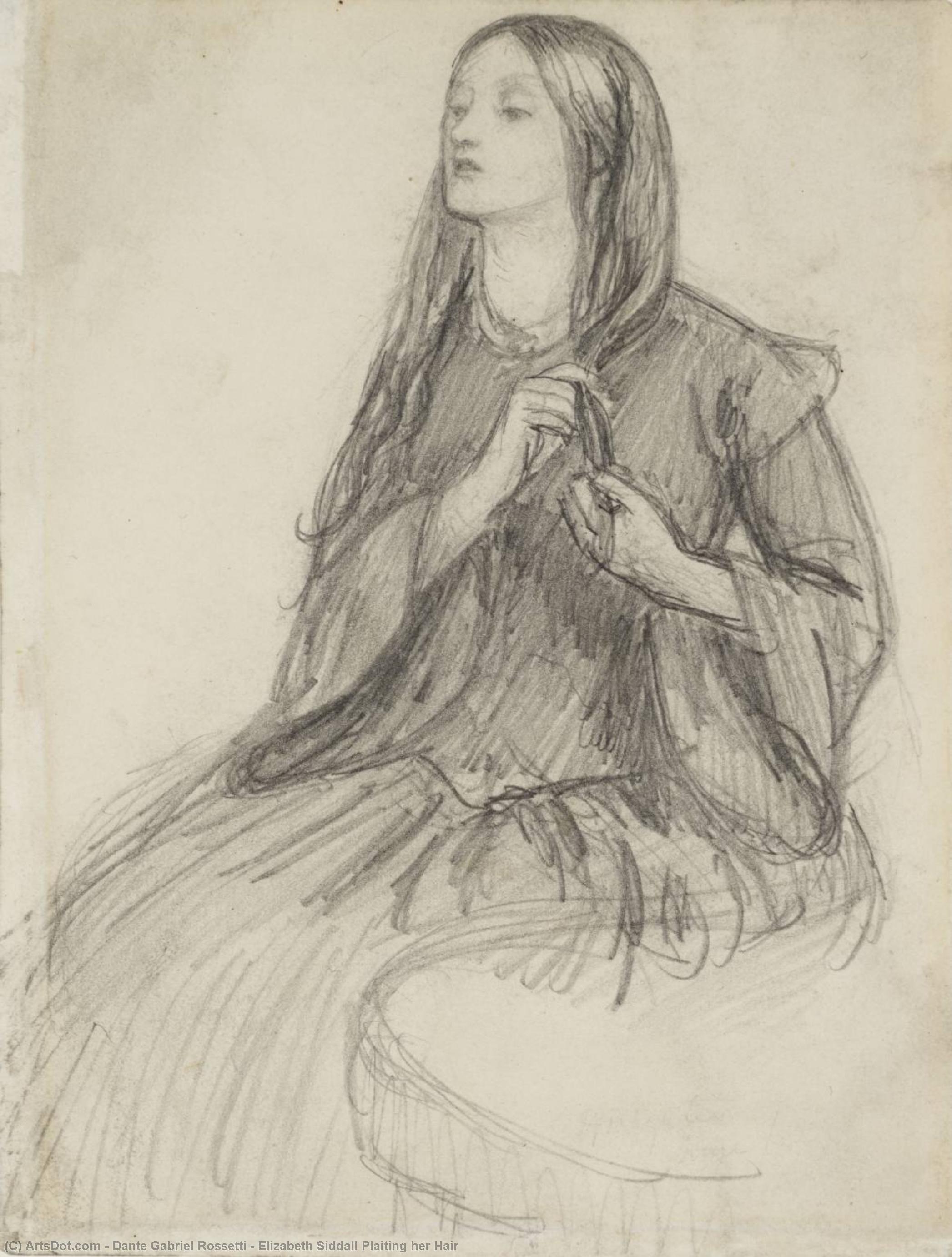
Elizabeth Siddall Plaiting her Hair: A Pre-Raphaelite Study of Beauty and Melancholy
Dante Gabriel Rossetti’s “Elizabeth Siddall Plaiting Her Hair” stands as a testament to the Pre-Raphaelites' unwavering dedication to meticulous observation and expressive line work—a cornerstone of their artistic philosophy. Executed around 1855, this graphite drawing transcends mere representation; it embodies a profound exploration of feminine beauty intertwined with an undercurrent of contemplative sorrow.
- Subject Matter: The artwork centers on Elizabeth Siddall, Rossetti’s muse and lover, captured in a moment of domestic tranquility as she attends to the intricate task of plaiting her hair. This seemingly simple act becomes imbued with symbolic significance, reflecting themes of femininity, vulnerability, and the artist's fascination with capturing fleeting expressions of emotion.
- Style: Rooted firmly within the Pre-Raphaelite movement, “Elizabeth Siddall Plaiting Her Hair” adheres to the stylistic principles championed by Rossetti and his fellow artists—a deliberate rejection of academic conventions in favor of a return to idealized forms inspired by Renaissance art. The drawing’s aesthetic prioritizes clarity, luminosity, and an emotional resonance that distinguishes it from more formal artistic endeavors.
- Technique: Rossetti employed direct application of graphite onto paper, utilizing masterful hatching and cross-hatching techniques to achieve remarkable tonal variations and textural depth. These meticulous lines convey not only the physical form of Siddall but also her inner state—a subtle suggestion of melancholy that lingers beneath the surface.
- Historical Context: Created during Rossetti’s formative years, “Elizabeth Siddall Plaiting Her Hair” reflects the broader artistic currents of Victorian England. The Pre-Raphaelites sought to revive the spirit of Italian Renaissance painting, rejecting the perceived artificiality and sentimentality of Romanticism. This drawing exemplifies their commitment to capturing beauty with uncompromising honesty.
- Symbolic Elements: The upward gaze of Siddall’s eyes—a characteristic feature of Rossetti's portraits—evokes feelings of longing and spiritual contemplation. Her pose, relaxed yet vulnerable, underscores the Pre-Raphaelites’ preoccupation with portraying idealized femininity—a celebration of grace, innocence, and inner beauty.
The drawing’s subdued palette—primarily shades of gray, black, and white—serves to heighten its emotional impact. Rossetti skillfully utilizes line weight and hatching density to sculpt form and shadow, creating an illusion of volume that draws the viewer into Siddall's world. It is a study not merely of appearance but of mood—a poignant reminder of the Pre-Raphaelites’ ability to distill complex emotions into deceptively simple visual forms.
“Elizabeth Siddall Plaiting Her Hair” remains an enduring emblem of artistic beauty and psychological insight, securing its place as one of Rossetti's most celebrated achievements. Its meticulous execution and evocative symbolism continue to inspire admiration and contemplation among art historians and collectors alike.