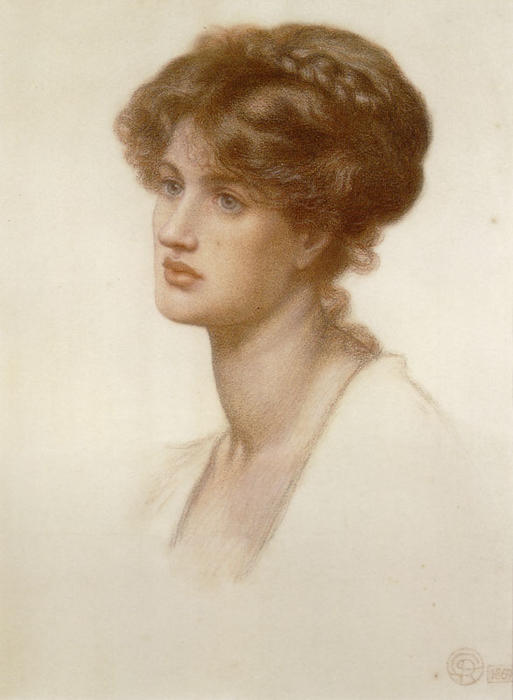
A Portrait of Quiet Contemplation: Marie Stillman by Dante Gabriel Rossetti
Dante Gabriel Rossetti’s “Marie Stillman,” painted in 1869, is more than just a depiction of a young woman; it's an exquisitely rendered meditation on beauty, melancholy, and the burgeoning spirit of Romanticism at the cusp of the Victorian era. The painting immediately draws the viewer into a world of subtle emotion, anchored by the subject’s direct gaze – a poignant invitation to share in her thoughtful stillness. Rossetti masterfully captures a moment suspended between observation and introspection, a quality that has secured its place as one of his most enduring portraits.
Chalk on Paper: A Delicate Technique
- Medium: The work’s remarkable detail is achieved through the innovative use of chalk on paper. This technique, favored by Rossetti for its ability to create luminous textures and delicate gradations of tone, lends a unique softness to the image.
- Surface Texture: The slightly textured surface of the paper enhances the impressionistic qualities of the painting, contributing to the overall sense of atmosphere and depth.
- Color Palette: Rossetti employs a restrained palette dominated by muted browns, creams, and whites, reflecting the prevailing aesthetic sensibilities of the time while simultaneously emphasizing the subject’s pale complexion and ethereal beauty.
Romantic Symbolism and Victorian Sensibilities
“Marie Stillman” is firmly rooted in the Romantic tradition, a movement that prioritized emotion, imagination, and the sublime over strict classical ideals. The woman's pose – gazing directly at the viewer – was a common motif in Romantic portraiture, intended to create an immediate connection between subject and observer. Her simple white dress symbolizes purity and innocence, while her flowing hair evokes a sense of unrestrained beauty and vulnerability. The painting reflects the Victorian fascination with idealized femininity and the exploration of inner emotions, themes prevalent in Rossetti’s oeuvre.
Rossetti's London: Contextualizing the Work
Painted in 1869, “Marie Stillman” was created during a period of significant social and artistic change in London. The city was experiencing rapid industrialization and urbanization, yet artists like Rossetti sought to preserve beauty and tradition amidst this transformation. Rossetti’s work reflects the influence of Pre-Raphaelite ideals – a reaction against the perceived artificiality of Renaissance art – emphasizing meticulous detail, vibrant color (though subtly employed here), and literary subject matter. The painting offers a window into the artistic landscape of Victorian London, showcasing Rossetti's commitment to both aesthetic innovation and historical reference.
Emotional Resonance and Artistic Legacy
“Marie Stillman” possesses an undeniable emotional power, stemming from Rossetti’s ability to capture a fleeting moment of quiet contemplation. The subject’s expression invites the viewer to share in her thoughts, fostering a sense of intimacy and connection. This painting exemplifies Rossetti's mastery of portraiture, demonstrating his profound understanding of human psychology and his exceptional technical skill. Today, “Marie Stillman” continues to resonate with audiences, solidifying its place as a cornerstone of Victorian art and a testament to the enduring power of beauty and introspection.