A Portal to the Past: The Architectural Grandeur of Córdoba
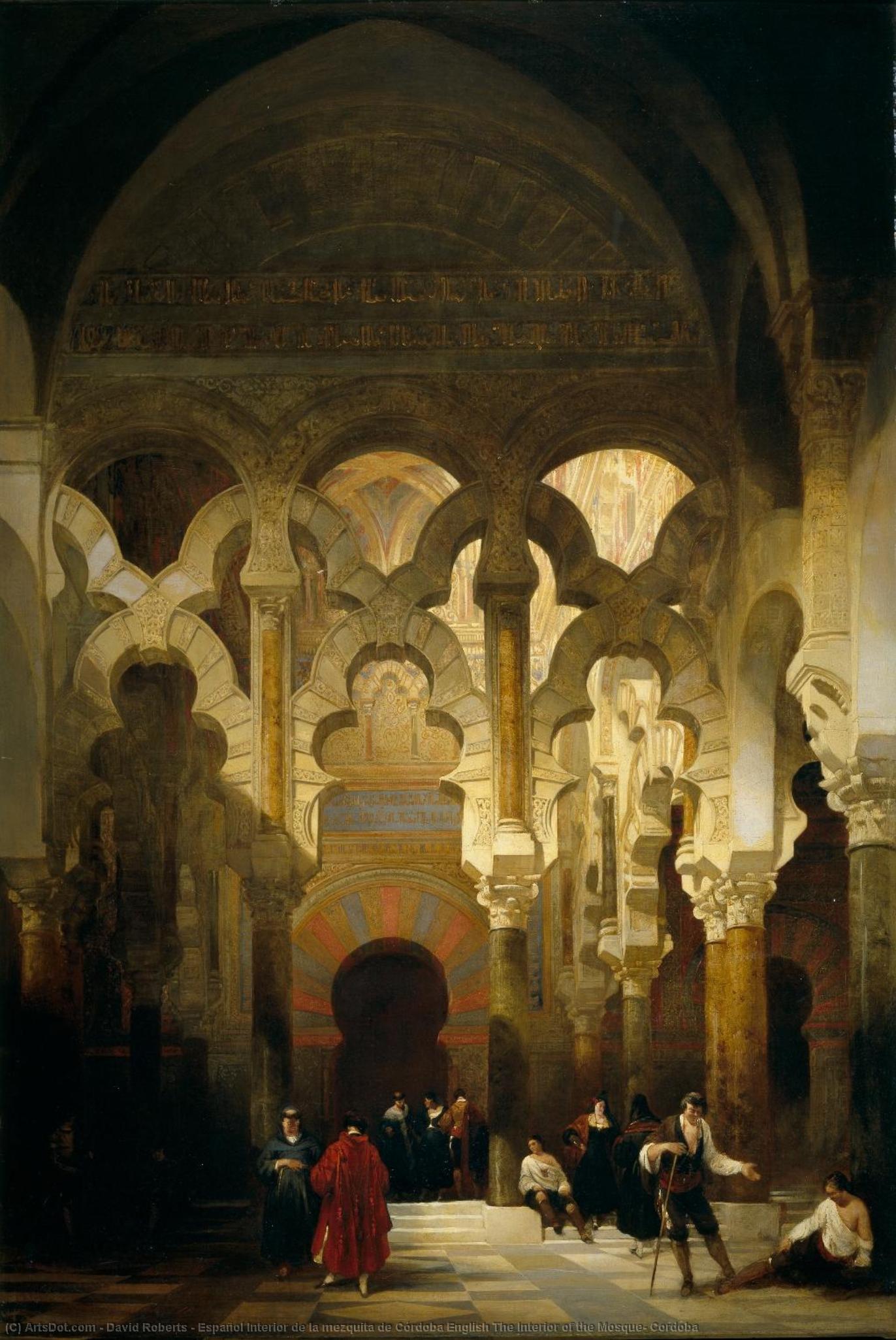
In the heart of his 1838 masterpiece, “The Interior of the Mosque, Córdoba,” David Roberts invites us to step through a threshold of time. This breathtaking work serves as more than just a depiction of a sacred space; it is a profound window into the era of Victorian Orientalism, capturing the awe-inspiring majesty of one of history's most significant architectural wonders. As the eye wanders through the vast, rhythmic expanse of the cathedral’s interior, one is immediately struck by the sheer scale of the arches that seem to stretch toward infinity. Roberts does not merely document a building; he orchestrates an encounter with the sublime, where the heavy weight of history meets the ethereal play of light.
The scene is alive with a quiet, contemplative energy. Amidst the monumental stone pillars, small figures move through the space—some draped in vibrant red garments that provide striking focal points against the more muted, earthy tones of the masonry. The presence of horses, resting near the center and edges of the composition, adds a layer of narrative depth, suggesting a moment of respite within a bustling, lived-in sanctuary. This infusion of daily life into such a grand setting creates a captivating tension between the eternal nature of the architecture and the fleeting moments of human existence.
Mastery of Light and the Art of Observation
To behold this work is to witness Roberts’s unparalleled command over watercolor and gouache. His technique is a delicate dance of precision and atmosphere, characterized by meticulous layering that builds a sense of tangible texture upon the paper. He employs chiaroscuro with masterful intent, manipulating deep shadows and brilliant highlights to sculpt the architectural forms. This interplay of light does more than define shape; it breathes life into the stone, creating a sense of depth that pulls the viewer into the very center of the nave.
The artist’s background in scene painting for the theater is evident in his ability to create immersive environments. Every wash of color and every fine line serves the purpose of atmospheric storytelling. The way light filters through the upper reaches of the arches creates a soft, diffused glow that evokes a sense of reverence and peace. For the collector or interior designer, this piece offers a sophisticated interplay of tonal complexity, making it an ideal centerpiece for spaces that require a touch of historical elegance and dramatic flair.
A Legacy of Cultural Fascination
Historically, this painting stands as a testament to the 19th-century European fascination with the Orient—a period defined by a romanticized yet deeply curious gaze toward the East. Roberts, a chronicler of the Middle East, utilized his travels to bridge the gap between distant lands and the Victorian imagination. Through his lens, the intricate Moorish influences of Córdoba are presented with an accuracy that honors the original craftsmanship while imbuing it with a sense of romantic mystery.
For those seeking to adorn a home or gallery with art that inspires conversation, this reproduction offers much more than aesthetic beauty. It provides a connection to a bygone era of exploration and discovery. The emotional impact of the work—a blend of tranquility, wonder, and respect for human heritage—makes it a timeless addition to any curated collection. It is an invitation to pause, to reflect, and to lose oneself in the magnificent, shadowed corridors of history.