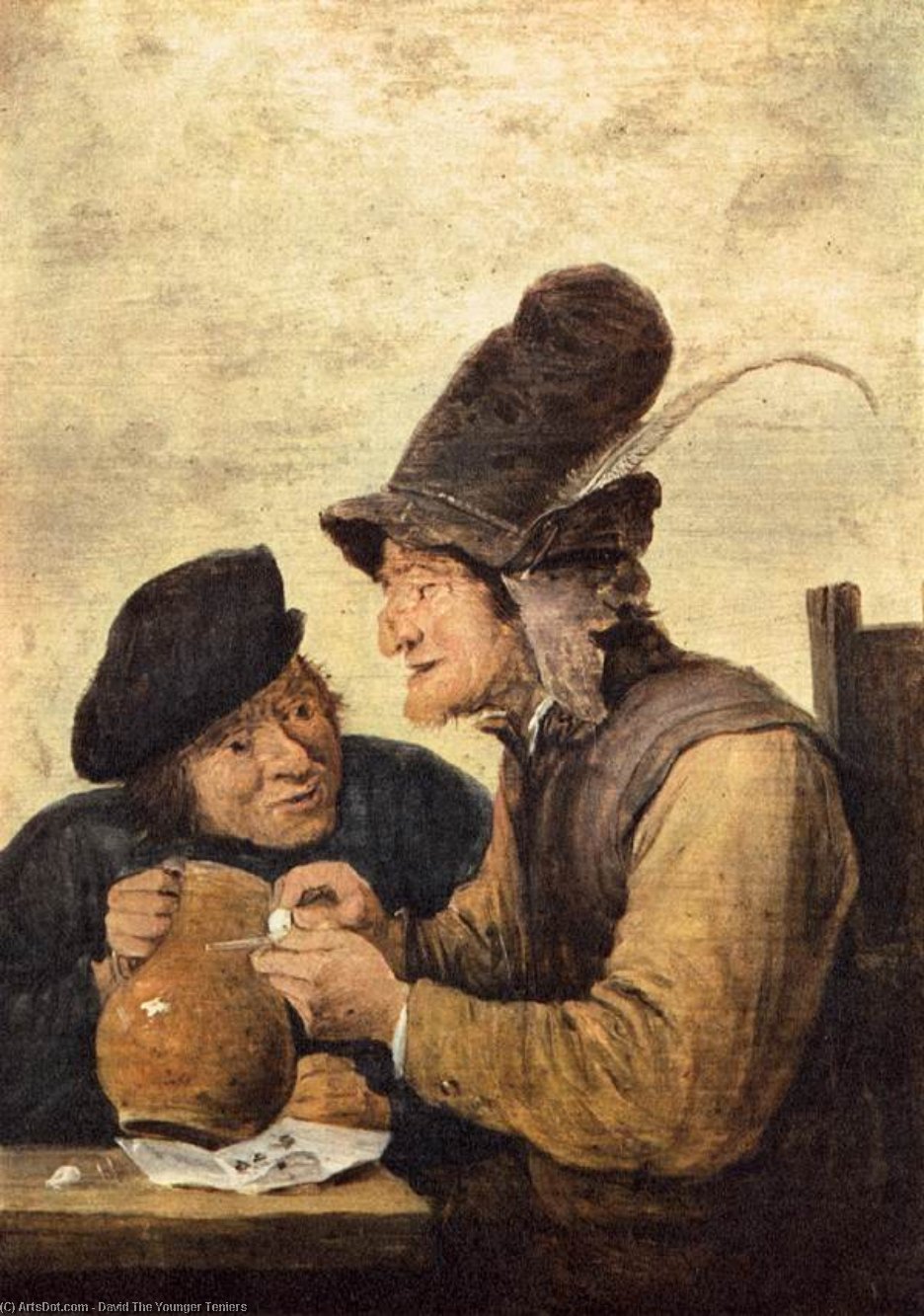
A Moment of Quiet Observation: David Teniers the Younger’s “Two Drunkards”
David Teniers the Younger's "Two Drunkards," painted in 1630, is more than just a depiction of two men engaged in an apparent conversation; it’s a meticulously crafted window into the social fabric and artistic sensibilities of the Dutch Golden Age. Measuring a modest 22 x 17 cm, this oil on panel painting, currently residing within the Národní Galerie in Prague, possesses a remarkable intimacy born from its focused composition and masterful use of light. The scene unfolds with an understated elegance – two figures, rendered with the characteristic detail and realism that defined Teniers’ oeuvre, are caught in a moment of shared attention over a small object on a table. The painting's power lies not in grand gestures or dramatic action, but in the quiet observation of everyday life, a hallmark of the genre paintings so highly valued during this period.
Style and Technique: Echoes of the Golden Age
- Dutch Golden Age Realism: Teniers’ skill lies in his ability to capture the nuances of human interaction with remarkable accuracy. The figures are not idealized; they possess a palpable sense of weariness, their expressions hinting at the complexities of conversation and perhaps, subtly, the influence of drink.
- Soft Lighting & Diffusion: The painting's atmosphere is profoundly shaped by its use of soft, diffused light – a technique frequently employed by artists of the era to create an intimate and contemplative mood. This careful manipulation of light eliminates harsh shadows, drawing the viewer’s eye directly to the central figures and their interaction.
- Panel Painting Tradition: Executed on panel, a common practice at the time, contributes to the painting's rich texture and subtle variations in color, enhancing its overall visual depth.
Historical Context & Symbolism – A Hint of Vice?
"Two Drunkards" was created during a period of significant social change in the Netherlands, marked by burgeoning trade, urban growth, and a growing interest in secular life. While the title suggests a preoccupation with alcohol consumption—a common theme in Dutch art reflecting the era’s relaxed attitude towards indulgence – the painting deliberately avoids explicit depictions of drunkenness. Instead, it focuses on the *potential* for such an encounter, inviting speculation about their conversation and the object of their shared interest. The presence of the feathered hats, fashionable accessories of the time, adds a layer of social commentary, subtly highlighting status and taste within the burgeoning merchant class.
The Artist & His Legacy: David Teniers the Younger
David Teniers the Younger (1610-1690) was a pivotal figure in the Flemish artistic landscape. Trained by his father, David Teniers the Elder, he developed a distinctive style characterized by meticulous detail and a deep understanding of human psychology. His work reflects not only his technical skill but also his keen observation of everyday life – a characteristic that secured him a prominent place within the vibrant art scene of Antwerp and beyond. The Národní Galerie’s acquisition of “Two Drunkards” underscores its significance as a representative example of Teniers' enduring legacy, a testament to his ability to capture the essence of human experience with both realism and grace.