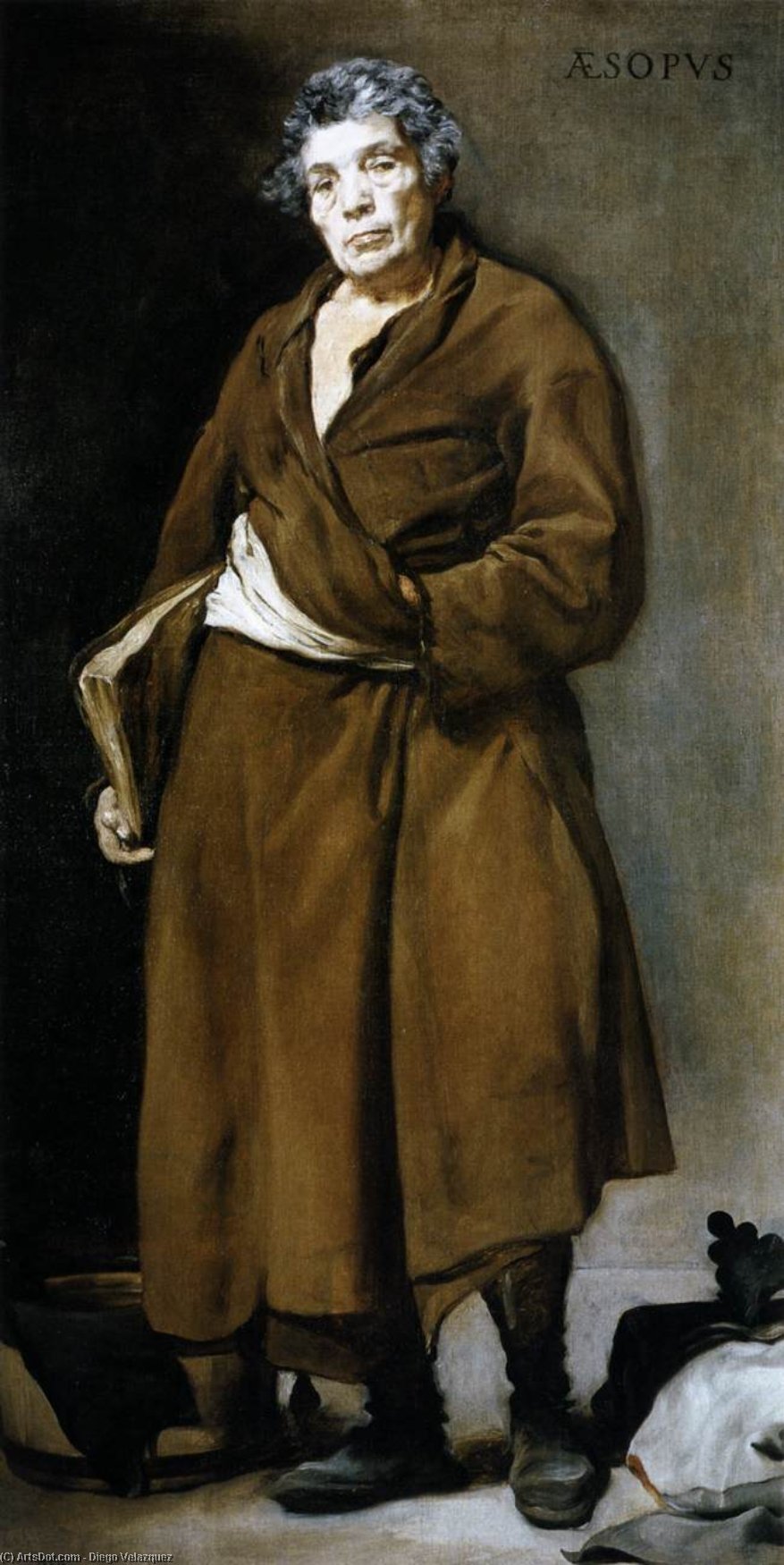
Aesop
Diego Velázquez, one of the most celebrated artists of the Spanish Golden Age, left an indelible mark on the world of art with his captivating portraits. Among these, Aesop stands out as a masterpiece that continues to intrigue art enthusiasts and scholars alike. Painted in 1639, this oil-on-canvas work is housed at the prestigious Museo del Prado in Madrid, Spain.
The Subject: Aesop
The painting depicts an elderly man with a beard, dressed in a brown coat that suggests he might be a sailor or traveler. He holds a book in his hand and stands next to a dog, adding a sense of companionship and wisdom to the scene. The subject is believed to be Aesop, the ancient Greek storyteller known for his fables—a figure revered for imparting moral lessons through narrative. Velázquez’s meticulous attention to detail captures the sitter's dignified posture and gaze, conveying an aura of profound contemplation.
Composition and Symbolism
Velázquez’s composition is characterized by its simplicity yet profound depth. The man with the book occupies the central position, framed against a subtly textured background featuring two indistinct figures—likely attendants—and architectural elements like a chair and suitcases. These additions aren't merely decorative; they serve as symbolic representations of Aesop’s journey through life, his travels disseminating wisdom and storytelling across cultures. The inclusion of the dog reinforces themes of loyalty and steadfastness, mirroring Aesop’s enduring legacy as a moral guide.
Artistic Technique
Velázquez’s mastery of light and shadow—a hallmark of Baroque painting—is evident in Aesop. He employs *chiaroscuro*, skillfully manipulating tonal variations to sculpt the figure's form and create dramatic depth, drawing the viewer’s eye directly to Aesop’s face. The brushwork is remarkably delicate yet expressive, capturing the textures of the coat fabric and the book’s parchment surface with remarkable accuracy. Velázquez achieved this breathtaking realism through layering thin glazes of pigment—a technique that allowed him to build up color gradually while maintaining luminosity and subtlety.
Historical Context
Painted during Velázquez's time in Madrid, Aesop reflects the artist’s fascination with portraying everyday life and characters from literature—a trend prevalent during the Baroque period. This era witnessed a surge of artistic patronage by the Spanish monarchy, fostering ambitious projects aimed at elevating art as a tool for conveying moral values and celebrating royal grandeur. Velázquez's depiction aligns perfectly with this cultural climate, demonstrating his commitment to capturing both visual beauty and intellectual significance.
Relevance Today
Aesop remains a fascinating piece in art history, offering insights into the artistic techniques and thematic interests of Diego Velázquez—a figure who profoundly influenced subsequent generations of painters. For those seeking inspiration or contemplating acquiring a high-quality reproduction, Aesop embodies the spirit of Baroque artistry: elegance, realism, and an unwavering dedication to conveying profound ideas. Its enduring appeal testifies to Velázquez’s genius in transforming observation into timeless art.
To delve deeper into the world of Diego Velázquez and his contributions to Spanish art, visit The Museum Prado (Madrid, Spain) on ArtsDot. This museum houses an extensive collection of European art, including several works by Velázquez.
For a comprehensive list of Diego Velázquez's paintings and drawings, refer to List of works by Diego Velázquez on Wikipedia.
In conclusion, Aesop by Diego Velázquez is a testament to the artist’s skill in capturing the essence of his subjects. This painting continues to captivate audiences with its enigmatic presence and rich symbolism, making it a significant piece in the history of art.