The Soul Behind the Gaze: Encountering Velázquez’s Portrait of a Man
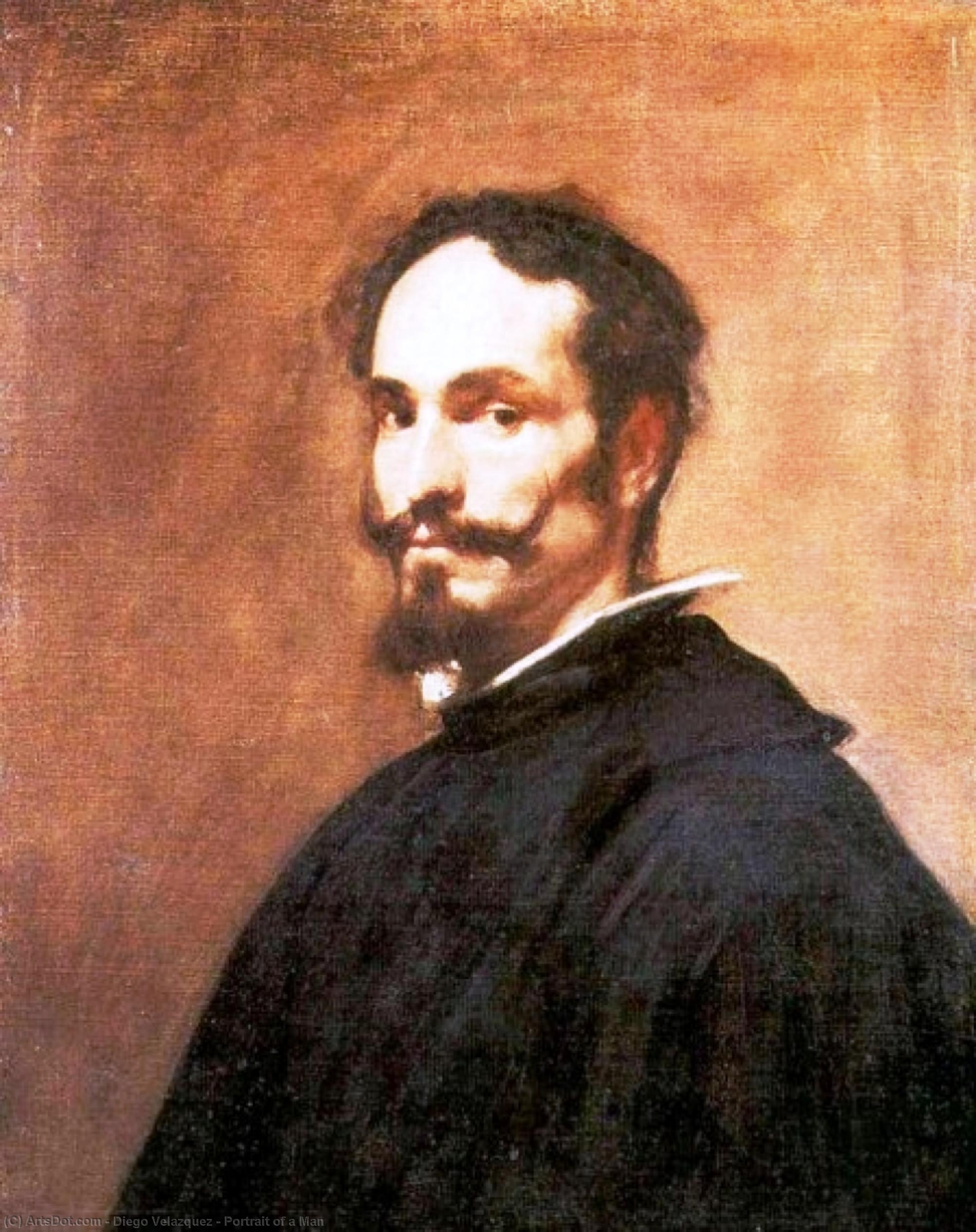
In the quiet corridors of the Wellington Museum in London, there exists a moment of profound stillness captured in oil on canvas. Diego Velázquez, the undisputed titan of the Spanish Golden Age, achieved something miraculous in his 1649 Portrait of a Man: he did not merely paint a likeness, but rather summoned a presence. The subject, a man defined by a dignified beard and mustache, emerges from a dark, atmospheric void, his gaze meeting the viewer with an intensity that feels both immediate and eternal. There is a weight to his expression, a contemplative gravity that suggests a life lived through the complex political and religious shifts of 17th-century Spain. To look upon this portrait is to enter into a silent dialogue with history, where every brushstroke serves as a bridge between the viewer and the vanished world of the Habsburg court.
The technical mastery on display in this work is a testament to Velázquez’s evolution as a painter. Moving away from the rigid, precise tenebrism of his youth, this portrait showcases his ability to manipulate light and shadow to create volume and psychological depth. The artist employs a sophisticated palette where rich, dark tones are punctuated by subtle, vibrant highlights that catch the texture of the man's facial hair and the heavy folds of his black attire. This mastery of chiaroscuro does more than just define form; it creates an emotional atmosphere of mystery. For the discerning collector or interior designer, this piece offers a commanding focal point—a work that brings a sense of intellectual rigor and classical elegance to any curated space.
A Legacy of Light and Human Truth
Beyond the mere depiction of a person, the Portrait of a Man embodies the very essence of the Spanish Baroque aesthetic. This era was characterized by a unique tension between outward grandeur and inward spiritual reflection. Velázquez captures this duality perfectly; while the subject’s clothing speaks to a certain social standing or historical importance, his eyes reveal a vulnerable, human interiority. There is no unnecessary ornamentation here, only the raw, honest pursuit of character. This economy of detail—focusing the viewer's attention on the subtle nuances of the brow and the steady set of the mouth—is what makes the work so enduringly modern.
Integrating a high-quality reproduction of such a masterpiece into a contemporary environment allows for a profound connection to the Golden Age. Whether placed in a study filled with books or as a centerpiece in a minimalist gallery-style living room, the painting acts as an anchor of sophistication. It invites contemplation and serves as a reminder of the power of art to capture the ephemeral nature of human thought. Owning a piece that echoes Velázquez’s legendary ability to breathe life into pigment is not just about decoration; it is about surrounding oneself with the enduring spirit of one of history's greatest visual storytellers.