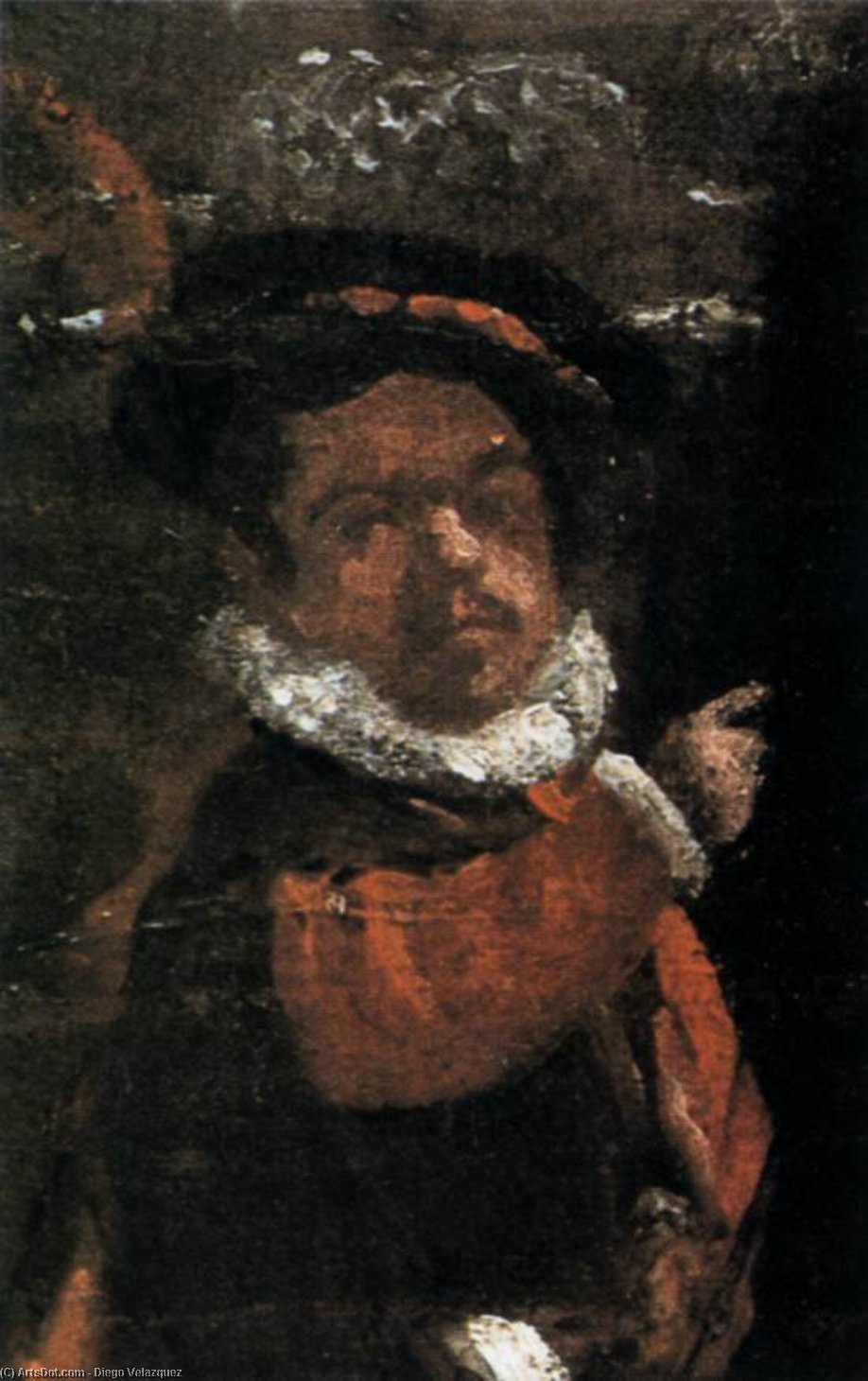
Prince Baltasar Carlos with the Count-Duke of Olivares at the Royal Mews (detail) – A Window into the Soul of an Era
Diego Velázquez’s “Prince Baltasar Carlos with the Count-Duke of Olivares at the Royal Mews (detail)” is more than just a portrait; it's a meticulously crafted snapshot of power, introspection, and the subtle dance between royalty and counsel within 17th-century Spain. Painted in 1636, this intimate detail from a larger composition offers an unparalleled glimpse into the character of Prince Baltasar Carlos, son of King Philip IV, and the astute presence of the Count-Duke of Olivares, his chief minister. The painting resides today in the collection of the Duke of Westminster at the Wallace Collection in London, a testament to its enduring artistic merit and historical significance. Velázquez’s genius lies not merely in his technical skill – though undeniably masterful – but in his ability to capture the very essence of his subjects, imbuing them with a palpable sense of personality and emotion.
The scene unfolds within the confines of a royal mews, a space typically associated with activity and preparation, yet here rendered remarkably still and contemplative. The Prince, positioned slightly off-center, is dressed in a vibrant red attire accented by a crisp white collar – clear indicators of his elevated status. His gaze, directed downwards, immediately draws the viewer’s attention, creating an immediate sense of quiet introspection. This isn't a pose of regal authority; rather, it suggests a moment of private reflection, perhaps considering weighty matters or simply lost in thought. The Count-Duke of Olivares, standing to the right, exudes an air of dignified composure, his posture and bearing reflecting years of service and political acumen. He’s not depicted as overtly powerful, but rather as a figure of measured authority – a silent observer and advisor. Noticeably, the background is subtly populated with two birds: one on the left, another to the right. These seemingly minor details are far from accidental; they introduce an element of naturalism and perhaps even a touch of symbolism, hinting at themes of freedom, observation, or the fleeting nature of time – elements that resonate deeply within the Baroque aesthetic.
Velázquez’s technical prowess is immediately apparent in the painting's remarkable realism. He employs *chiaroscuro*, the dramatic interplay of light and shadow, to sculpt the figures and create a sense of depth and volume. The textures of the Prince’s clothing – the velvet, the lace, the folds of fabric – are rendered with astonishing detail, inviting the viewer to almost reach out and touch them. Similarly, the subtle variations in tone capture the nuances of the surrounding environment, from the rough texture of the doorway to the muted colors of the background. This meticulous attention to detail is not merely decorative; it serves to ground the scene in reality and enhance its emotional impact. The artist’s use of loose brushstrokes, particularly evident in the rendering of the figures' clothing and the background, contributes to a sense of immediacy and spontaneity – as if Velázquez were capturing a fleeting moment in time.
Historically, “Prince Baltasar Carlos with the Count-Duke of Olivares at the Royal Mews (detail)” provides invaluable insight into the political landscape of Spain during the reign of Philip IV. The Count-Duke of Olivares was a pivotal figure, serving as the King’s chief minister and orchestrating much of Spain's foreign policy and domestic affairs. Including him in this portrait underscores his immense influence and the complex web of relationships within the royal court. The painting reflects the Baroque era’s fascination with portraying human emotion and psychological depth – a departure from earlier, more idealized representations of royalty. Velázquez wasn’t simply documenting a scene; he was revealing character, capturing the inner lives of his subjects. His work profoundly influenced subsequent generations of artists, particularly in Spain, establishing a new standard for portraiture characterized by realism, psychological insight, and dramatic use of light and shadow. For those seeking to delve deeper into Velázquez’s oeuvre, WGA offers a detailed look at his other works, while Wikipedia provides a comprehensive biography outlining the artist's life and legacy.
- Key Techniques: Chiaroscuro, Realism, Loose Brushstrokes
- Historical Significance: Reflects the political power of the Count-Duke of Olivares and the complexities of the Spanish court.
- Symbolic Elements: The birds in the background may represent freedom, observation, or the passage of time.
Exploring Further: Velázquez’s Artistic Legacy
Diego Velázquez's impact on art history is undeniable. His innovative techniques and profound understanding of human psychology paved the way for future generations of painters. He wasn't just a portraitist; he was a master of capturing the essence of his subjects, imbuing them with personality and emotion. His influence can be seen in the works of artists such as Rembrandt, Goya, and Picasso, who all drew inspiration from Velázquez’s masterful use of light, shadow, and color. The painting's composition—the careful arrangement of figures within a defined space—demonstrates Velázquez’s command of perspective and his ability to create a sense of depth and realism. Consider the subtle details – the way the fabric drapes, the expression on the Prince’s face, the quiet dignity of the Count-Duke – each element contributes to the painting's overall impact.
A Reproduction for Your Collection
ArtsDot offers meticulously crafted hand-painted reproductions of “Prince Baltasar Carlos with the Count-Duke of Olivares at the Royal Mews (detail)” by Diego Velázquez, allowing you to bring this iconic masterpiece into your home or office. Our skilled artists replicate the painting’s intricate details and vibrant colors using traditional techniques, ensuring a faithful representation of Velázquez's original vision. Whether you are an art enthusiast, a collector, or simply seeking a stunning piece of décor, our reproductions provide an authentic and affordable way to experience the beauty and historical significance of this remarkable work. Explore more of Diego Velazquez’s masterpieces on ArtsDot.com.
Resources for Further Study