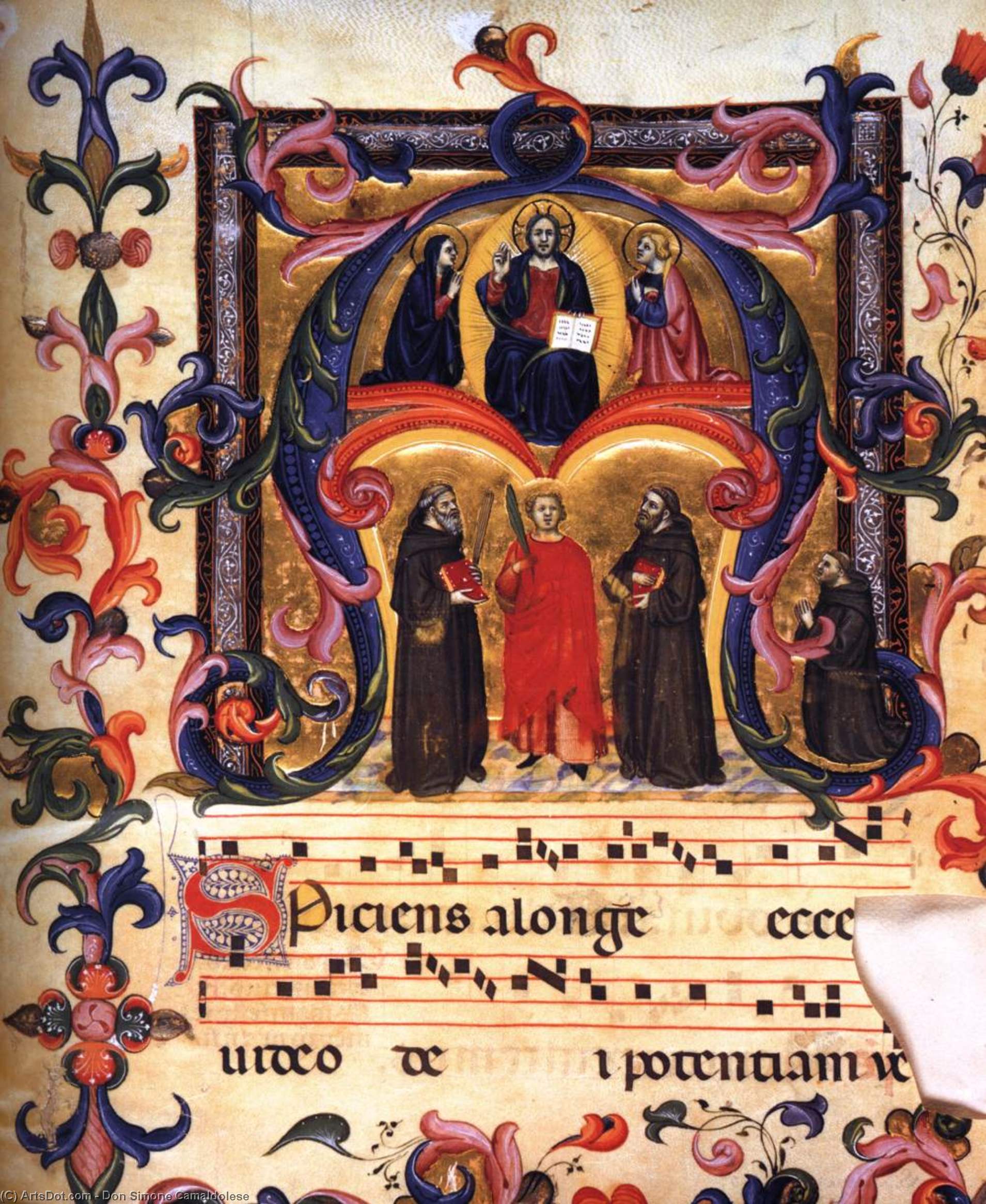
Delicate Gothic artistry shines through Don Simone Camaldolese’s stunning Initial ‘A’ from the Antiphonary Choir Book 39, a masterpiece of Florentine illumination dating back to 1381. Explore this exquisite piece and its rich symbolism at ArtsDot.
Don Simone Camaldolese (c. 1378-1405) was a Florentine artist renowned for illuminated manuscripts, including the Antiphonary & Gradual. Explore his intricate initial capitals and book illustrations.
Otkrijte istoriju i umetnost u Biblioteci Medicea Laurenziana u Firenci. Uživajte u arhitektonskom remek-delu Mikelanjela i neprocenjivim kolekcijama renesansnih rukopisa i drevnih tekstova.
A Window Into Medieval Liturgy: Examining Don Simone Camaldolese’s Initial ‘A’ from the Antiphonary Choir Book 39
The Initial ‘A’ from the Antiphonary Choir Book 39 by Don Simone Camaldolese, created in 1381, transcends mere calligraphy; it embodies the spirit of Gothic art and serves as a tangible link to the solemn rituals of medieval Christendom. This exquisite manuscript illumination hails from Florence, specifically housed within the Biblioteca Medicea-Laurenziana, where its preservation allows us to appreciate not only its visual splendor but also the profound cultural significance embedded within its intricate design.
The Context of Faith: Medieval Liturgy and Monastic Patronage
Medieval liturgical practice revolved around chanting hymns and prayers—the Divine Office—performed by monks and canons in churches throughout Europe. The Antiphonary Choir Book 39, like countless others produced during this era, was a crucial instrument for facilitating these sacred ceremonies. Its purpose wasn’t simply functional; it aimed to elevate the soul and foster contemplation amidst the daily rhythm of monastic life. Don Simone Camaldolese's work reflects this devotion, commissioned by Santa Maria degli Angeli monastery—a testament to the influence of religious patronage on artistic endeavors during the period.
A Symphony of Color and Ornamentation: Artistic Technique and Style
Camaldolese’s mastery lies in his masterful application of tempera paint and gold leaf onto parchment – techniques that ensured remarkable longevity for this artwork. Tempera, derived from pigment mixed with egg yolk, provided vibrant hues capable of capturing the subtleties of light and shadow, while gold leaf imparted an aura of majesty and holiness—a deliberate choice mirroring the importance of the liturgical text it adorned. The artist’s meticulous attention to detail is evident in every flourish of foliage, petal, and animal motif that embellishes the letter ‘A’. This style aligns closely with broader Gothic artistic trends prevalent across Europe, notably exemplified by masterpieces like Duccio Di Buoninsegna's MaestÓ and Giotto Di Bondone’s Legend of St Francis.
Symbolism Rooted in Tradition: Flora, Fauna, and Divine Representation
The decorative elements surrounding the Initial ‘A’ are laden with symbolic meaning. Foliage and flowers—particularly lilies—represent purity and divine grace – concepts central to Christian theology. Animals, such as birds and insects, symbolize humility and contemplation, mirroring the contemplative nature of monastic prayer. The overall composition speaks to a desire for transcendence, inviting viewers to contemplate the sacredness of scripture and the beauty of God’s creation.
Emotional Resonance: Capturing the Spirit of Medieval Art
More than just aesthetically pleasing, this Initial ‘A’ evokes a powerful emotional response—a feeling of reverence and wonder at the artistry of a bygone era. It transports us back to a time when faith permeated every aspect of daily life, inspiring artists like Don Simone Camaldolese to create works that not only documented religious beliefs but also sought to embody their essence. A reproduction captures this spirit, offering an opportunity to bring a piece of medieval art history into the modern home—a celebration of craftsmanship and devotion.