A Glimpse Through Time: The Dignity of Early Australian Portraiture
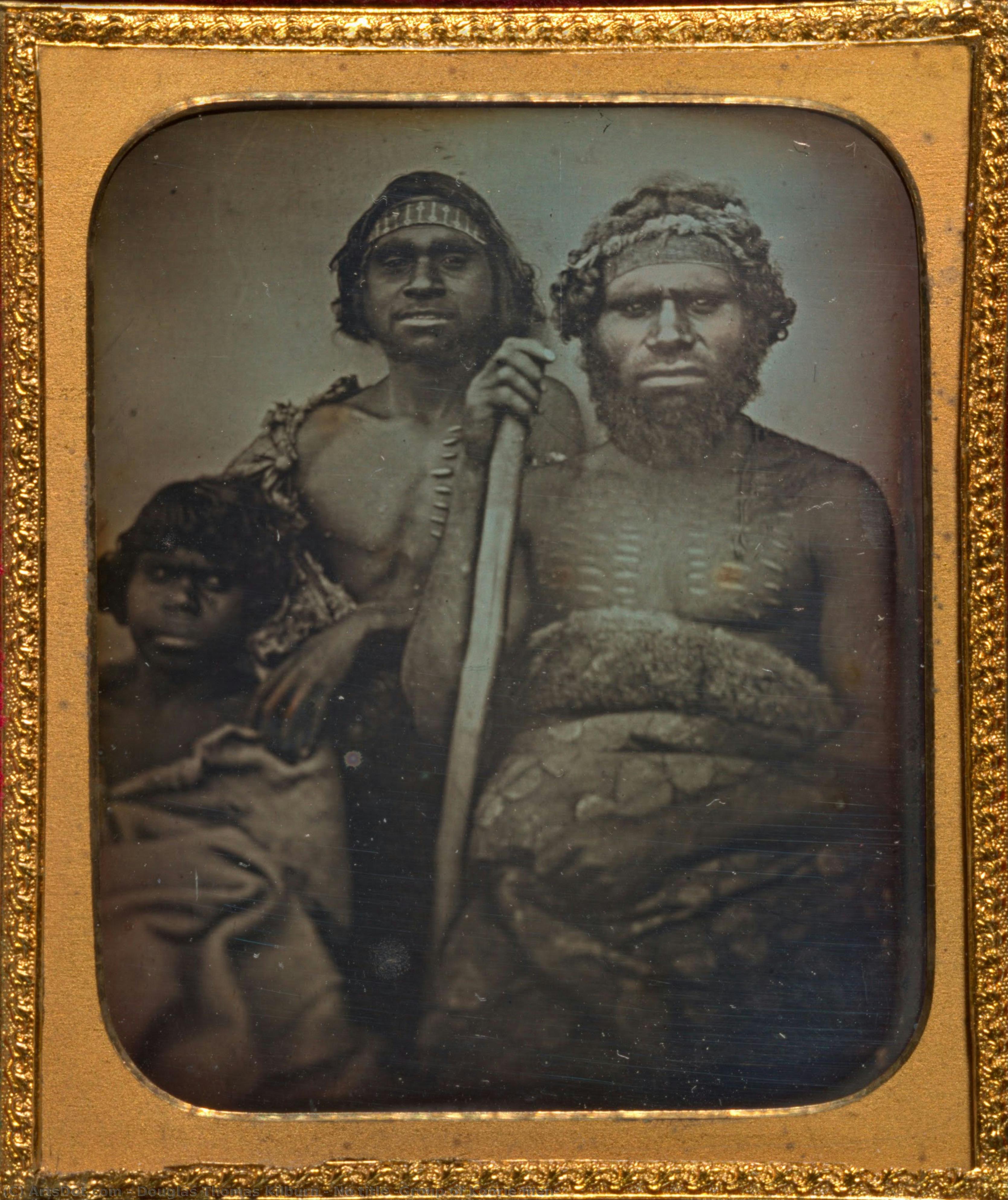
To stand before this remarkable daguerreotype is to confront a moment suspended in amber—a fragile echo from the nascent days of Melbourne. Created in 1847 by Douglas Thomas Kilburn, these images are not merely photographs; they are primary documents of encounter, capturing the lives and presence of Aboriginal people from the surrounding tribes. The composition itself draws the eye immediately to the grouping: three commanding men standing sentinel beside a cluster of seated children. The black and white medium inherently lends an air of solemnity, forcing us to look past the technical limitations of early photography and into the enduring spirit captured within the frame.
Technique and Historical Context
Kilburn’s pioneering work as a daguerreotypist placed him at the very intersection of burgeoning colonial enterprise and deep-rooted Indigenous culture. The process itself—the meticulous chemistry required to fix an image onto polished metal plates—speaks volumes about the scientific curiosity of the mid-nineteenth century. While Kilburn intended these images perhaps as ethnographic studies, the resulting portraits transcend such categorization. Notice the details: the traditional attire worn by the men, the spear held with practiced ease, and even the incongruous presence of an umbrella near the center—these elements anchor the piece firmly in its time while simultaneously suggesting a narrative richness that resists simple labeling.
Symbolism and Enduring Presence
What resonates most profoundly is the palpable dignity emanating from the sitters. Despite the historical context, which involved approaches described as requiring bribery to secure cooperation, the subjects project an undeniable self-possession. They are not merely objects of study; they are individuals asserting their continuity. For contemporary viewers, these daguerreotypes have evolved into powerful symbols of survival and resilience. The gaze captured here is direct, meeting the lens—and thus, the viewer—with an unwavering acknowledgment of existence.
Bringing History Home: Decorating with Memory
For the discerning collector or designer seeking art that carries weight, history, and narrative depth, this reproduction offers a unique focal point. Imagine this piece rendered in exquisite detail within a sophisticated interior space. It does not shout for attention; rather, it invites contemplation. Its muted tones and profound subject matter lend themselves beautifully to rooms aiming for an atmosphere of cultured gravitas or historical reverence. Owning a high-quality reproduction allows one to participate in the dialogue between past and present, honoring both the pioneering artistry of Kilburn and the enduring culture represented.