A Moment Frozen in Time: The Psychological Depth of Duccio’s Masterpiece
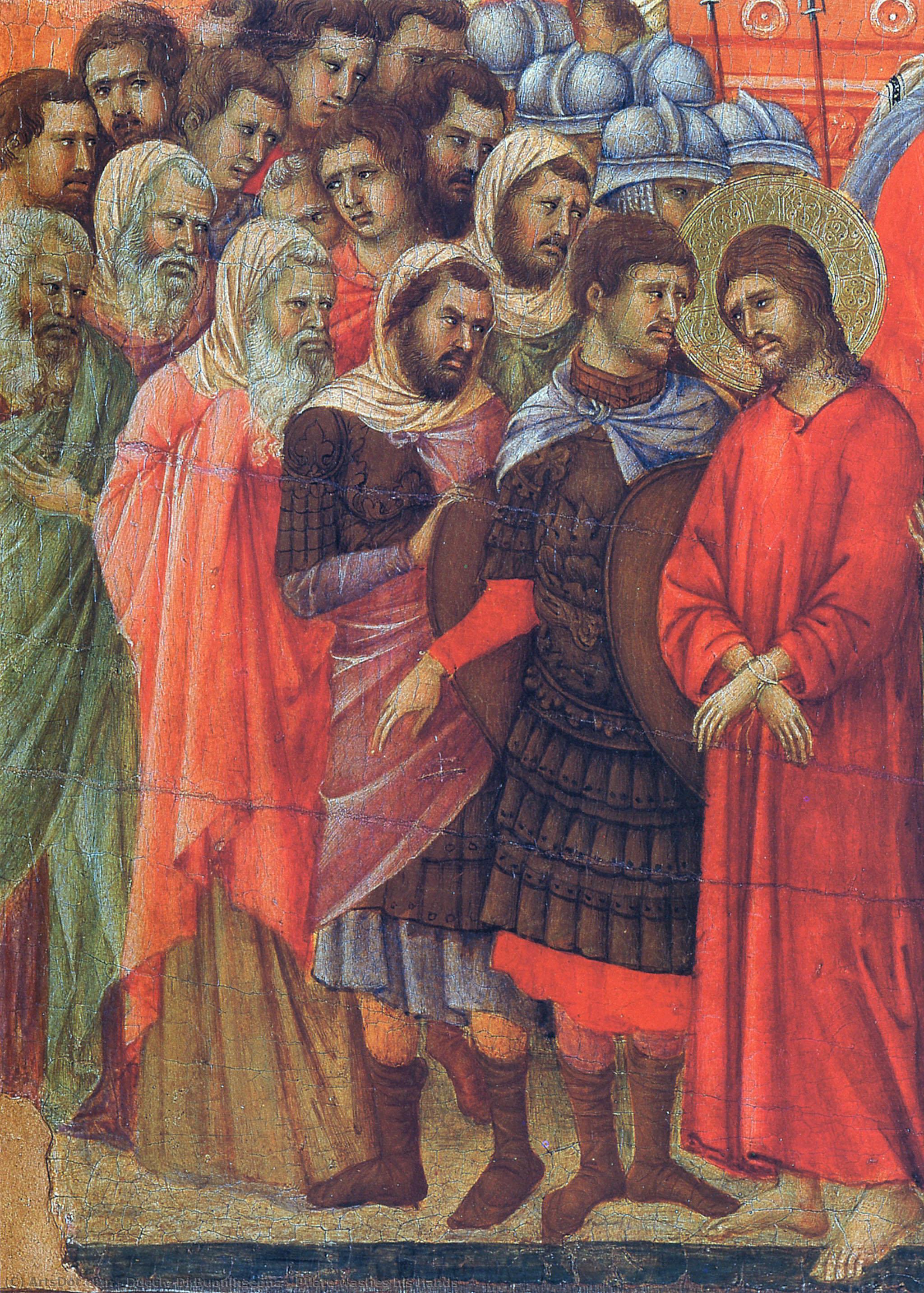
In the quiet, hallowed atmosphere of the early fourteenth century, a transformative moment in art history was captured on a wooden panel. Duccio di Buoninsegna’s “Pilate Washes His Hands” is far more than a mere biblical illustration; it is a profound meditation on the agonizing weight of human decision. As part of the monumental Maestà altarpiece, this scene transports the viewer to a pivotal juncture in the Gospel narrative, where the fate of Jesus Christ hangs in the balance. The painting captures the precise second when Pontius Pilate attempts to divest himself of moral responsibility, his hands meeting in a gesture that has since become an eternal symbol of evasion and regret.
The composition is a masterclass in Proto-Renaissance storytelling, where the rigid, golden formality of the Byzantine tradition begins to soften into something deeply human. Duccio skillfully employs tempera on panel, a technique that allows for a luminous, ethereal quality in the colors and subtle gradations of tone. Through an emerging use of illusionistic perspective, he creates a sense of depth that draws the observer into the crowded, tense space of the trial. The figures are not merely icons; they possess a burgeoning naturalism, with drapery that falls with weight and faces that reflect the heavy atmosphere of judgment and uncertainty.
Symbolism and the Weight of Authority
Every element within this frame serves a higher narrative purpose, weaving a complex web of symbolism that resonates with both spiritual and earthly power. The act of washing hands is, of course, the central motif—a powerful emblem of the attempt to escape the consequences of one's actions. Surrounding this central drama, the presence of swords introduces a sharp, metallic tension, representing both the divine judgment awaiting the accused and the brutal, earthly power of the Roman Empire. A shield visible on the periphery further underscores the themes of conflict and protection.
The emotional resonance of the piece is found in its ability to evoke pathos. Duccio does not present Pilate as a triumphant conqueror, but as a man consumed by doubt and the crushing pressure of his office. The interplay of light and shadow across the scene intensifies this sense of solemnity, highlighting the psychological complexity of the characters. For the modern collector or interior designer, this artwork offers more than just aesthetic beauty; it provides a focal point of profound contemplation, making it an ideal centerpiece for spaces designed for reflection, study, or sophisticated intellectual engagement.
An Eternal Legacy for the Discerning Collector
To possess a high-quality reproduction of this Sienese treasure is to bring a piece of the Italian Trecento into the contemporary home. Duccio’s ability to bridge the gap between the divine and the earthly makes "Pilate Washes His Hands" a timeless addition to any curated collection. It serves as a reminder of a period when art began to breathe with a new, tender humanity, moving away from stylized conventions toward an intimate connection with the viewer's own emotions.
Whether gracing a grand gallery wall or adding a layer of historical depth to a refined living space, this painting inspires awe through its technical mastery and narrative gravity. It remains a testament to the power of art to capture the most fleeting, yet most significant, moments of the human experience.