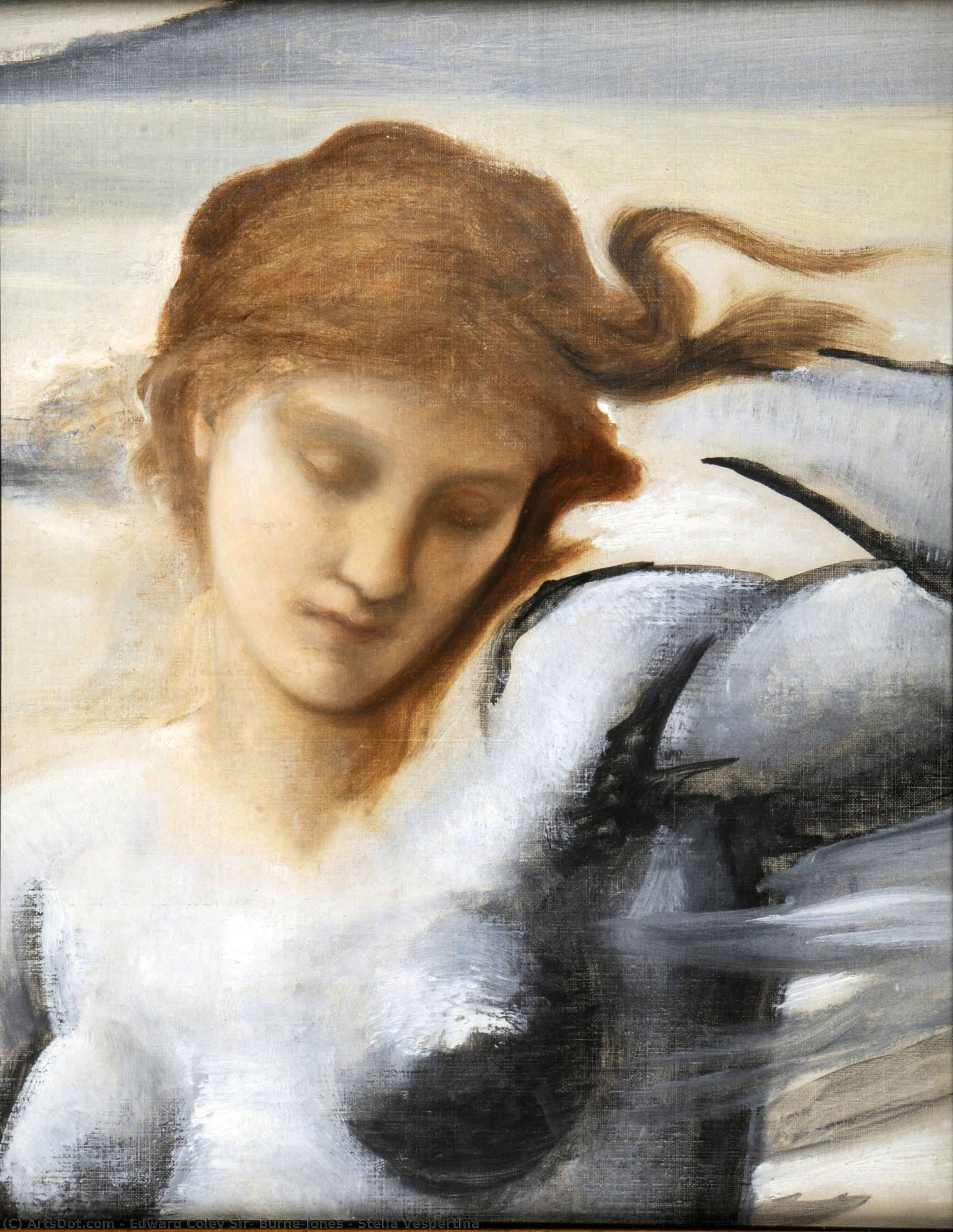
Explore 'Stella Vespertina,' a melancholic oil painting by Edward Burne-Jones. A Pre-Raphaelite masterpiece featuring a woman in thought, reflecting romanticism & Victorian aesthetics.
Откријте пленити прерафаелитски створ БенаЏонса (1833-1898). Истражите његове митолошке слике, стаклење и дизајне Аестетичке школе.
Otkrijte svet Vilijama Morisa u galeriji Walthamstow! Istražite zadivljujuće tekstil, dizajn i njegovo socijalističko nasleđe. Besplatan ulaz – proslava lepote pokreta Arts & Crafts.
A Dream Woven in Color: Exploring Edward Burne-Jones’ Stella Vespertina
This hauntingly beautiful oil painting by Sir Edward Coley Burne-Jones, completed around 1881, transcends mere visual representation; it embodies the spirit of Romanticism intertwined with the profound influence of Pre-Raphaelite aesthetics. More than just a depiction of a young woman’s visage, “Stella Vespertina” – Latin for "Evening Star" – is a meditation on sorrow, contemplation, and the elusive beauty found within melancholic introspection. Its creation coincided with Burne-Jones' fervent engagement in the Pre-Raphaelite Brotherhood’s quest to recapture artistic purity by rejecting academic conventions and returning to medieval sources of inspiration.
The Subject Matter: A Portrait Steeped in Symbolism
Initially conceived as a full-length nude figure seated upon a rock, mirroring depictions of biblical Mary Magdalene – a deliberate nod to the Brotherhood's preoccupation with religious iconography – “Stella Vespertina” underwent a transformative revision process. Recognizing the limitations of capturing the essence of emotion through monumental sculpture, Burne-Jones skillfully reduced the canvas size, preserving the core compositional elements while distilling them into a powerfully concentrated image. The woman portrayed is rendered in profile to the right, her gaze downward—a gesture that speaks volumes about inner turmoil and unspoken grief. Her flowing hair cascades around her shoulders, symbolizing unrest and vulnerability – motifs frequently employed by Pre-Raphaelite artists to convey psychological depth. The subtle inclusion of a hat serves as a protective barrier against external pressures, highlighting themes of solitude and resilience.
Technique and Style: Impressionistic Brushstrokes Reveal Emotional Resonance
Burne-Jones’ masterful technique exemplifies the hallmarks of Impressionism blended with Pre-Raphaelite precision. Loose, expressive brushstrokes dominate the painting's surface, capturing the ephemeral quality of light and emotion—a characteristic favored by artists seeking to convey subjective experience rather than objective reality. The artist meticulously rendered the woman’s face with remarkable detail, utilizing subtle shading and highlighting to sculpt form and imbue it with palpable warmth. This meticulous attention to anatomical accuracy contrasts sharply with the broader atmospheric perspective employed in the background, creating a dynamic interplay between focal point and environment. The muted palette—primarily shades of gray, brown, beige, and white—contributes significantly to the painting’s somber mood, fostering an atmosphere of quiet contemplation.
Historical Context: Embracing Medieval Ideals Amidst Victorian Change
“Stella Vespertina” emerged during a period of significant artistic and intellectual upheaval in Victorian England. The Pre-Raphaelite Brotherhood championed a revival of medieval art and literature, rejecting the perceived artificiality of academic painting and advocating for a return to spiritual values. Burne-Jones’ work reflects this broader movement's fascination with mythology and symbolism—drawing inspiration from Dante Alighieri’s “Divine Comedy” and exploring themes of redemption and sorrow. The painting stands as a testament to the enduring power of Romantic ideals within a rapidly industrializing society, capturing a moment of profound emotional resonance that continues to captivate viewers today.
Emotional Impact: A Window into Inner Turmoil
Ultimately, "Stella Vespertina" succeeds in conveying an overwhelming sense of melancholy and introspection. The artist’s skillful use of color, brushwork, and composition invites the viewer to contemplate themes of loss, vulnerability, and the beauty found within quiet sorrow. It's a painting that lingers in the mind long after viewing, prompting reflection on the complexities of human emotion and the enduring allure of Pre-Raphaelite artistic vision. Its understated elegance speaks volumes about Burne-Jones’ ability to distill profound psychological states into a single, unforgettable image—a legacy that secures its place as one of the most poignant works of art from the Victorian era.