A Moment of Quietude: Egon Schiele’s “Reclining Girl on a Pillow”
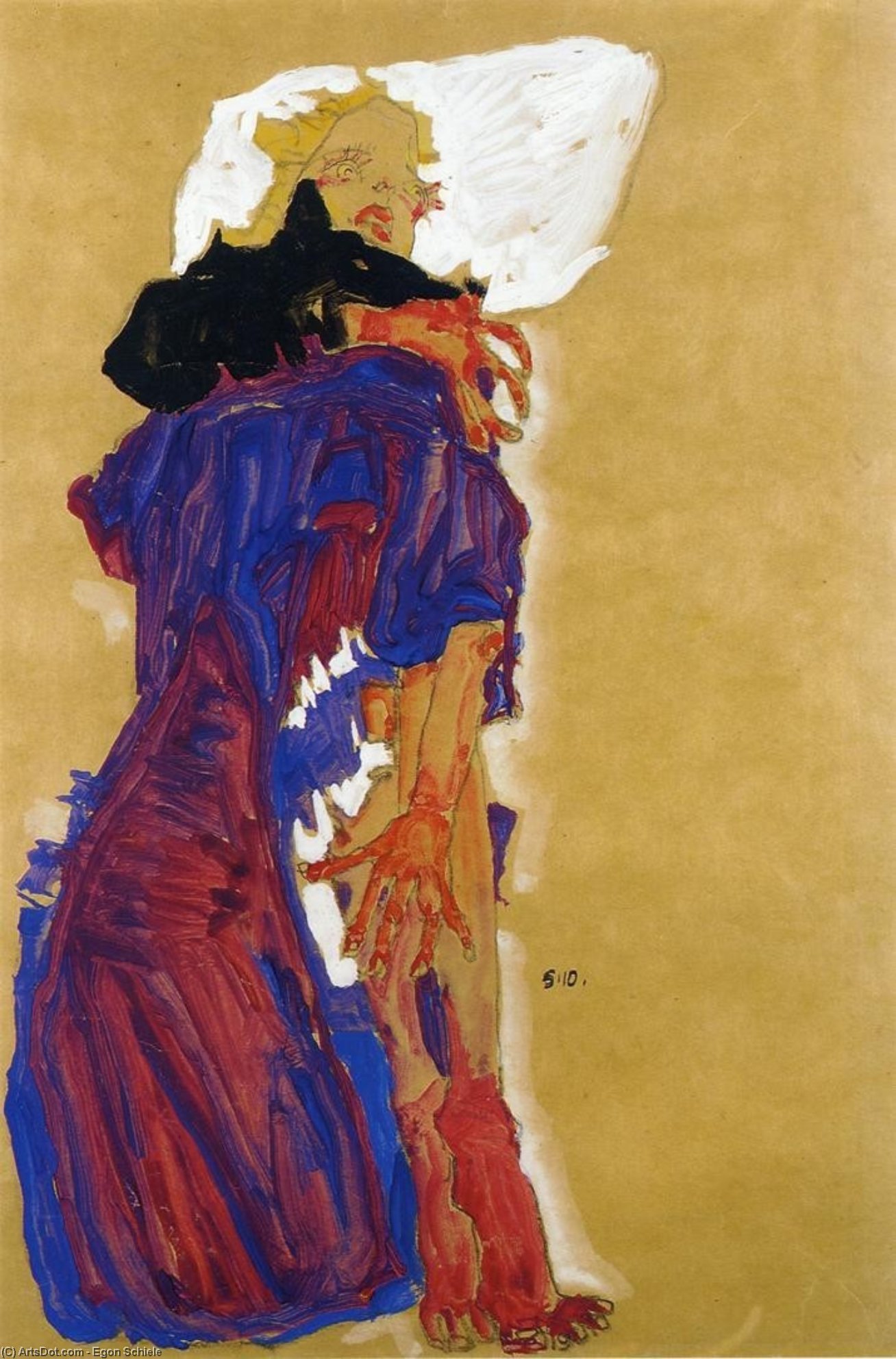
Egon Schiele's "Reclining Girl on a Pillow," painted in 1910, isn’t merely a depiction of a woman resting; it’s a raw and intensely personal exploration of vulnerability, mortality, and the fleeting beauty of existence. Created during a period of profound upheaval for the artist – marked by illness, loss, and a growing preoccupation with death – this intimate oil on canvas offers a glimpse into Schiele's uniquely unsettling yet captivating world. The painting’s deceptively simple composition—a young woman curled upon a pillow, bathed in a muted palette of reds and blues—conceals layers of psychological depth and artistic innovation that continue to resonate with viewers today.
The Expressionist Palette: Form and Emotion
Schiele’s signature style is immediately apparent in “Reclining Girl on a Pillow.” He abandons traditional representational techniques, favoring bold, gestural brushstrokes that convey an almost palpable sense of unease. The forms are distorted, the lines fragmented—a deliberate rejection of academic precision in favor of expressing raw emotion. Notice how the pillow itself seems to undulate and shift beneath the girl’s form, mirroring a subconscious instability. The color choices – predominantly deep reds and blues – aren't chosen for their beauty but rather for their symbolic weight. Red often represents passion, desire, and even blood—a subtle nod to Schiele’s own struggles with mortality. Blue, frequently associated with melancholy and introspection, further reinforces the painting’s somber mood.
-
Brushwork:
Characterized by rapid, almost frantic strokes that build up layers of paint, creating a textured surface that seems to vibrate with energy.
-
Color Palette:
A restrained yet powerful combination of reds and blues, evoking both passion and melancholy.
-
Distortion:
The deliberate manipulation of form contributes to the painting’s unsettling atmosphere.
A Portrait of Anxiety: Schiele's Personal Landscape
Understanding Schiele requires acknowledging the context of his life. His father’s death from syphilis, coupled with the early loss of his sister, profoundly shaped his artistic vision. “Reclining Girl on a Pillow” can be interpreted as a meditation on these traumas—a visual representation of vulnerability and the fragility of human existence. The girl's closed eyes suggest a state of surrender or perhaps even oblivion, while her slightly parted lips hint at an unspoken sorrow. The painting isn’t about idyllic repose; it’s about confronting the darker aspects of life with unflinching honesty.
Interestingly, Schiele’s artistic circle included Max Oppenheimer, another Austrian Expressionist known for his own explorations of sexuality and mortality. Their shared interest in depicting raw emotion and challenging conventional notions of beauty created a fertile ground for artistic exchange and mutual influence.
Symbolism and the Echoes of Vienna
Beyond its immediate emotional impact, “Reclining Girl on a Pillow” is steeped in symbolism. The pillow itself can be seen as a symbol of comfort and security—a fleeting illusion offered to someone facing an uncertain future. The girl’s pose, reminiscent of classical reclining figures, subtly subverts traditional notions of beauty and grace, imbuing the image with a sense of unease. Furthermore, the painting reflects the broader artistic climate of Vienna at the turn of the 20th century—a city grappling with social change, political unrest, and a growing awareness of psychological complexities. The Österreichische Galerie Belvedere in Vienna houses a significant collection of Schiele’s work, offering visitors a chance to immerse themselves in this pivotal moment in art history.
A high-quality reproduction of “Reclining Girl on a Pillow” offers a powerful way to experience the intensity and emotional depth of Schiele's vision. It’s more than just a painting; it’s a window into the soul of an artist grappling with life, death, and the enduring mysteries of human existence.