A Study in Tension: Exploring Egon Schiele’s Torso Masculine
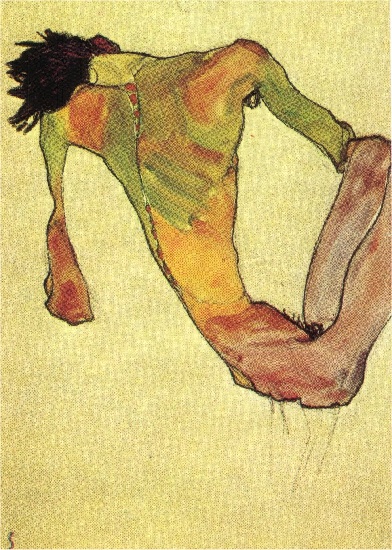
The painting “Torse Masculine” by Egon Schiele stands as a haunting testament to the artist's preoccupation with themes of vulnerability and physicality, rendered in a strikingly expressive style that embodies the core tenets of Expressionism. Executed in 1911, this piece transcends mere representation; it delves into the psychological landscape of its subject—a man’s torso—capturing not just anatomical detail but also an intangible aura of unease and latent emotion.
- Subject Matter & Composition: Schiele's focus is deliberately reductive, concentrating solely on the human form. The torso dominates the canvas, positioned centrally with outstretched arms creating a dynamic counterbalance. This deliberate simplification serves to amplify the emotional impact, forcing the viewer to confront the raw essence of existence without extraneous distractions.
- Style & Technique: Characteristic of Schiele’s oeuvre is his masterful use of Expressionist technique—bold brushstrokes and impasto layering create a textured surface that vibrates with energy. The artist eschews polished realism, opting instead for distortions that heighten the sense of drama and convey inner turmoil. These expressive marks aren't merely decorative; they are conduits for conveying psychological states.
The painting’s palette—primarily shades of orange and yellow—contributes significantly to its emotive power. These warm hues contrast sharply with the implied darkness surrounding the figure, creating a visual tension that mirrors the internal struggles depicted. The color choices aren't arbitrary; they align with Expressionist conventions where color is employed symbolically to communicate feelings rather than accurately depicting reality. Orange and yellow often represent vitality, passion, but here, they are imbued with an unsettling quality—a hint of feverish intensity that underscores the vulnerability inherent in the pose.
Historical Context & Artistic Influences
Schiele’s work emerged during a period of profound artistic ferment in Vienna – a city grappling with anxieties surrounding societal change and intellectual upheaval. Expressionism, as a movement, reacted against the prevailing optimism of Impressionism and championed subjective experience as paramount. Schiele drew inspiration from artists like Edvard Munch and Oskar Kokoschka, whose explorations of psychological torment and distorted forms paved the way for his own distinctive vision. The influence of Nietzsche’s philosophy—particularly his concept of the Übermensch—is palpable in Schiele's preoccupation with confronting mortality and embracing primal instincts.
Symbolism & Emotional Resonance
Beyond its formal qualities, “Torse Masculine” resonates deeply on an emotional level. The outstretched arms can be interpreted as a gesture of defiance against impending doom—a futile attempt to ward off the inevitable. Simultaneously, they convey a sense of helplessness and exposure, mirroring Schiele’s own anxieties about illness and loss. The painting's unsettling stillness speaks volumes about the artist’s internal state, inviting contemplation on themes of fragility, desire, and the confrontation with death.
A Reproduction Worth Considering
A high-quality reproduction of “Torse Masculine” offers a captivating glimpse into Schiele’s artistic genius. ArtsDot.com provides meticulously crafted reproductions that faithfully capture the painting's textural richness and emotive intensity, allowing collectors and interior designers alike to experience the profound impact of this iconic artwork firsthand. Its enduring appeal lies in its ability to provoke introspection and illuminate the complexities of human emotion—a timeless masterpiece deserving of appreciation.