El Greco, grčki slikar španske renesanse, poznat po dramatičnim kompozicijama, izduženim figurama i religijskim temama. Otkrijte 'Sahranu grofa Orgaza' i ostala remek-dela ovog vizionara!
Истражите светски познати музеј у Канзас Сити! Откријте велику колекцију уметности, дивну архитектуру и бесплатни премаштенје у Канзас Сити.
Национална галерија Канзас Сити, Уметност Канзас Сити, Колекција азијске уметности, Зграда Блох, Каравђао, Моне, Савремена уметност, Скулптура Парк, Бесплатни премаштенје, Архитектура, Фине уметности, Американска уметност
Национална галерија Канзас Сити
СА
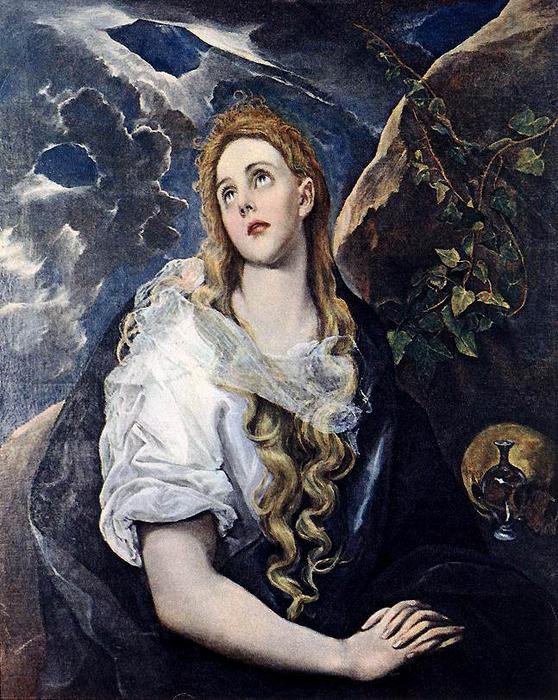
A Vision of Penance and Divine Turmoil: El Greco’s *Mary Magdalen in Penitence*
El Greco's (*Doménikos Theotokopoulos*) 1580 masterpiece, *Mary Magdalen in Penitence*, is a profoundly moving depiction of spiritual struggle and redemption. Housed at the Nelson-Atkins Museum of Art, this oil on canvas (108 x 87 cm) exemplifies the artist’s unique blend of Byzantine mysticism and Renaissance innovation – a style that would prove remarkably influential, foreshadowing aspects of Expressionism. This particular composition is one of five distinct versions El Greco developed exploring the theme of Mary Magdalene's repentance.
Subject and Historical Context
Mary Magdalene occupies a complex position within Christian tradition. Often mistakenly conflated with other biblical figures, she is recognized as a devoted follower of Christ, present at his crucifixion and resurrection. El Greco’s portrayal focuses not on her past life – often sensationalized – but on her subsequent devotion and penitence. Painted during the Counter-Reformation, a period of intense religious fervor within the Catholic Church, the artwork reflects a renewed emphasis on personal piety and emotional engagement with faith. The image served as a powerful reminder of the possibility of salvation through repentance and spiritual contemplation.
Composition and Symbolism
The painting’s composition is strikingly dramatic. Mary Magdalene is seated, her hands clasped in prayer, her gaze directed upwards towards a swirling, tempestuous sky. This upward thrust isn't merely physical; it symbolizes her yearning for divine grace. El Greco masterfully uses the surrounding landscape to reinforce this emotional state. Jagged rocks and clinging ivy suggest isolation and a withdrawal from worldly concerns – a deliberate embrace of solitude in pursuit of spiritual growth.
Several symbolic elements enrich the narrative:
- The Skull: A *memento mori*, reminding the viewer (and Mary Magdalene herself) of the inevitability of death and the importance of focusing on eternal life.
- The Glass Vessel: Its precise meaning is debated, but it likely represents fragility, vanity, or perhaps a vessel for tears – symbolizing sorrow and purification.
- Turbulent Sky: Reflects inner turmoil and the struggle between earthly desires and spiritual aspirations. It also hints at divine power and intervention.
- Ivy: Traditionally symbolizes fidelity, resurrection, and eternal life.
El Greco’s Distinctive Style & Technique
*Mary Magdalen in Penitence* is a showcase of El Greco's highly individual style. He departs from the classical ideals of proportion and anatomical accuracy, favoring elongated figures, dramatic poses, and intense emotional expression. His use of color is equally distinctive – vibrant yet restrained, creating an atmosphere of otherworldly beauty.
The technique itself is remarkable. El Greco employed layers of oil paint with visible brushstrokes (*impasto*), building texture and a sense of movement. This approach contributes to the painting’s dynamic energy and emotional impact. The flattened perspective further enhances this effect, prioritizing expressive power over strict realism. His refined handling of drapery is particularly noteworthy, conveying both weight and fluidity.
Emotional Impact & Legacy
This artwork isn't simply a depiction of religious devotion; it’s an exploration of the human condition – our struggles with faith, mortality, and the search for meaning. The painting evokes feelings of melancholy, introspection, and ultimately, hope. The dramatic lighting and expressive brushwork create a powerful emotional resonance that continues to captivate viewers centuries later.
El Greco's influence extended far beyond his own time. His innovative style paved the way for future generations of artists, particularly those associated with Expressionism, who sought to convey inner emotions through bold colors and distorted forms. *Mary Magdalen in Penitence* remains a testament to El Greco’s artistic genius – a compelling blend of spirituality, beauty, and profound psychological insight.